

July 02, 2026 – Two assets that moved together for most of 2025 are now falling together, and traders say the shared exit is no accident.

In Summary
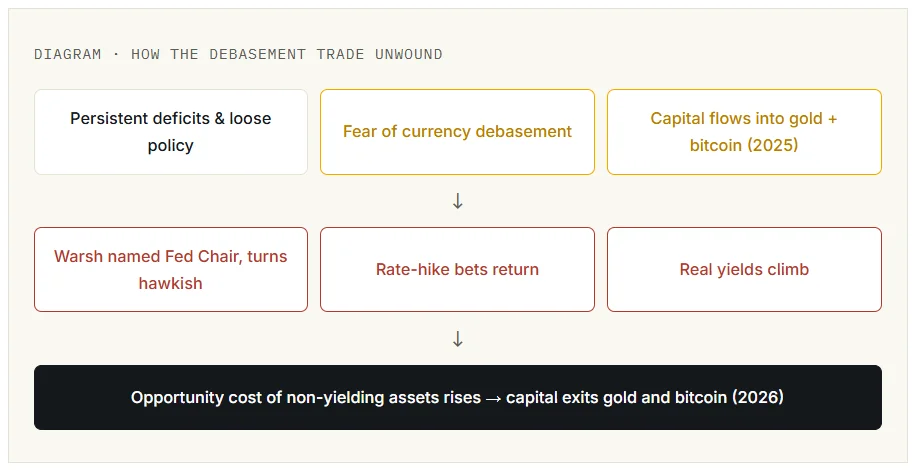
Bitcoin trades near $58,278, down more than 50% from its October 2025 peak.
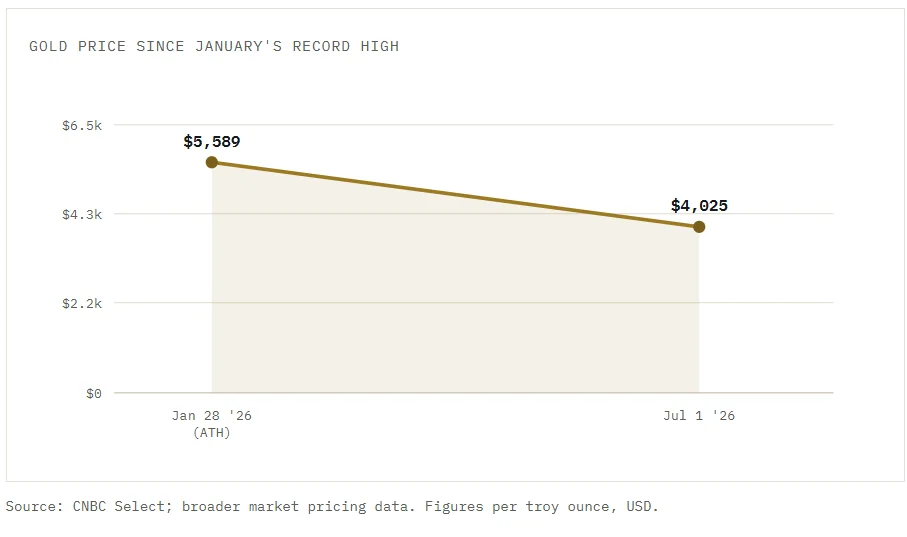
Gold sits near $4,025 an ounce, sliding well off January’s record high.
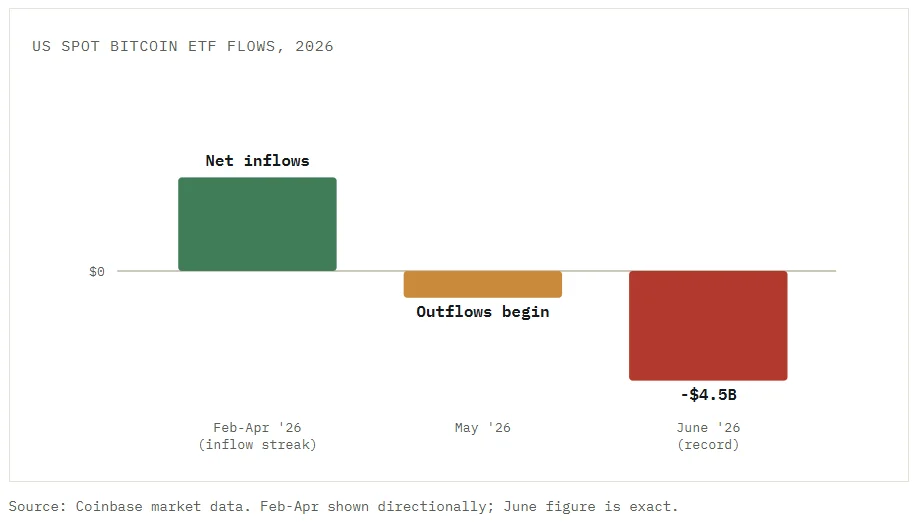
US spot bitcoin ETFs shed $4.5 billion in June, the worst month since the funds launched in 2024.
Fed Chair Kevin Warsh’s hawkish tone revived rate-hike bets and lifted real yields.
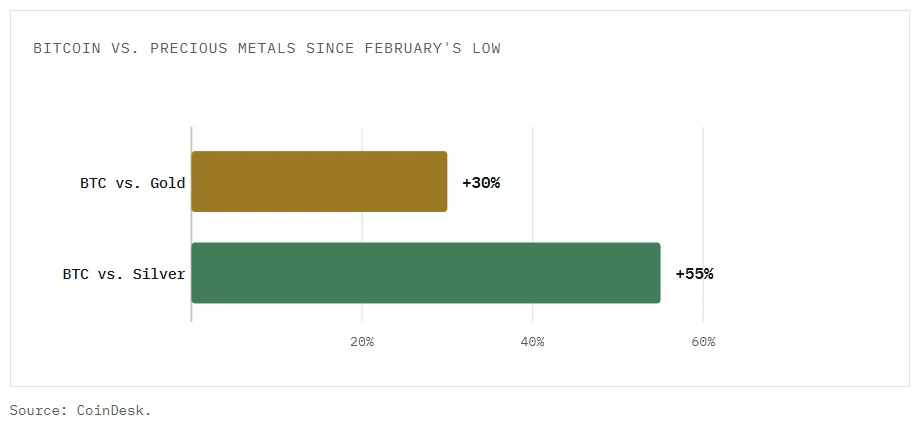
Bitcoin has still led gold and silver since February, up 30% and 55%, respectively.
Bitcoin dropped to $58,278 on Wednesday, down more than half from its October peak. Gold fell to $4,025 an ounce, down sharply from January’s record. Both assets are sliding together, and that timing matters. Through most of 2025, investors bought bitcoin and gold as a hedge against currency debasement. That trade is now unwinding fast.
What Happened to the Debasement Trade
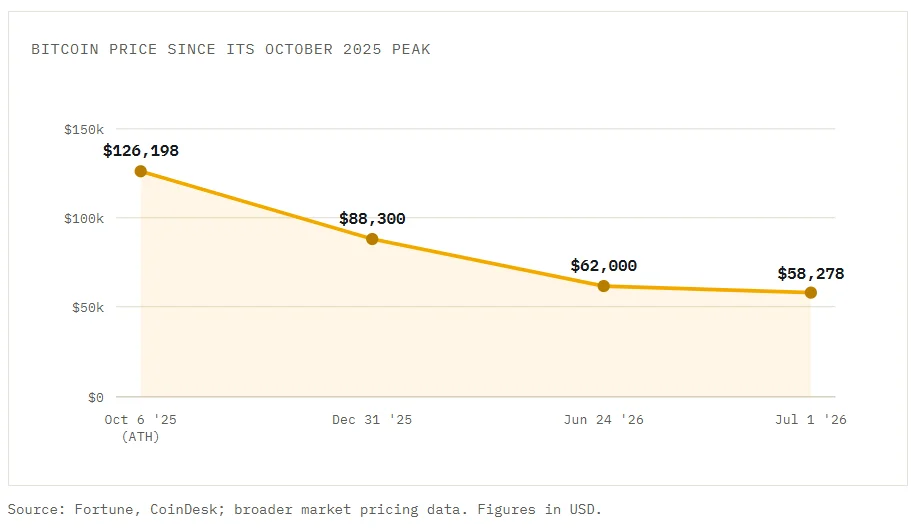
The debasement trade had a simple premise. Governments kept borrowing. Central banks kept policy loose. So investors hedged with assets governments cannot print, like gold and bitcoin. That thesis dominated 2025. Then the mood flipped in early 2026, Bloomberg reported via Yahoo Finance. President Trump’s nomination of Kevin Warsh to lead the Federal Reserve triggered the first crack in late January. Gold tumbled 13 percent that single day. It was the steepest one-day drop in more than four decades, the report said. Warsh later confirmed his hawkish instincts. He told markets that price stability was his top priority. Traders now price in two rate hikes by early 2027, up from just one before his comments. Higher rates raise real yields. That lifts the cost of holding assets with no income, including gold and bitcoin.
Bitcoin Takes the Steeper Fall
Bitcoin has absorbed the harder hit. The token stagnated near $100,000 through most of 2025, even as gold and silver rallied hard, CoinDesk reported. That divergence raised doubts about bitcoin’s place in the debasement trade. Those doubts turned into selling pressure. By late June, bitcoin traded below $62,000. That marked a correction of roughly 50 percent from its October peak, CoinDesk noted. The coin also fell below its 200-week moving average near $62,800. CoinDesk called that level a key technical marker. Spot bitcoin ETFs mirrored the exit. Coinbase reported that the funds shed $4.5 billion in June alone. That was the worst monthly figure since the products launched in January 2024. Bitcoin fell 20.48 percent that month, its steepest monthly drop on record, per the same report. Still, bitcoin has not lost every fight. Since February’s low, bitcoin has gained 30 percent against gold and 55 percent against silver, CoinDesk found.
Gold’s Parallel Retreat
Gold is falling too, just less dramatically than bitcoin. The metal now trades near $4,025 an ounce, CNBC Select reported Wednesday. That is only slightly above Tuesday’s price of $4,018. Yet the broader trend points down. Gold has traditionally served as a safe haven during turmoil and as a hedge against inflation, CNBC noted. That reputation is being tested. Strong US economic data has undercut the case for rate cuts. Investors increasingly expect the Federal Reserve to raise rates rather than lower them this year. Higher expected rates weigh on gold because bullion pays no yield. JPMorgan estimates debasement trade allocations have fallen back to March 2025 levels, Bloomberg reported. That is before tariff announcements first reignited inflation fears.
Why Both Assets Are Falling Together
Correlation is the real story here, not the price drop alone. Bitcoin, gold and silver moved almost in lockstep through 2025 because investors treated them as a single trade. JPMorgan’s Meera Chandan explained the logic to Bloomberg. It becomes hard to justify the debasement trade once the Fed signals a bias toward hiking, she said. When the shared reason to hold all three fades, investors tend to exit together. Deutsche Bank has cut its gold price forecast by as much as 22 percent, Bloomberg reported. Weaker demand expectations drove the cut. Meanwhile, capital is rotating elsewhere. The artificial intelligence boom continues to absorb risk appetite and dollars that might once have flowed into scarce assets instead.
What Comes Next
Not every analyst treats this as a permanent shift. JPMorgan’s Chandan still frames the pullback as a retreat, not a full reversal. Sentiment could turn quickly if the Fed softens its tone again. Bitcoin’s market capitalization still sits near $1.33 trillion, Fortune reported, keeping it far ahead of every other digital asset. That scale means large swings still draw attention fast. Traders are now watching three things closely. First, whether the Fed follows through on hikes or holds steady. Second, whether ETF outflows continue to accelerate or begin to slow. Third, whether Bitcoin can defend recent support levels without breaking down further.
Bottom Line
The debasement trade is not dead, but it has clearly lost its 2025 momentum. Fewer investors believe fiscal worry alone justifies holding both gold and bitcoin at once. Traders are watching rate decisions, ETF flows and support levels for the next real signal. Until real yields stop climbing, both assets face continued resistance. However, the gap between price and long term fundamentals may matter more than today’s headlines suggest.