

July 22, 2026 – US spot bitcoin funds just posted five straight days of net buying for the first time since April. The $727 million run rebuilds the demand pillar the market lost in June, right before earnings and the Fed decide its fate.

In Summary
Spot bitcoin ETFs logged five straight inflow days, the first such streak since April.
The run totals roughly $727 million and reverses June’s record outflow pressure.
BlackRock’s IBIT led July 20 buying; ether funds added about $38 million.
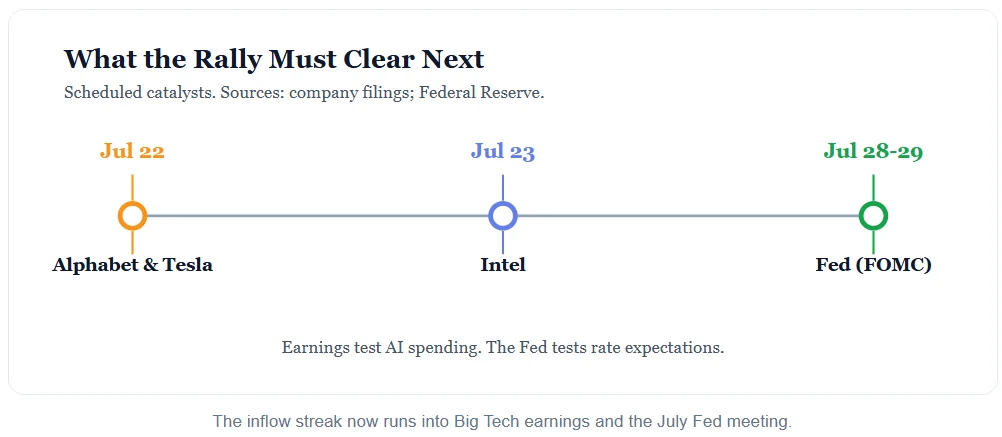
Alphabet, Tesla, and Intel earnings, then the July 28-29 Fed meeting, now test the rally.
Bitcoin ETF inflows just staged their steadiest comeback in months. The return of the fund bid arrives at a pivotal moment for crypto. Institutional buyers had largely stepped away through a rough second quarter. Now their money flows back, right before a heavy week of tests. Two big questions loom over the tape. Can earnings and the Fed keep the risk-on mood alive?
The five-day bid returns
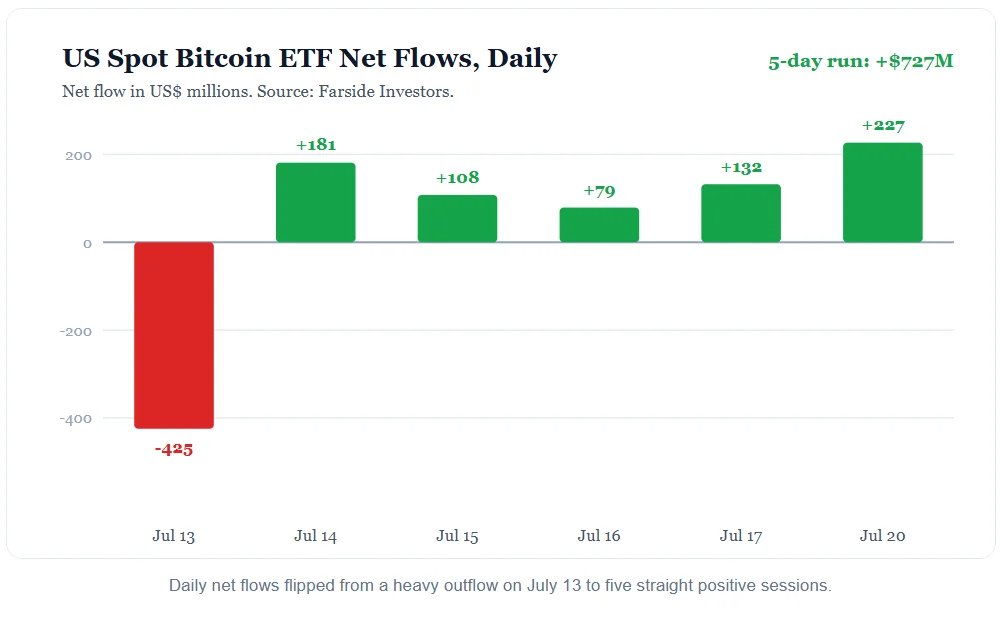
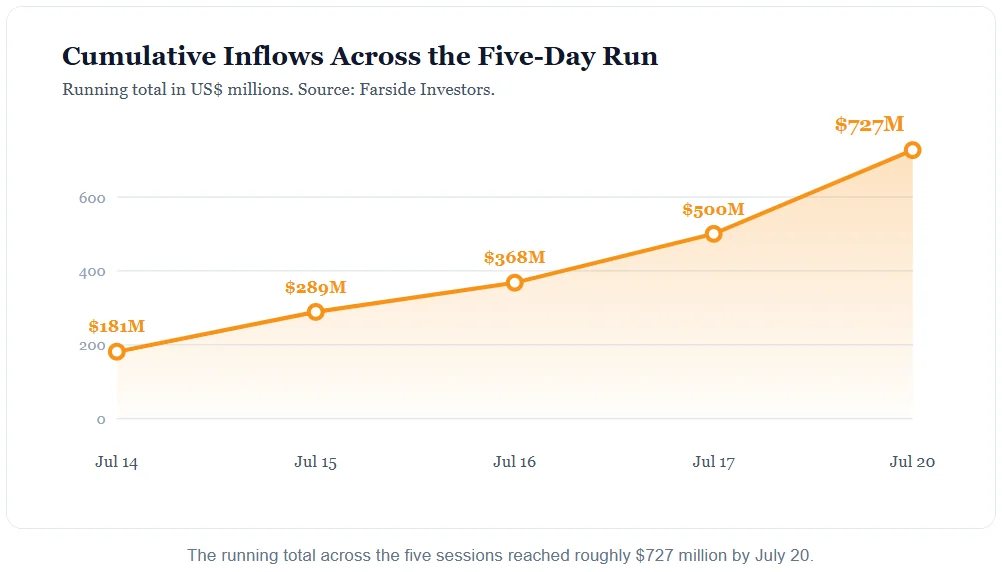
Start with the raw numbers, because they frame everything. US spot bitcoin funds pulled in about $227 million on July 20. That figure marked a fifth straight day of net buying. Moreover, the streak now ranks as the calmest stretch in months. Together, the five sessions gathered roughly $727 million. For context, June had delivered record outflows instead.
The reversal looks sharper against last week’s action. On July 13, the funds bled about $425 million in one day. Then the tide flipped, and inflows returned for five sessions in a row. Notably, this run also stands as the first such streak since April. Buyers had gone quiet through a quarter of mostly outflows. Now they appear willing to step back in.
Who did the buying
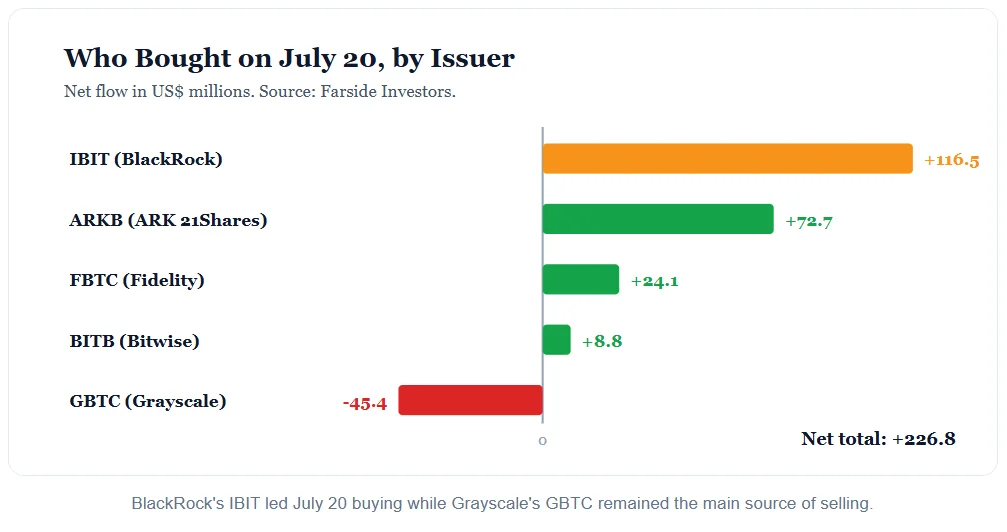
Individual issuers tell the clearest version of the story. Notably, BlackRock’s IBIT led the charge with about $117 million. Meanwhile, ARK’s fund added roughly $73 million more. Fidelity and Bitwise chipped in smaller positive tickets too. However, Grayscale’s flagship still leaked money on the day. On balance, buyers clearly outweighed sellers across the complex.
Why the flow signal counts
Analysts read steady fund demand as a cleaner gauge than social chatter. When money enters regulated products, allocators reveal real positioning. Consequently, five green days carry more weight than any single print. Still, one caveat deserves attention here. Inflow figures do not always convert into same-day spot buying. Instead, market makers may lag or net orders internally. Even so, sustained runs usually track genuine demand well.
Ether joins the move
Ether funds also turned positive during the same window. They collected about $38 million on July 20. Furthermore, BlackRock’s ETHA drove nearly all of that total. As a result, both major crypto categories now point the same way. Yet ether flows stay smaller and choppier than bitcoin’s. Even so, the twin signal strengthens the broader demand story.
Price catches a bid
Bitcoin climbed alongside the fresh wave of demand. The token traded near $66,000 on July 21, a five-week high. Earlier live coverage had pegged the level closer to $63,000. Yet verified market data confirms the higher, corrected figure. Therefore, the fund bid looks like the missing piece returning. Total Bitcoin assets have also rebuilt toward roughly $79 billion. That marks a clear recovery from the July low near $75 billion.
The week ahead sets the test
This rally now faces a dense calendar of catalysts. First, Alphabet and Tesla report earnings after the close on July 22. Tesla just posted record quarterly deliveries of 480,126 vehicles. Then Intel follows with its own numbers on July 23. These prints will show whether AI spending still climbs.
That question matters directly for crypto markets. Bitcoin has tracked the AI trade closely all month. Therefore, softer capital guidance could drain the risk-on mood fast. Conversely, upbeat results might extend the fund-led recovery. Either way, traders will parse every line for direction.
The macro backdrop adds another layer of tension. Recently, hedge funds have trimmed technology exposure at a rapid clip. As a result, broad de-risking could sap crypto of its usual tailwind. Meanwhile, a clean earnings beat might quickly reverse that caution. So the coming sessions should reveal which force wins.
Then comes the Fed
Policy lands next, and the stakes rise again. The Federal Reserve meets on July 28 and 29. Officials have held rates at 3.5% to 3.75% since December. Markets now want fresh clues about the next move. Meanwhile, a dovish tone would likely lift risk assets. However, sticky inflation could still cap the advance.
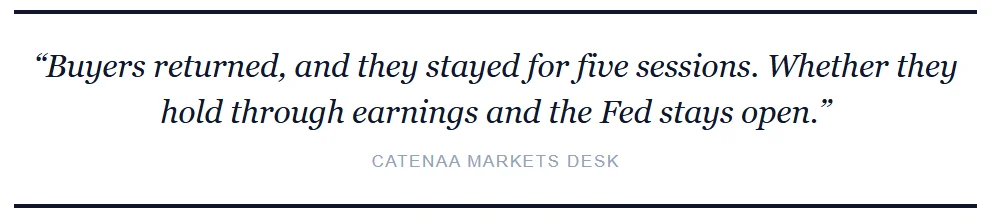
For now, the flow data tells a simple story. Buyers returned, and they stayed for five sessions. Whether they hold through earnings and the Fed stays open. Even so, the trend has clearly turned friendlier for bulls. Investors should still refresh these fast-moving figures before acting.