


August 10, 2026 – A five-session inflow streak has revived institutional Bitcoin demand, while one fund captured most of the new capital.
In Summary
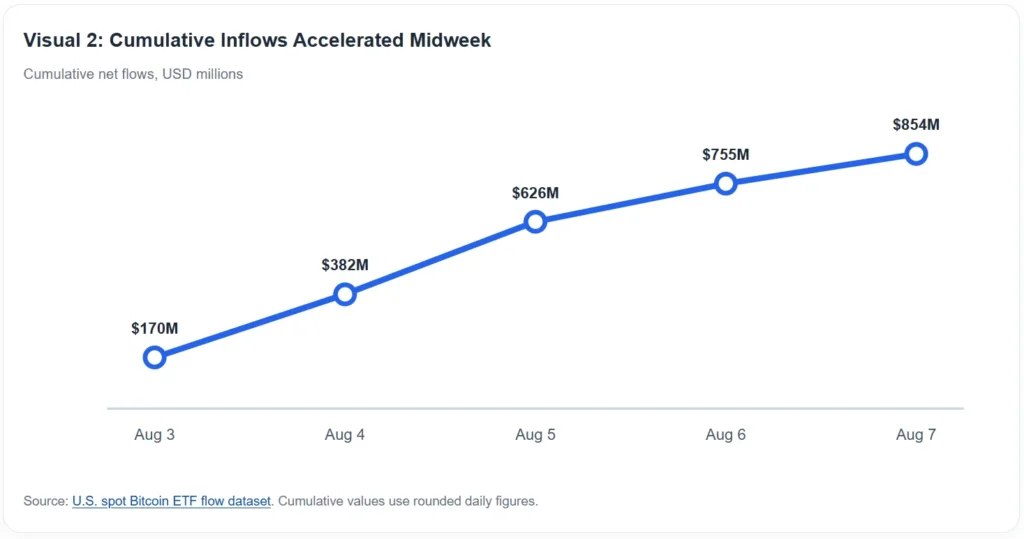
U.S. spot Bitcoin products attracted about $853.5 million from August 3 through August 7.
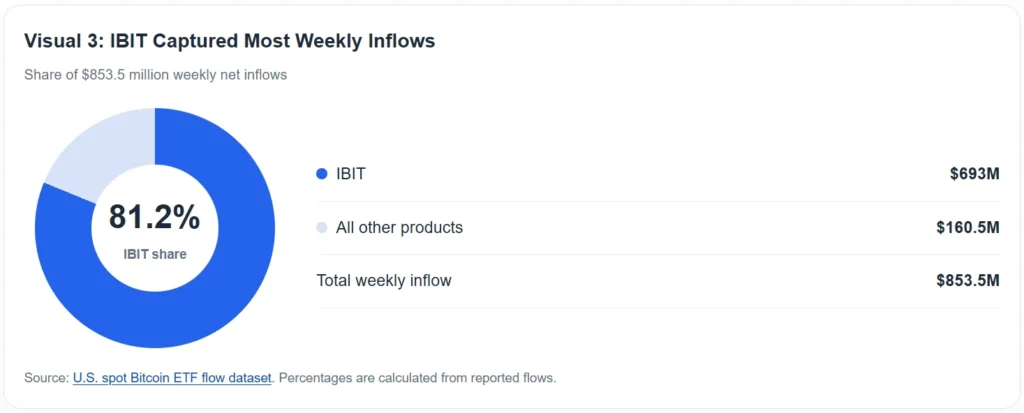
IBIT received about $693 million, representing roughly 81% of the weekly total.
Daily inflows stayed positive for five consecutive sessions, although momentum slowed by Friday.
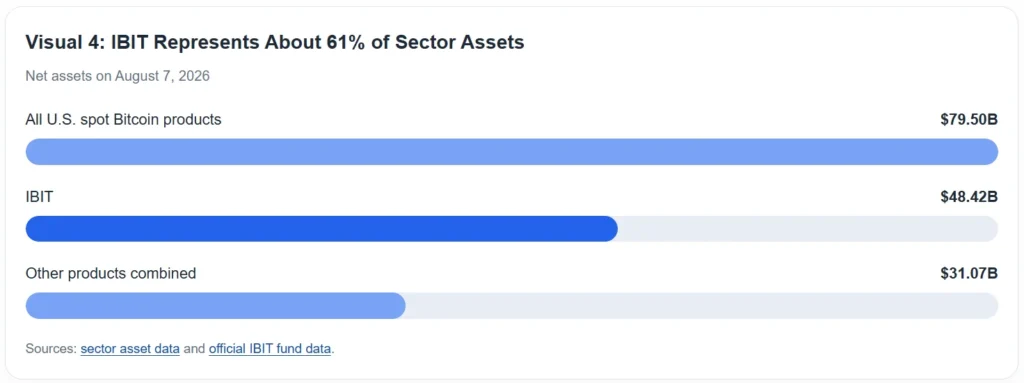
IBIT held about $48.42 billion in net assets on August 7.
Strong ETF demand has not yet produced a decisive Bitcoin breakout, which keeps macro risk important.
U.S. spot Bitcoin exchange-traded products have started August with a sharp return of investor demand. Bitcoin ETF inflows reached about $853.5 million during the five sessions ending August 7. The streak was the strongest weekly intake since mid-April. More importantly, one fund captured most of the fresh capital.
Five Positive Sessions Change the Flow Picture
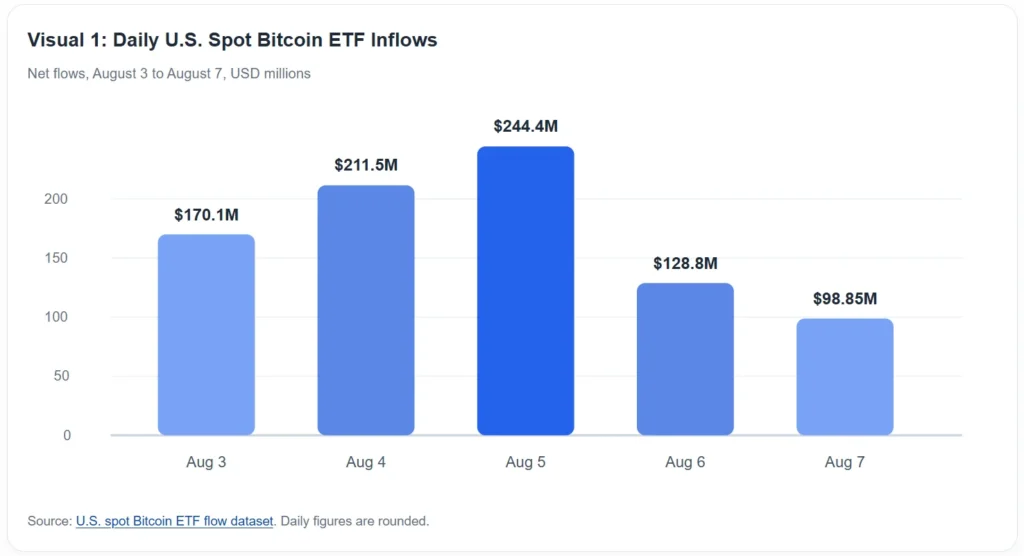
Bitcoin ETF demand strengthened quickly after a weak close to July. Public flow data show roughly $170.1 million entered the products on August 3. Inflows then increased to about $211.5 million on August 4.
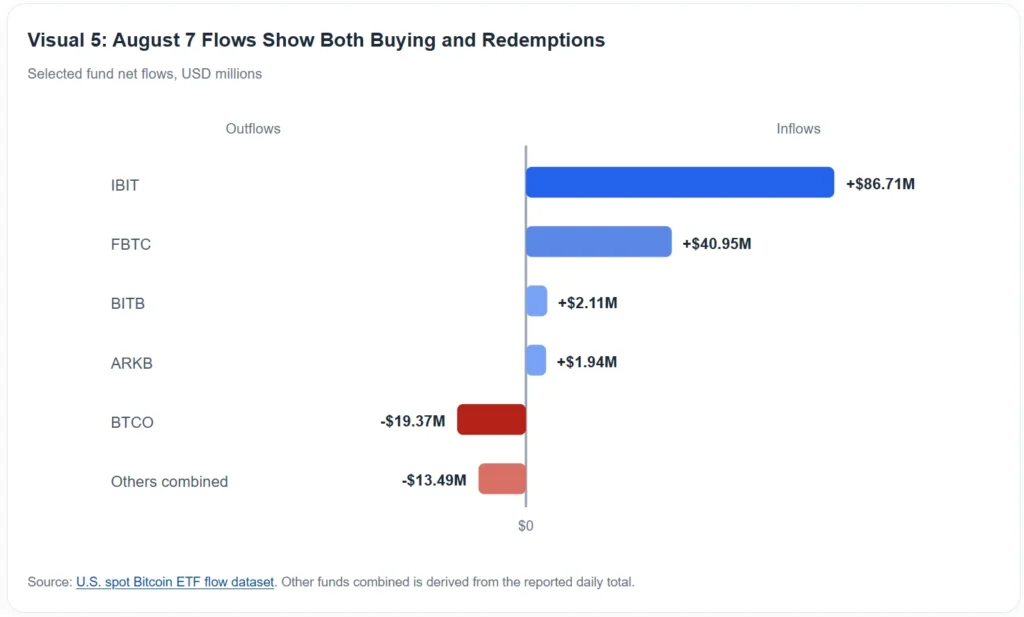
The strongest session came on August 5, when net buying reached about $244.4 million. Demand cooled afterwards, but it remained positive. Products added about $128.8 million on August 6 and $98.85 million on August 7.
Therefore, the signal is not only the weekly total. The more important feature is consistency across every trading session. Five positive days suggest investors were adding exposure despite uncertain price momentum.
However, the pace weakened during the second half of the week. That slowdown matters because ETF flows can shift quickly. A sustained trend will require repeated inflows beyond one strong week. Broad participation across several issuers would make that signal even stronger.
IBIT Dominates New Bitcoin Demand
IBIT attracted about $693 million during the week. That equals roughly 81% of total net inflows. The concentration shows how institutional Bitcoin access continues to cluster around the largest products. That concentration also makes headline flows sensitive to one issuer’s creation activity.
The scale of the fund also explains its influence. Official fund data showed IBIT net assets of $48.42 billion on August 7. The fund had 1.318 billion shares outstanding and traded about 35.1 million shares that day.
IBIT also uses the CME CF Bitcoin Reference Rate New York Variant as its benchmark. That benchmark stood near $64,880 on August 7, according to the fund page.
This structure places Bitcoin exposure inside familiar brokerage and portfolio systems. Fidelity’s product disclosure describes standard reporting, transparent pricing, and intraday liquidity. That broader accessibility helps spot products connect traditional capital with Bitcoin.
The Price Response Remains Surprisingly Muted
The inflow surge looks significant against the size of the market. U.S. spot Bitcoin products held about $79.5 billion in combined net assets on August 7. The weekly inflow therefore equaled slightly more than 1% of that asset base.
Yet Bitcoin remained near the mid-$60,000 area. That muted response suggests ETF buying is providing support rather than triggering a momentum breakout.
Several factors may explain the gap. Existing holders can sell into ETF-driven demand. Derivatives positioning can also absorb spot pressure. Furthermore, macro conditions still shape risk appetite across digital assets.
The CME benchmark framework aggregates pricing from major spot venues. Therefore, regulated products remain linked to the broader Bitcoin market rather than operating in isolation.
Why the Five-Day Streak Matters
Spot Bitcoin products have become a measurable channel for regulated investor demand. The SEC approved spot Bitcoin product listings in January 2024. Since then, fund flows have offered a visible gauge of capital entering and leaving Bitcoin exposure.
However, approval never removed Bitcoin’s underlying volatility. The SEC has warned that Bitcoin-linked products carry significant risks. Fidelity also describes Bitcoin as highly volatile and potentially illiquid.
For investors, the next signal is straightforward. Another week of broad inflows would strengthen the case for renewed institutional accumulation. A sudden reversal would suggest the latest burst was tactical.
For now, the $853.5 million week has changed the short-term flow picture. It has also confirmed IBIT’s dominant role. The harder question is whether that demand can pull Bitcoin decisively above its recent trading range.