


June 25, 2026 – Exchange inflows, ETF outflows, and forced liquidations hit support together, before dip buyers could react.

In Summary
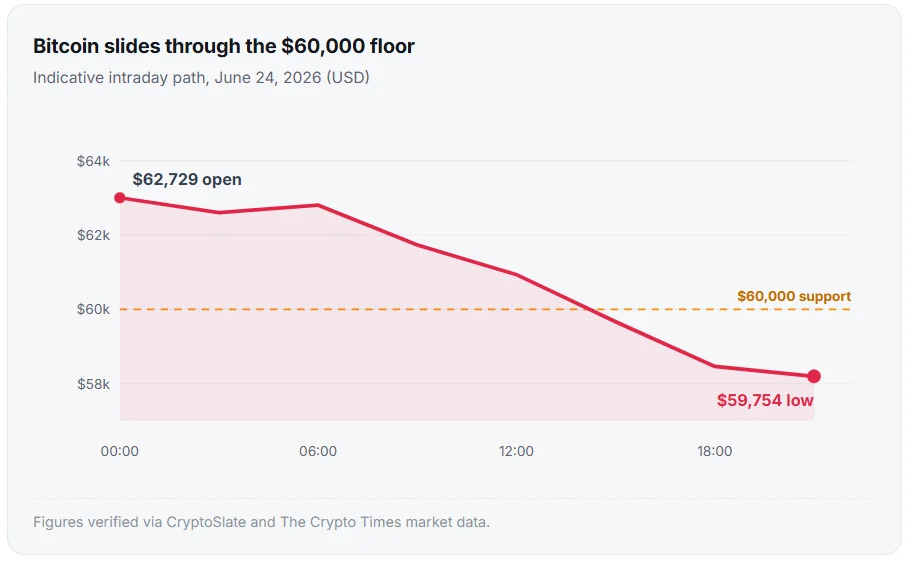
Bitcoin broke below $60,000 on June 24, falling to roughly $59,754.
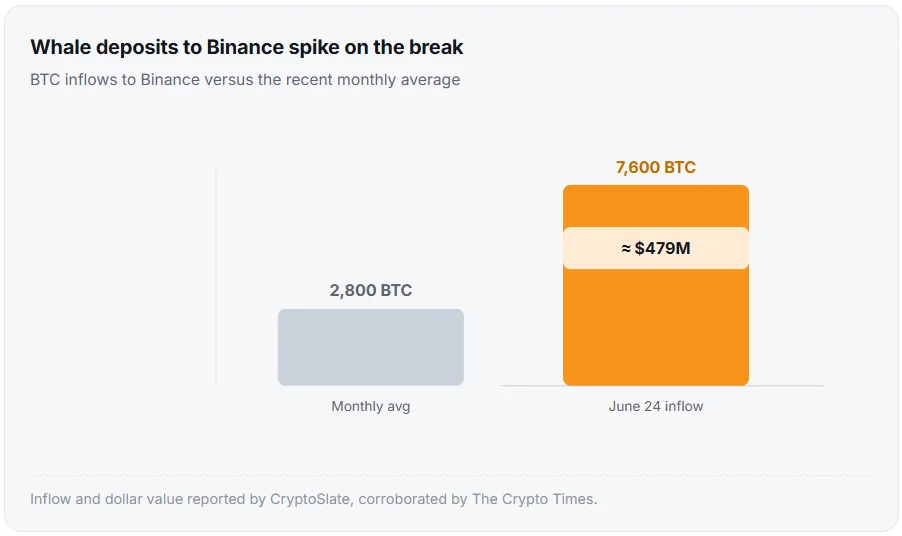
About 7,600 BTC moved to Binance, worth close to $479 million.
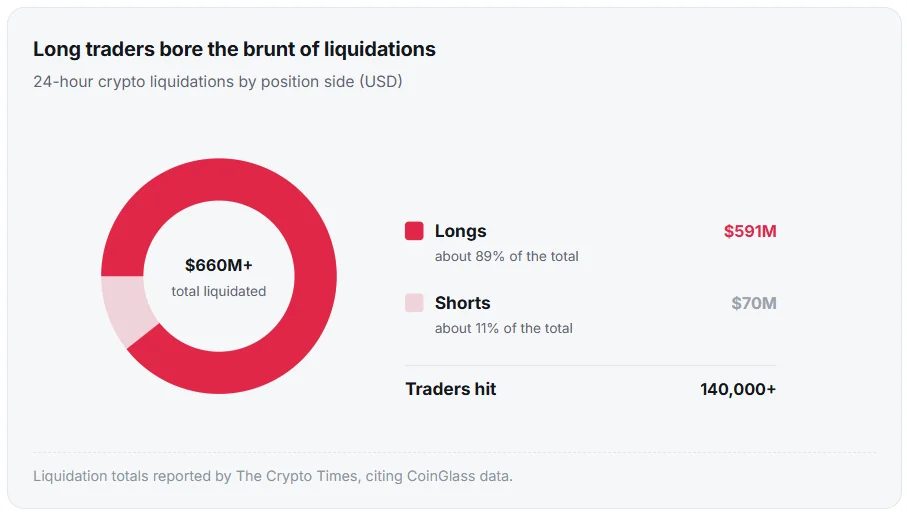
Long liquidations reached about $591 million within 24 hours.
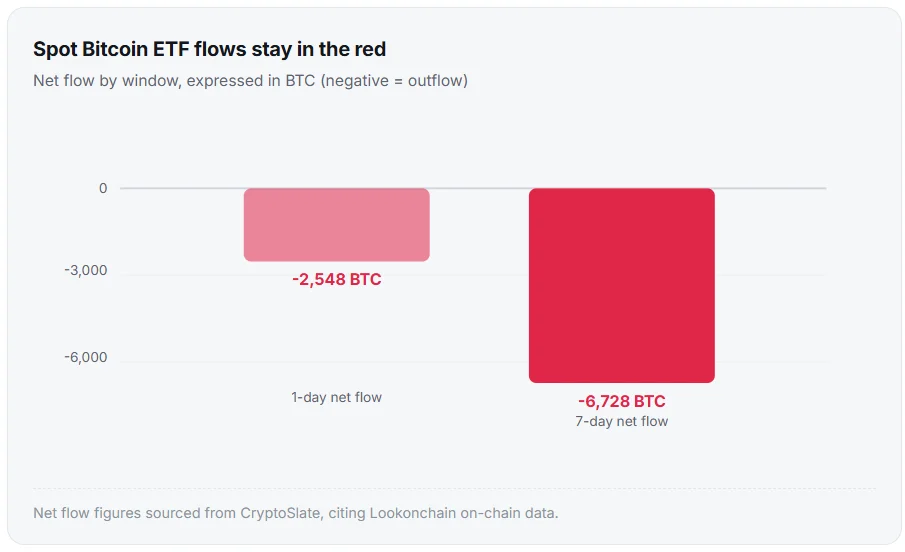
Spot ETF flows stayed negative, signaling weaker institutional demand.
Bitcoin slipped below $60,000 on June 24, 2026. The break exposed a clear timing problem for buyers. Sellable coins reached exchanges while institutional demand cooled. As a result, support failed faster than many traders expected. According to CryptoSlate, Bitcoin traded near $59,340 during the slide. The Crypto Times later pegged the intraday low at $59,754. Therefore, the psychological $60,000 floor no longer offered protection.
Sell pressure reached exchanges first
Exchange inflows carry the most weight near crowded price levels. On June 24, roughly 7,600 BTC moved into Binance. At prevailing prices, the supply equaled about $479 million.
However, inflows reveal only potential selling, not confirmed sales. Still, the timing sharpened the risk. Fresh coins arrived just as the $60,000 area weakened. Consequently, the move looked structural rather than routine.
Analysts watch Binance closely for a reason. The venue holds deep liquidity and fast execution. Therefore, large deposits often precede heavier selling. In short, the inflow set the stage for the breakdown.
ETF demand cooled at the worst moment
Institutional flows added another layer of strain. Spot Bitcoin ETFs posted a sixth straight week of outflows. Meanwhile, monthly redemptions climbed past $5.94 billion.
That retreat stripped away a vital demand channel. When ETF buyers pause, price support thins quickly. Furthermore, the data reaches traders almost in real time. Negative flows and rising inflows sent two warnings together.
ETF flows reflect only one slice of demand. Even so, they now rank among the clearest public gauges. During this slide, the answer leaned bearish. Redemptions signaled caution rather than fresh conviction.
Leverage turned the dip into a slide
Leverage formed the second major pressure point. Once $60,000 broke, forced selling accelerated the descent. CoinGlass tracked repeated long liquidations near $59,650.
According to The Crypto Times, over $660 million in positions were cleared within 24 hours. Long traders absorbed roughly $591 million of that figure. Shorts lost only about $70 million by comparison.
In addition, more than 140,000 traders faced liquidation across global venues. Liquidations work like falling dominoes during stress. Exchanges close losing trades once the margin runs out. That selling, in turn, pushes the price lower still, triggering yet more liquidations.
Fear gripped the wider market
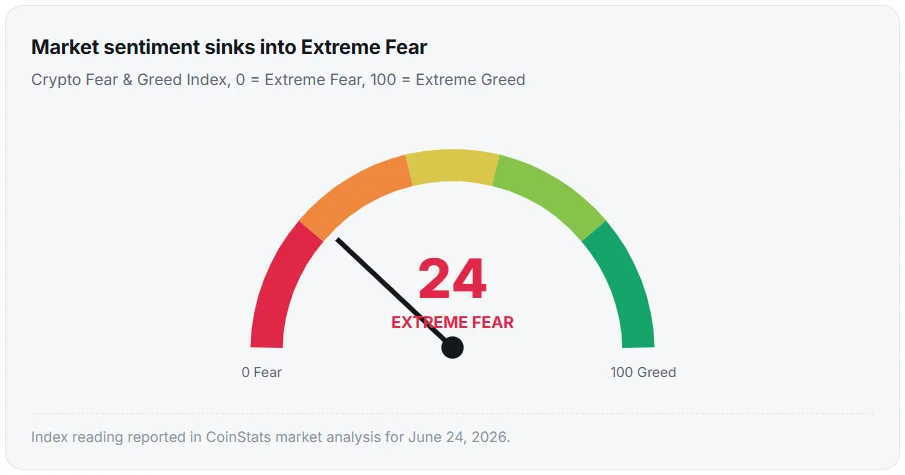
Sentiment matched the sharp price action. The Fear and Greed Index dropped to 24, labeled “Extreme Fear.” Such low readings often follow heavy drawdowns.
Bitcoin has now lost about 16% this month alone. Moreover, it trades far below its October 2025 record of $126,198. Capital also rotated toward AI-linked equities during the decline. Meanwhile, US stock indices held near record highs.
What traders should watch next?
The break became a test of absorption, not only support. Buyers must step in while the flows calm down. Otherwise, $60,000 flips from floor to ceiling.
For a recovery case, Binance inflows need to slow. Additionally, ETF redemptions must stabilize after recent losses. Liquidation alerts should cool rather than drift lower.
Conversely, steady inflows would hint at more selling ahead. Renewed ETF outflows would confirm weaker institutional appetite. Persistent, prolonged liquidations would point to deeper price losses.
For now, the evidence leans cautiously yet is undecided. Bitcoin can still turn panic into healthy redistribution. However, buyers must prove their strength quickly. Until then, the market remains fragile.




