

May 13, 2026 – The AI giant updated its terms on May 12, 2026. It named eight unauthorized platforms. Tokenized equities now face a serious credibility test. Retail buyers may hold tokens with no legal value.
In Summary
Anthropic declared all unauthorized tokenized shares void on May 12, 2026.
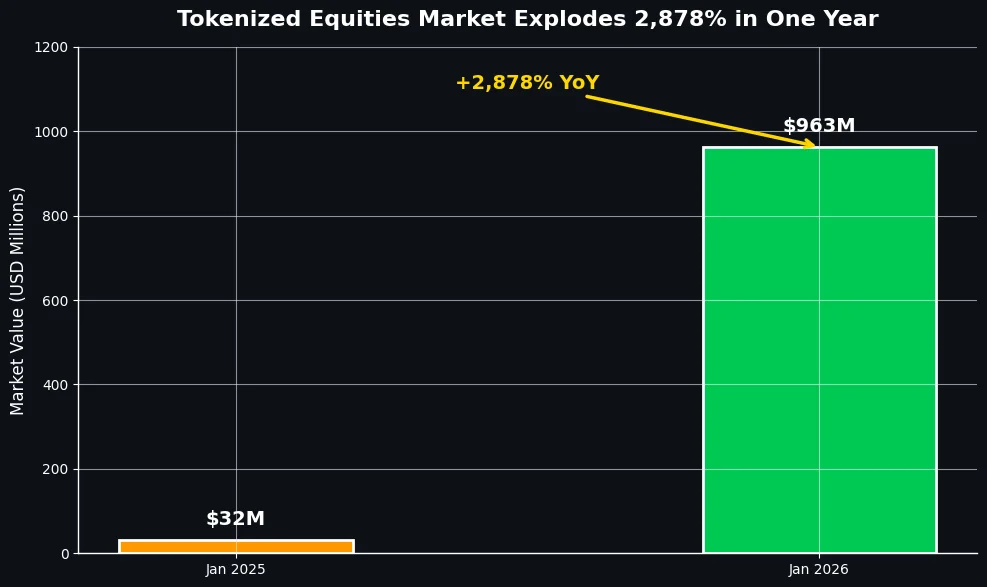
On-chain platforms implied a $1.5T valuation. That is 4x above the official $38
Eight firms were blacklisted. These include Forge and Hiive.
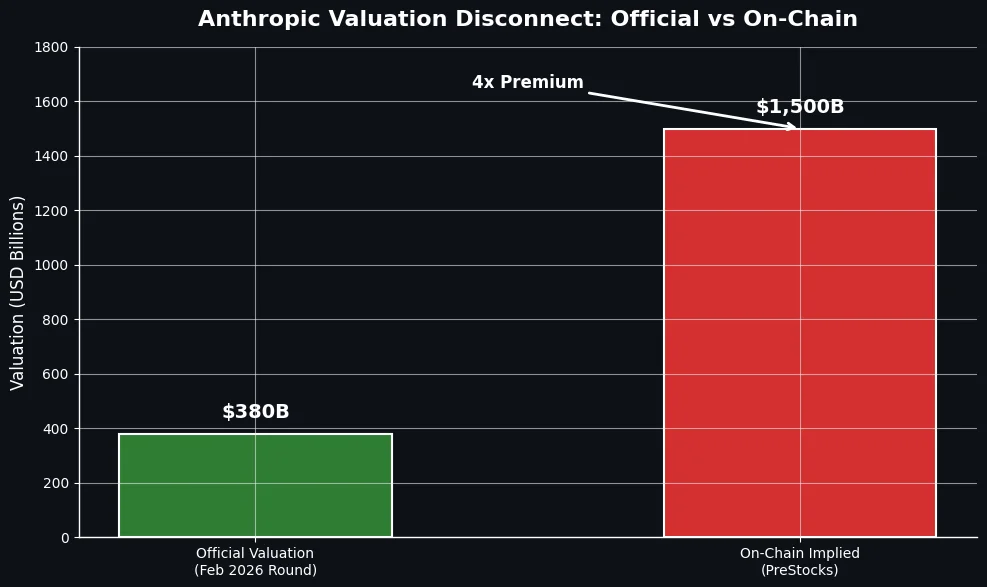
The tokenized equities market surged 2,878% year-on-year to $963 million.
Only Board-approved transfers carry legal weight under Anthropic’s updated terms.
Anthropic Draws a Hard Line
Anthropic fired a warning shot across crypto markets on May 12, 2026. The AI developer behind Claude updated its legal terms. It declared all unauthorized sales of its private stock void. The move targets tokenized securities, SPVs, and forward contracts. Anthropic named eight firms as unauthorized sellers. These include Forge, Hiive, Sydecar, and Upmarket. The company stated that any transfer without Board approval is invalid.
The Tokenized Equities Boom
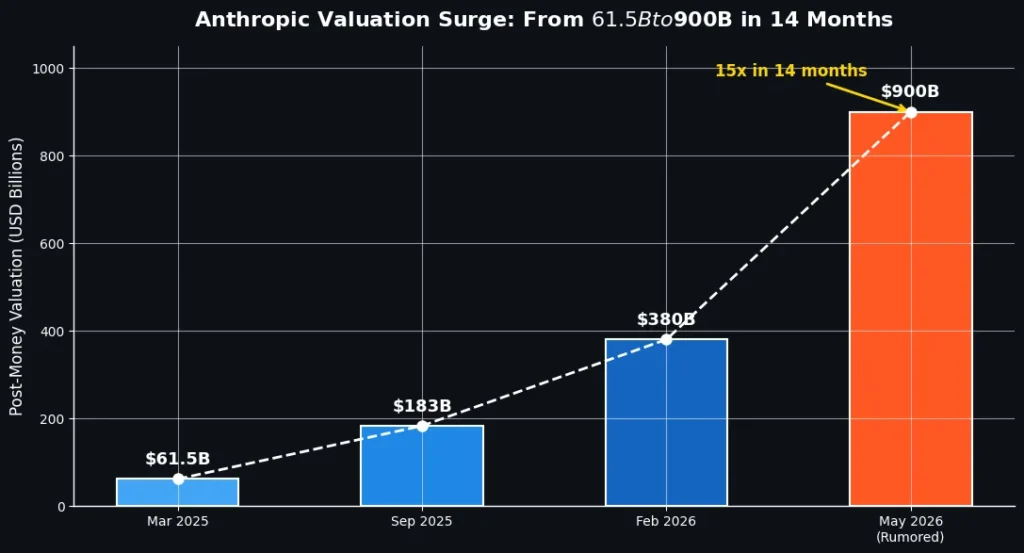
The timing is critical. Tokenized equities have exploded to $963 million in market value. That marks a 2,878% year-on-year surge. Anthropic itself is one of the hottest private assets on earth. Its valuation has climbed from $61.5 billion in March 2025 to $380 billion by February 2026. A rumored $900 billion round is now in progress. This frenzy has fueled unauthorized platforms to offer synthetic exposure.
A $1.5 Trillion Mirage
The valuation gap is staggering. On-chain markets priced Anthropic at $1.5 trillion. That is nearly four times its last official round. RedStone co-founder Marcin Kazmierczak flagged this disconnect. He noted the on-chain venue held just 0.0015% of the implied market cap. Illiquid assets need a different methodology, he wrote. He urged investors to rely on primary sources and verified funding rounds.
The Blacklist
Anthropic’s updated terms are unambiguous. The company prohibits SPVs from acquiring its stock. It does not recognize any third-party tokenized securities. All share transfers require explicit approval from the Board of Directors. The eight blacklisted firms span traditional and crypto-native venues. Open Door Partners, Unicorns Exchange, Pachamama, and Lionheart Ventures joined Forge and Hiive on the list. Jupiter’s PreStocks and Ventuals were not named. They likely fall under the broader prohibition.
Authorized vs. Unauthorized Rails
The broader tokenized securities market is booming. Global asset tokenization reached $1.76 trillion in 2025. It could hit $24.5 trillion by 2033. The tokenized equities subset alone grew from $32 million to $963 million in one year. Institutional players like Securitize are building authorized rails. Securitize recently partnered with Computershare. Their model uses issuer-sponsored tokens with direct equity ownership. No SPV intermediary sits between investor and issuer.
This creates a clear fork in the road. Unauthorized tokenization offers retail access but carries legal risk. Authorized tokenization moves slower but preserves issuer control. Anthropic’s stance signals which path major private companies prefer. The company is reportedly preparing for an IPO. It hired Wilson Sonsini in late 2025. Public market discipline may arrive before tokenized markets mature.
Why Anthropic Can Afford to Say No
The revenue story supports the valuation surge. Anthropic claims a $14 billion run-rate revenue. It grew over 10x annually for three straight years. More than 1,000 enterprise accounts now spend over $1 million per year. Eight of the Fortune 10 are customers. This demand explains why investors chase exposure through any channel. It also explains why Anthropic tightly guards its cap table.
The Secondary Market Gray Zone
Forge Global pushed back after being named. The platform told reporters its inclusion was erroneous. It claimed that it does not facilitate trades without the company’s approval. Anthropic has not revised its public list. The standoff highlights a gray zone. Secondary markets often operate with limited issuer visibility. Tokenized platforms add blockchain opacity to that problem.
Regulatory Headwinds
Regulators are watching closely. Only 30% of countries have clear digital asset frameworks. The U.S. SEC issued new broker-dealer custody guidance in December 2025. A DTCC no-action letter supported a tokenization pilot. These steps help the institutional infrastructure. They do not resolve the core issue. Private companies set their own transfer rules. Blockchain rails cannot override corporate bylaws.
Three Red Flags for Investors
Investors should treat on-chain private equity with caution. The Anthropic case reveals three red flags. First, implied valuations can detach sharply from reality. Second, tokenized products may carry no legal equity claim. Third, issuers can nullify unauthorized transfers retroactively. The $1.5 trillion on-chain price tag looks more like speculation than investment. It reflects scarcity, not fundamentals.
The Road Ahead
The market will likely split into two tiers. Authorized tokenization will serve institutional buyers with proper KYC and issuer consent. Unauthorized products may persist in regulatory gray areas. They will target retail traders seeking pre-IPO exposure. Anthropic’s hard line suggests the unauthorized tier faces an uphill climb. The company has raised nearly $64 billion since 2021. It can afford to be selective about who holds its paper.
Tokenization of equities is not slowing down. The question is who controls the rails. Anthropic has cast its vote for issuer-sanctioned channels. The $1.5 trillion ghost valuation may fade. The $380 billion official round remains the only price with a Board stamp. Authorized markets will define the next phase.