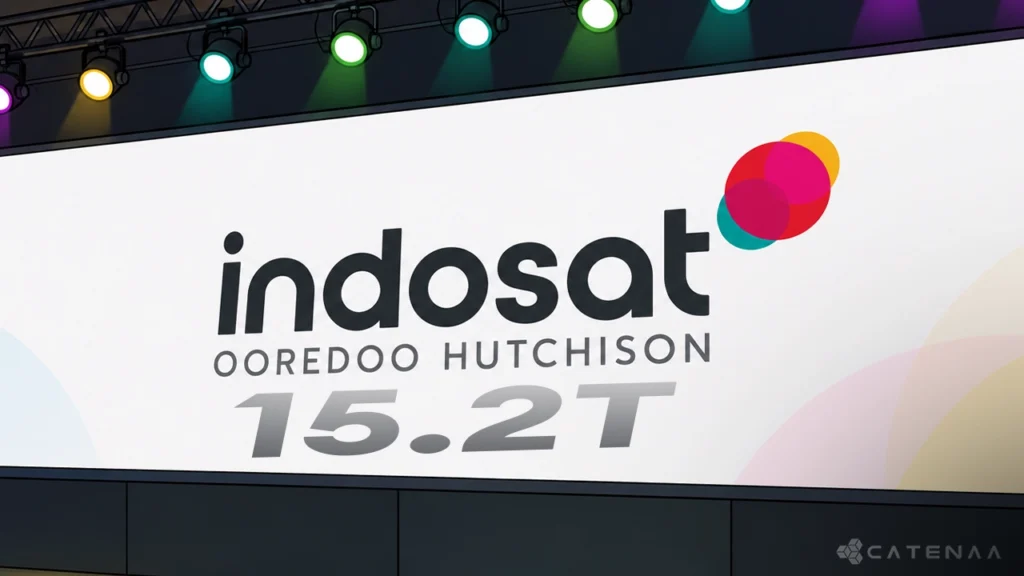


Catenaa, Sunday, May 10, 2026 Indonesia telecom operator Indosat Ooredoo Hutchison reported record quarterly revenue of IDR 15.2 trillion in the first quarter of 2026, driven by artificial intelligenceled personalization strategies that boosted user engagement, data consumption, and mobile service performance across its network.
Indosat posted its highest quarterly revenue on record in Q1 2026, rising 12 percent year on year to IDR 15.2 trillion as AIdriven personalization reshaped customer engagement across Indonesia.
Earnings before interest, taxes, depreciation, and amortization rose 13 percent to IDR 7.2 trillion. Net profit attributable to shareholders climbed 26 percent to IDR 1.5 trillion.
The company also reported stronger core mobile performance. Average revenue per user increased 15 percent to IDR 45,000, while data traffic grew 25.1 percent, reflecting rising demand for digital services.
Executives attributed the gains to a shift toward AIpowered customer targeting, which tailors services and offers based on user behavior patterns and preferences.
Turning to AI
Telecom operators are turning to artificial intelligence to improve customer retention and revenue growth as digital usage becomes more complex. Users now consume content across multiple platforms, creating fragmented data patterns.
Indosat has responded by building a datadriven system that analyzes user activity to deliver more relevant service offerings. These include flexible data plans, curated content, and improved digital interfaces.
The company also expanded its AI capabilities during the quarter. It launched SahabatAI, a locally developed large language model designed to understand Indonesian languages and cultural context.
Alongside this, Indosat strengthened its infrastructure through its NeoCloud platform, which supports highperformance computing for AI workloads.
The Shift
The results highlight how telecom companies are shifting from traditional connectivity providers to digital service platforms powered by AI. Personalization is becoming central to revenue growth strategies.
Higher data usage and improved user targeting suggest telecom firms can increase customer spending without relying solely on subscriber growth. This may reshape pricing models across the industry.
Investment in AI infrastructure also signals rising competition among regional operators. Companies that build local AI ecosystems may gain an advantage in serving domestic markets.
Indosat’s focus on localized AI models reflects a broader trend toward digital sovereignty, where countries develop technology tailored to local language and regulatory needs.
Interactive
Industry analysts say AI personalization is changing how telecom operators interact with users. By analyzing behavior in real time, companies can deliver targeted services that increase engagement.
Market observers note that rising average revenue per user indicates successful monetization of digital services. This suggests that personalization strategies are translating into measurable financial gains.
Technology experts also highlight the importance of local AI development. Models designed for regional languages and contexts are seen as more effective than global systems.
Analysts expect continued investment in AI infrastructure as telecom firms compete to deliver advanced digital services and maintain network performance.
Growing Role
Indosat’s record revenue underscores the growing role of artificial intelligence in telecom operations. The company’s focus on personalization and infrastructure expansion is driving both usage and profitability.
As digital consumption patterns evolve, telecom providers are expected to deepen their reliance on AI to manage networks and engage customers. The shift marks a broader transformation in how connectivity services are delivered.
Continued investment in AI platforms and local capabilities may shape the next phase of growth in Indonesia’s telecom sector.
Indosat Ooredoo Hutchison is one of Indonesia’s largest telecommunications providers, formed through the merger of Indosat Ooredoo and Hutchison 3 Indonesia. The company serves tens of millions of mobile subscribers across the country.
Indonesia’s telecom market has experienced rapid growth over the past decade, driven by rising smartphone adoption and expanding internet access. Data services have become a primary revenue source as users shift toward streaming, social media, and digital commerce.
The integration of artificial intelligence into telecom operations has accelerated in recent years. Operators are using AI for network optimization, customer service automation, and targeted marketing.
Indosat has positioned itself as a leader in this transition by investing in AI platforms, partnerships, and infrastructure. Collaborations with global technology firms have supported the development of advanced capabilities, including cybersecurity systems and AI research initiatives.
The company’s strategy reflects a broader industry move toward combining connectivity with digital services, as telecom firms seek new revenue streams beyond traditional voice and data offerings.