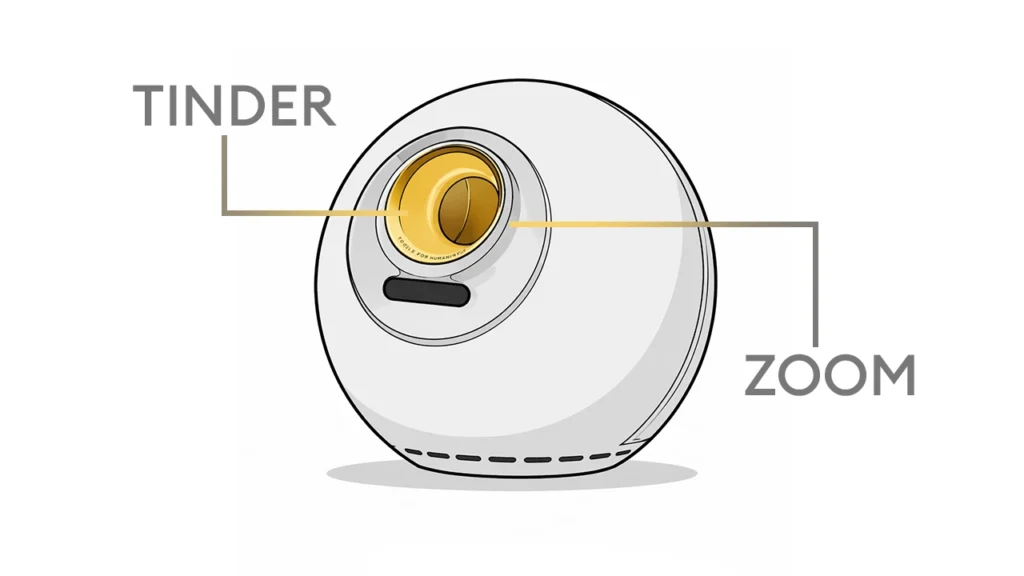


Catenaa, Tuesday, April 21, 2026- World unveiled what it called its biggest upgrade yet to its World ID protocol, adding new integrations with platforms including Tinder, Zoom, Reddit, Razer and Mythical Games as it pushes further into proof-of-human verification.
The upgrade includes a new standalone World ID app, stronger security features, support for enterprise use cases and a commercial fee model for applications using the system. The company said the new protocol is designed to verify not just that a device or credential is valid, but that the same real human is present across repeated online interactions.
Added Security Features
World said the upgraded World ID protocol now includes multi-key support, key rotation, recovery mechanisms and formal session management.
Those additions are meant to bring the system closer to enterprise-grade security standards while making it easier for users to recover accounts and manage access across multiple devices.
The company also launched a public beta version of a dedicated World ID app. The app will allow users to manage their credentials, verify themselves with outside platforms and control how their identity data is used online.
World also open-sourced its World ID software development kit, allowing developers to build their own authentication tools on top of the protocol.
Tinder and Zoom Join
One of the most visible new partnerships is with Tinder, which is rolling out a verified human badge for users who have completed orb-based identity verification.
The badge is designed to help distinguish real people from fake accounts, bots and impersonators on dating profiles.
Zoom is also integrating a feature called Deep Face protection. The system uses hardware-backed trust mechanisms to confirm that meeting participants are real humans rather than AI-generated deepfakes.
That could become increasingly important as video manipulation tools become more realistic and easier to use.
Meanwhile, Reddit is exploring the technology for accounts suspected of being automated, while Razer and Mythical Games are using World ID to verify players inside gaming ecosystems.
Focus on “Human Continuity”
World is describing the upgrade around a concept it calls “human continuity.”
Instead of simply checking a password or device, the system is designed to confirm that the same unique person remains behind an account or interaction over time.
That approach reflects a growing challenge for online platforms. Traditional security tools can prove that someone knows a password or controls a phone, but they do not necessarily prove that the user is a real person.
As AI tools improve, companies are increasingly worried about automated accounts, deepfake video calls, fake dating profiles and bot-driven spam.
World is trying to make proof of human identity a core internet function rather than a niche feature.
New Business Model
The company also introduced a fee system tied to World ID usage.
Users will continue to access the service for free, but applications using World ID credentials may be charged both a credential fee and a protocol fee.
World said the system will likely use a monthly active user model, allowing apps to compare the cost directly against the value generated by proof-of-human verification.
The fees can be paid through prefunded wallets. Web3 applications can settle directly onchain, while traditional web companies can use outside payment providers that convert fiat currency into wallet balances.
Part of the fees may also be used for network operations or token burns under mechanisms set by the World Foundation.
Beyond Crypto
Although World first gained attention in crypto circles, the latest update shows the company is targeting a much broader market.
The company said World ID can be used across 13 industries, including social media, gaming, banking, government services, travel and e-commerce.
In the enterprise market, World said the protocol could help verify that the correct person is signing documents, approving transactions or sending sensitive emails.
That could make the technology useful not only for consumer apps but also for large businesses worried about identity fraud and AI impersonation.
The launch comes as more technology companies look for ways to separate humans from bots online.
AI-generated images, fake voices and automated accounts are becoming more convincing, making it harder for platforms to determine whether users are real.
World is betting that proof-of-human verification will become a standard internet service as digital interactions become more automated.
The company’s strategy is to position World ID as a reusable identity layer that works across multiple platforms, rather than as a single-purpose verification tool. If successful, that would give World a larger role in how people prove who they are online.




