

June 15, 2026 – A protocol-level fee cut turned Sui into a fast-growing settlement layer. The data shows why “free” moves matter for payments.
In Summary
Sui settled nearly $65 billion in stablecoins in five days. Therefore, momentum is clearly building.
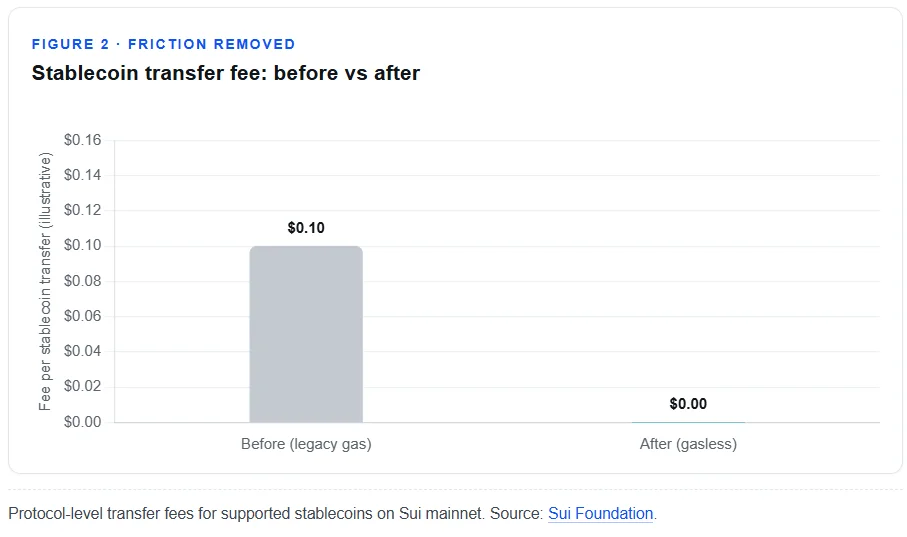
Mysten Labs removed gas fees on seven stablecoins. As a result, users no longer hold a separate token.
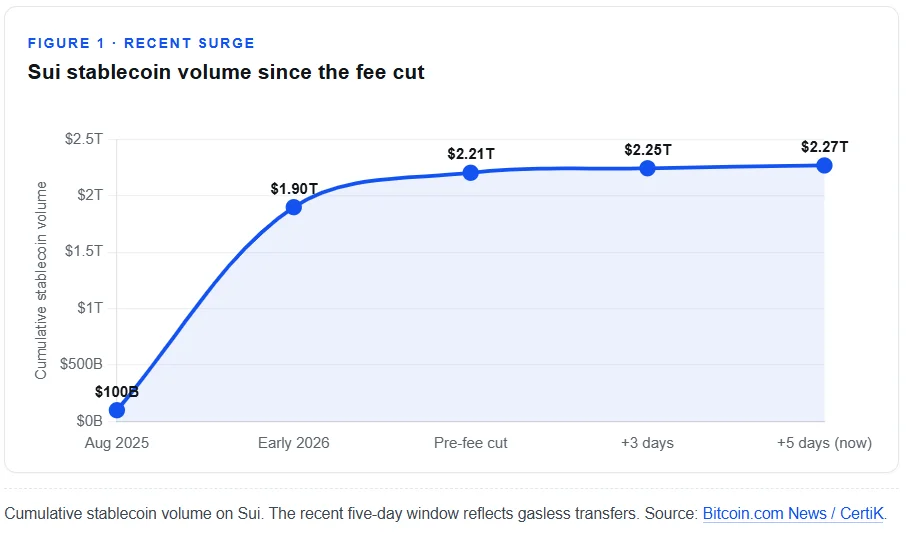
Sui has now cleared $2.27 trillion in cumulative stablecoin volume since early 2024.
Mysten Labs wants Sui to rival SWIFT. Moreover, private transfers are already in testing.
Sui just posted a number that demands attention. The blockchain settled nearly $65 billion in stablecoin volume in just five days. Furthermore, it did so without charging users a single cent in gas.
The surge followed a deliberate design change. In May, Mysten Labs made stablecoin transfers gasless at the protocol level. Consequently, traders flocked to the network to move dollars for free.
Blockchain security firm CertiK confirmed the figure. According to its data, Sui cleared the volume in the period starting June 10. Moreover, the network has now processed more than $2.27 trillion in stablecoin volume since early 2024.
Why Removing Gas Fees Changes the Math
Gas fees seem tiny on paper. However, they create real friction for businesses. Every transfer forces a firm to hold a second asset just to move the first.
Adeniyi Abiodun, co-founder and chief product officer at Mysten Labs, framed the problem bluntly. He argued that small fees still impose high hidden costs.
“Even at 1/1000th of a cent, gas forces you to hold reserves, build payment logic, monitor balances, and account for a second asset.”
-Adeniyi Abiodun, Co-Founder and CPO, Mysten Labs
That overhead adds up quickly. Indeed, it means infrastructure, headcount, and audit scope for any service provider. Therefore, removing it lowers the barrier to adoption.
The gasless feature is not universal, though. It applies to seven named stablecoins, including USDC, AUSD, and FDUSD. In addition, it covers direct token-to-token transfers on Sui’s mainnet. Fireblocks, which secures more than $14 trillion in digital asset transactions, integrated the feature before launch.
Sui’s Bet Lands in a Booming Market
Sui is chasing a fast-expanding prize. The total stablecoin market supply topped $320 billion in April 2026. Meanwhile, USDT and USDC together control more than 90% of that supply.
The scale of usage is even larger. Stablecoins processed an estimated $46 trillion in transaction volume during 2025. For comparison, that figure approaches three times Visa’s volume.
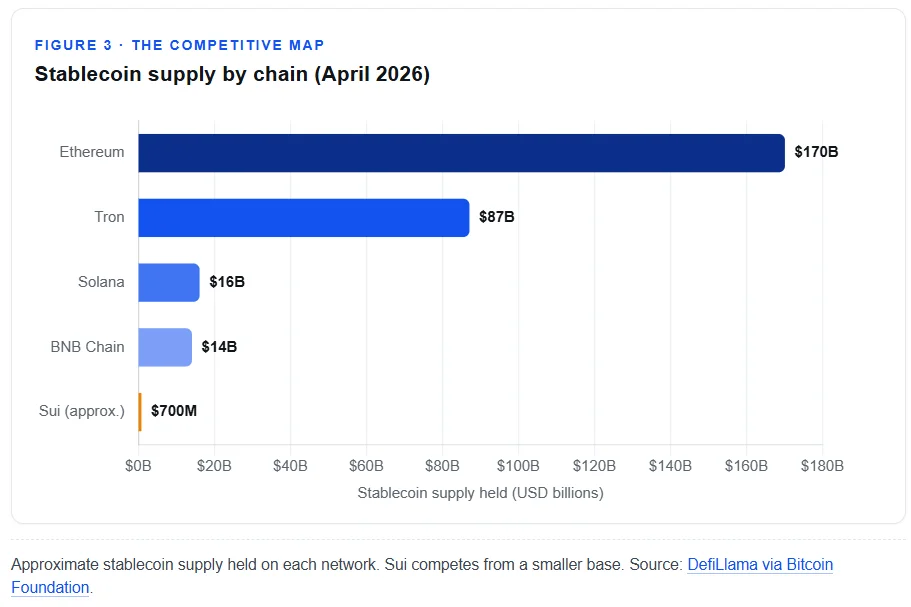
Most of that liquidity still sits elsewhere, however. Ethereum holds roughly $170 billion in stablecoins, while Tron follows with about $87 billion. Against that backdrop, Sui remains a smaller but rising challenger.
The Endgame: Replacing Traditional Rails
Mysten Labs is not hiding its ambition. Abiodun has said Sui aims to replace SWIFT and legacy settlement rails. Notably, he points to high scalability and privacy as the key advantages.
Privacy is the next milestone. Sui is now testing private transactions in its devnet. Importantly, the proposal keeps balances confidential while still allowing controlled visibility for compliance.
The regulatory timing also helps. The GENIUS Act now requires issuers to back tokens 1:1 with liquid assets, with rules set to take effect in July 2026. As a result, audited dollar tokens are becoming mainstream financial instruments.
Risks remain, of course. The volume figure covers a short window, so it may not hold steady. Additionally, USDC liquidity on Sui remains well below that of larger rivals. Nevertheless, the early data suggests a real shift toward fee-free settlement.
For now, Sui has made its case with numbers. The next test is whether businesses, not just traders, adopt these rails at scale.