

May 02, 2026 – Orbital slots are running out. Five projects are using blockchain to fix broken governance, before the skies become unmanageable.

In Summary
First, orbital crowding has grown 76% since 2019. As a result, current ITU rules cannot keep up with the rate of satellite launches.
In addition, Space-Fi projects use blockchain to bring open records and smart contract rules to orbital slot management.
Furthermore, Orbit AI, SpaceChain, and Cryptosat are moving compute and checks into orbit, so they no longer rely on ground systems.
Meanwhile, Spacecoin’s DePIN model turns satellite access into a token-based, open market that can serve remote areas.
Finally, Blockstream Satellite shows that shared GEO orbital slots can deliver open, global financial access to anyone with a dish.
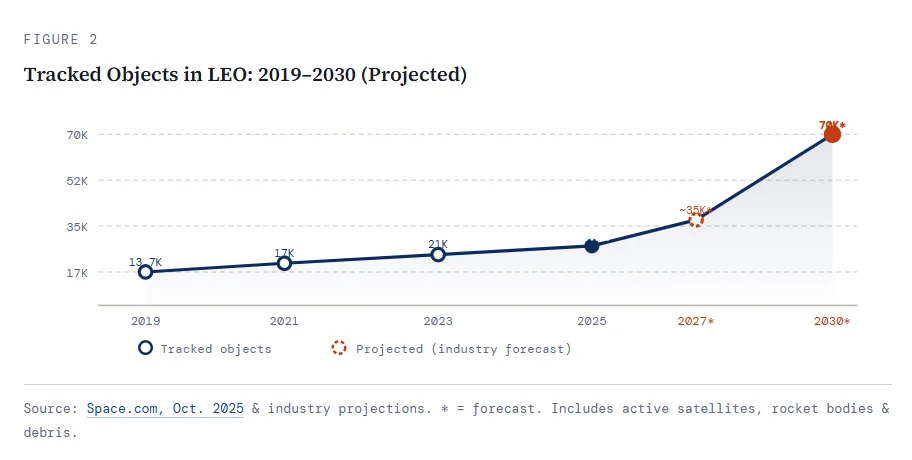
Earth’s orbit is becoming the world’s most fought-over resource. The number of tracked objects in Low Earth Orbit reached 24,185 in 2025, a 76% rise from 13,700 in 2019. Moreover, industry forecasts put the number at 70,000 satellites in LEO by 2030.
However, this growth far outpaces governance. The International Telecommunication Union (ITU) still manages orbital slots through old processes. As a result, filing delays, spectrum fights, and unclear coordination are now serious, ongoing problems.
Enter Space-Fi. In short, it is a new group of blockchain projects applying decentralised tools to the orbital layer. For example, smart contracts, token rewards, and on-chain data help satellites coordinate better. In other words, the goal is to make orbital access open, automated, and market-driven.
The Crisis Blockchain Must Fix
Orbital crowding is no longer just a theory. For instance, spectrum fights in busy orbital zones cut service quality by up to 15%. In fact, over 50% of LEO communication systems report frequency conflicts.
At its root, the problem is a failure to coordinate. Dozens of operators compete for nearby orbital bands. Moreover, no shared, live registry exists today. For example, SpaceX’s Starlink alone made 145,000 collision-avoidance moves in just six months to July 2025.
Blockchain’s key traits, fixed records, open data, and rules that run on their own map well onto these gaps. For instance, smart contracts can set slot-access rules in code. In addition, on-chain records can track satellite positions. As a result, token markets can set orbital prices in real time.
“A blockchain node in space that is off terrestrial infrastructure creates an air gap for any unauthorised access.”
— Cliff Beek, CEO, SpaceChain (via Fortune)
The Five Space-Fi Projects and How They Work
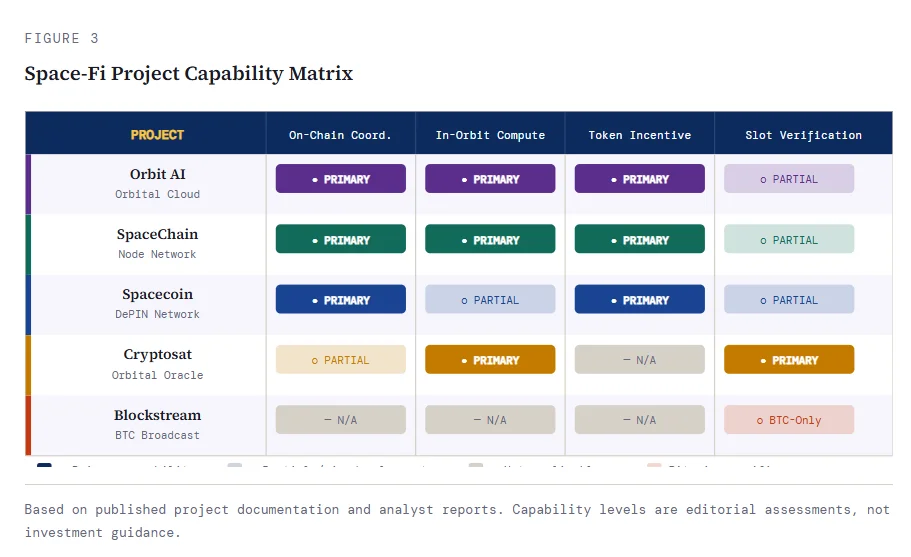
Space-Fi is less a single product and more a set of early tests in open orbital tools. Today, five projects lead the field. Notably, each one takes a different approach.
Orbit AI (The Orbital Cloud)
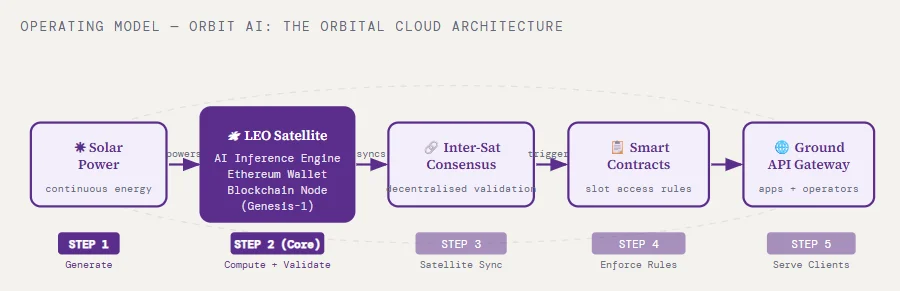
Orbit AI builds solar-powered LEO satellites that run AI compute, comms, and blockchain checks entirely in orbit. For example, its Genesis-1 satellite carries an Ethereum wallet, a blockchain node, and on-board AI. Partners include NVIDIA and the Ethereum Foundation. The roadmap targets a full satellite group by 2027–28 and full orbital control by 2030.
SpaceChain (The Space-Based Node Network)
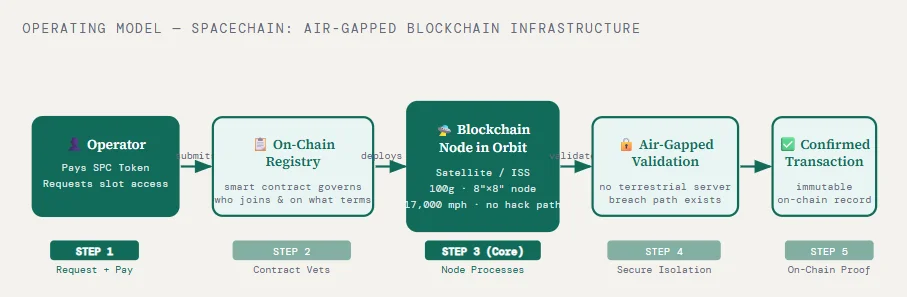
SpaceChain has deployed 7 blockchain nodes on satellites and 3 on the ISS. In fact, it was the first blockchain company to launch with NASA in 2019. Its SPC token controls access. As a result, operators can join a shared satellite group through on-chain smart contracts. Each node weighs just 100 grams and is about 8 inches wide.
Spacecoin (DePIN Satellite Internet)
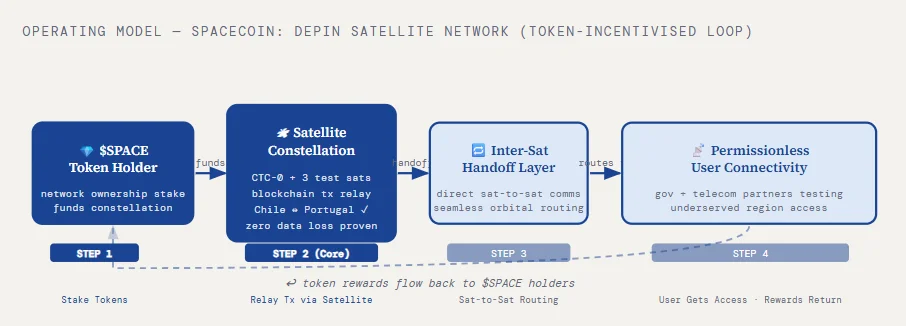
Spacecoin uses a decentralised, shared network model (DePIN). In this model, its $SPACE token gives holders a stake in the network. Moreover, the project has already sent a verified blockchain transaction via satellite between Chile and Portugal, with zero data loss. Three more test satellites are now checking inter-satellite links and direct sat-to-sat comms.
Cryptosat (Orbital Cryptographic Oracle)
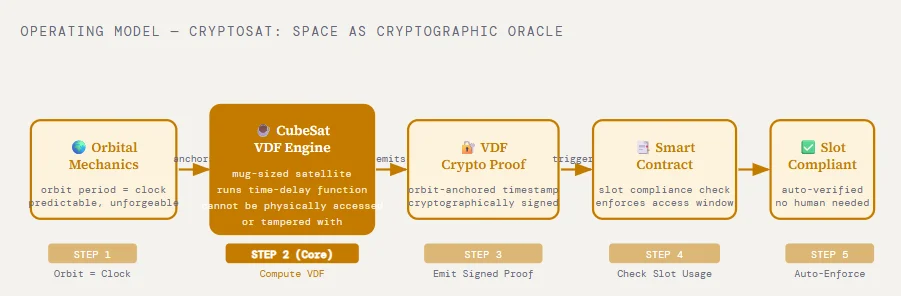
Cryptosat launches coffee-mug-sized CubeSats that run verifiable delay functions (VDFs) tied to real orbital motion. In other words, the satellites act as trusted clocks in space. As a result, compliance windows for orbital slot use can be checked by code against real orbit data, without a human being needed. The project was founded by two Stanford PhD researchers.
Blockstream Satellite (Global Bitcoin Broadcasting Network)
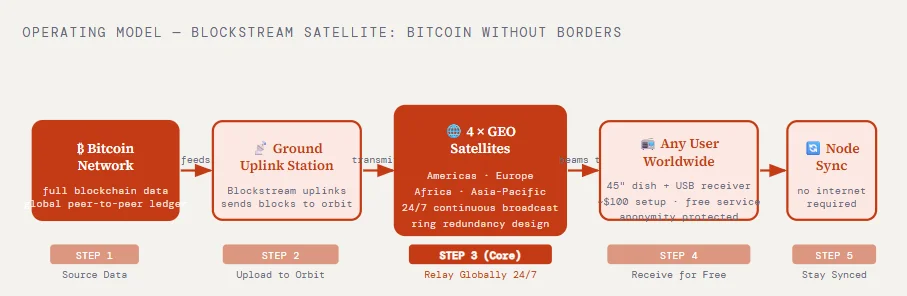
This is the original orbital blockchain use case. Blockstream leases space on four geostationary satellites to send the full Bitcoin blockchain to every major region, 24 hours a day, 7 days a week. To use it, people need only a small dish and a USB receiver, which costs about $100. The service is free to receive. Furthermore, it was the world’s first public blockchain satellite service, launched back in 2017.
Why This Matters Beyond Crypto
Space-Fi is not just a crypto story. Above all, it is a story about key shared resources. As governments and regulators struggle to update the ITU’s outdated rules, blockchain tools offer a real, working extra layer.
Today, over 42% of satellite firms already face delays getting licenses. In addition, orbital bands between 400–600 km now see more than 10 collision-avoidance moves per satellite each month. Simply put, hand-driven talks do not scale at that speed.
On-chain slot records could change that. For instance, positions could be checked by Cryptosat’s VDFs. Access rules, in turn, could be run by SpaceChain’s smart contracts. Meanwhile, orbital capacity could be traded via Spacecoin’s open network. Together, each layer adds a clear, self-running check where today only slow, manual talks exist.
However, the risks are real. Regulator buy-in remains unclear. Moreover, the delay between in-orbit nodes and ground systems adds technical problems. And hardware in space is very hard to update or fix.
Even so, the other option, relying on a system built in 1965 to run 2030’s orbital skies, carries far larger long-term risks.
Bottom Line
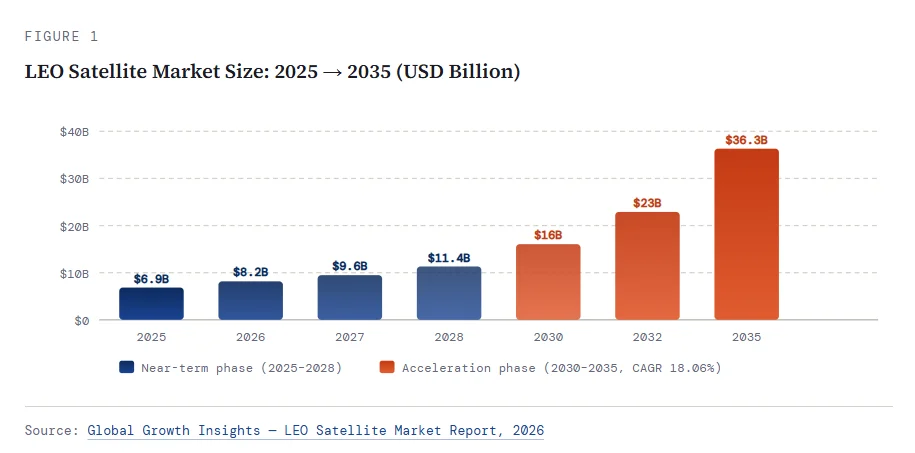
Orbital space is a limited shared resource. It is being used up faster than rules can keep pace. Space-Fi projects are early, flawed, and still largely untested at scale. Yet they are the clearest effort so far to bring modern tools to a modern problem. Given that the LEO market is set to grow from $6.9 billion in 2025 to $36.3 billion by 2035, the window to get governance right is closing fast.