

May 27, 2026 – Honeywell’s quantum unit sets Nasdaq pricing. It targets the sector’s largest-ever traditional public listing. The numbers reveal a high-stakes bet on a pre-commercial technology.

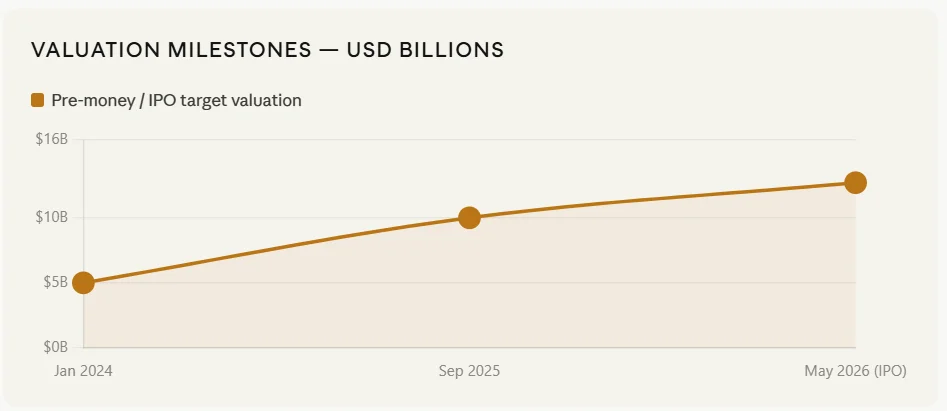
Quantinuum filed its updated IPO prospectus on May 26, 2026. The Honeywell-backed company is targeting a fully diluted valuation of $12.7 billion. It plans to sell 21.05 million shares on Nasdaq under the ticker “QNT.” The share price ranges from $45 to $50. Total proceeds could reach $1.05 billion.
J.P. Morgan and Morgan Stanley lead the offering as joint book-running managers. Jefferies and Evercore ISI serve as active co-managers. Honeywell first announced the S-1 registration with the SEC on May 8, 2026. This listing marks quantum computing’s first major traditional Nasdaq IPO.
From Private Rounds to Public Markets
Quantinuum was formed in late 2021 via a merger. It combined Honeywell Quantum Solutions with Cambridge Quantum Computing. Hardware expertise joined quantum software capabilities under one roof. In September 2025, Quantinuum raised $600 million at a $10 billion pre-money valuation. Backers included Nvidia’s NVentures, Quanta Computer, QED Investors, and existing shareholders JPMorgan Chase and Mitsui. The IPO now prices the company 27% above that private round.
Revenue Growth Masks Deepening Losses
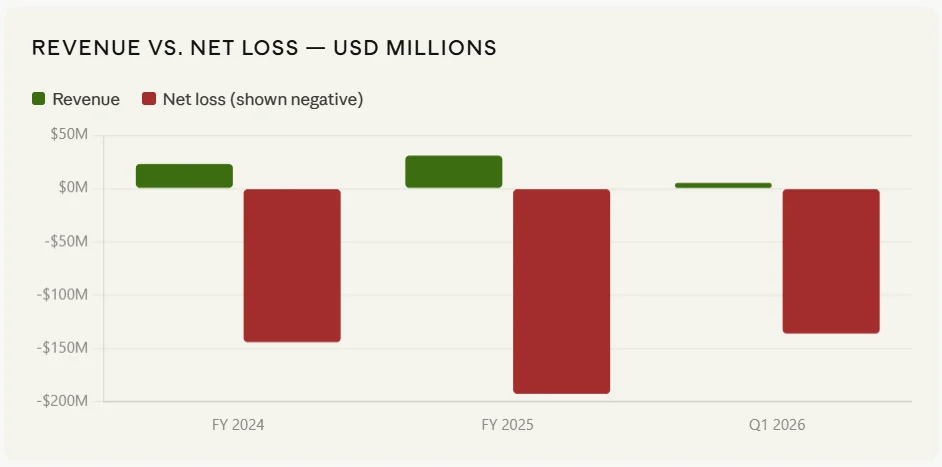
Quantinuum reported $30.9 million in full-year 2025 revenue, a 35% year-over-year increase. Yet net losses widened sharply to $192.6 million. That compares to a $144.1 million loss in 2024. Heavy investment in R&D, engineering, and sales widened the gap.
Q1 2026 data adds a layer of complexity. Revenue fell to $5.2 million, a 73% decline versus Q1 2025. The Q1 2026 net loss totaled $136 million. Revenue in quantum computing is inherently lumpy. A single large contract can dominate any reporting period.
The implied price-to-sales multiple at $12.7 billion is roughly 410 times trailing revenue. That ranks among the highest multiples of any 2026 IPO candidate. Customer concentration adds risk. RIKEN, a Japanese research institute, generated 90% of 2025 revenue. Quantinuum currently operates four commercial quantum systems worldwide. A fifth system is expected in Singapore by late 2026.
“Revenue contracts in quantum computing can be large and singular. One agreement can swing quarterly results dramatically.”
Bookings Signal a Growing Pipeline
Quantinuum reported $79.3 million in 2025 bookings. Bookings represent signed contracts that have not yet been recognized as revenue. That figure is 2.5 times the actual 2025 revenue. Key clients include Airbus, BMW Group, JPMorgan Chase, Mitsui, and Amgen. These remain R&D-stage engagements, not production-scale deployments.
Government Backing Strengthens the IPO Case
The Trump administration pledged $2 billion across nine quantum companies. Quantinuum received a $100 million government grant as part of that package. The commitment signals bipartisan recognition of quantum as critical infrastructure. It also validated the timing of the IPO amid broader market uncertainty.
Post-IPO Ownership: Founders Retain Control
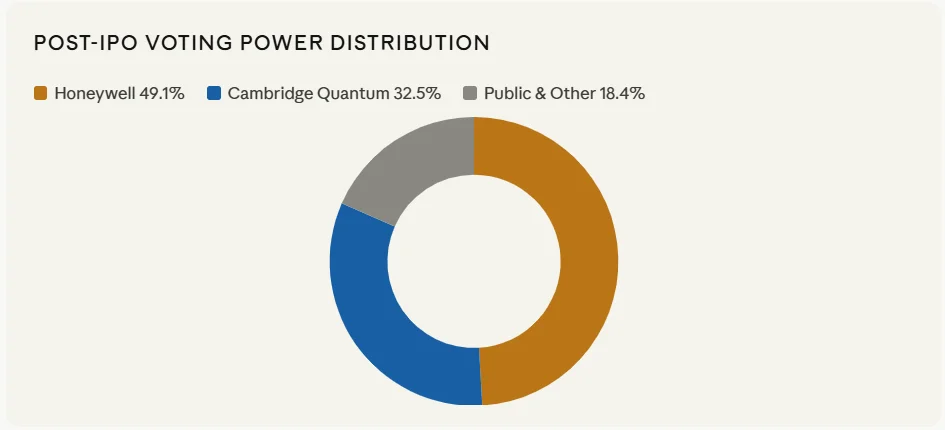
Honeywell will retain 49.1% of the combined voting power after listing. Cambridge Quantum Holdings will hold approximately 32.5%. Founder Ilyas Khan holds a personal stake valued at above $2 billion at the offering price. The two founding entities control roughly 82% of equity. Honeywell is also expected to remain a key customer post-IPO.
The Bottom Line
Quantinuum’s IPO is a landmark event for the quantum computing sector. Revenue is growing but remains modest at $30.9 million annually. Losses are widening faster than revenue gains. Valuation multiples sit at roughly 410 times trailing sales. Government support adds strategic credibility to the offering. The central question is timing. Quantum advantage, decisively outperforming classical computers, has no confirmed arrival date. For patient, risk-tolerant investors, this IPO may define a generational technology sector. For others, the risk-to-reward profile demands careful scrutiny. Watch the Nasdaq debut closely. It will set the pricing benchmark for the public-market era of quantum computing.




