

Catenaa, Saturday, June 27, 2026- Nokia is significantly expanding its semiconductor operations in Pennsylvania, betting that surging demand for artificial intelligence infrastructure will drive long-term growth in networking technologies and advanced chip manufacturing.
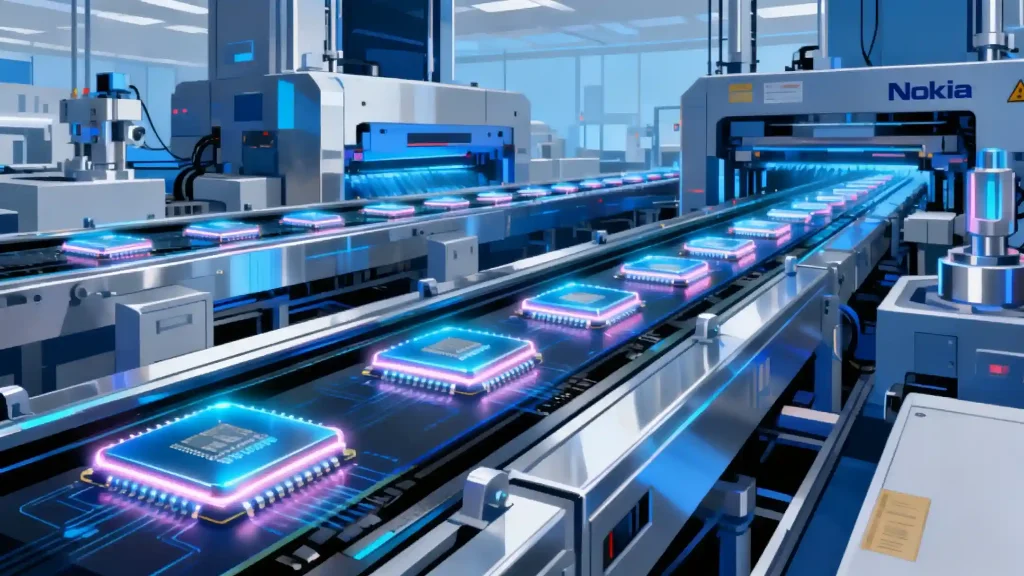
The company announced plans to increase capacity tenfold at its semiconductor testing and packaging facility in Allentown, Pennsylvania, through a $30 million investment that includes facility expansion and new manufacturing equipment.
The additional production capacity is expected to become available during the third quarter of this year.
The move reflects growing demand for advanced networking hardware used in artificial intelligence data centers, cloud computing facilities and next-generation communications infrastructure.
Nokia said the project will also double its workforce at the site to more than 500 employees, creating new positions in manufacturing, engineering and research and development.
The company estimates the investment could contribute approximately $500 million to the regional economy over the next five years.
Semiconductor packaging and testing have become increasingly important segments of the global chip industry.
While chip fabrication often receives the most attention, advanced packaging technologies play a critical role in connecting, protecting and optimizing semiconductor components used in high-performance computing systems.
The process improves thermal management, increases efficiency and enables faster communication between processors and other hardware components.
As artificial intelligence workloads become more demanding, advanced packaging capabilities are becoming a strategic priority for technology companies and governments alike.
The Pennsylvania facility specializes in these final stages of semiconductor production, ensuring chips meet performance and reliability requirements before deployment.
The investment aligns with broader efforts to strengthen domestic semiconductor supply chains within the United States.
Federal and state authorities have increased support for chip manufacturing through incentives designed to reduce reliance on overseas production and improve technology resilience.
Funding for the expansion includes support from Pennsylvania state programs and federal tax incentives linked to semiconductor investment initiatives.
Nokia’s contribution forms part of a larger multibillion-dollar commitment to research, development and manufacturing activities across the United States.
The company has increasingly positioned itself to benefit from the rapid expansion of artificial intelligence infrastructure.
Network operators, cloud providers and technology firms are investing heavily in data centers capable of supporting large language models, generative AI systems and advanced cloud services.
These facilities require substantial networking capacity to move vast amounts of data between processors, storage systems and computing clusters.
Nokia believes this trend will generate sustained demand for optical networking technologies and data center connectivity solutions.
The strategy is already producing results.
The company recently reported strong growth in sales to AI and cloud-related customers, helping drive revenue gains within its network infrastructure business.
The United States has become central to those ambitions.
Beyond its Pennsylvania operations, Nokia maintains research facilities, engineering centers and technology laboratories across multiple states.
The company also collaborates with major semiconductor manufacturers, cloud providers and technology firms that are investing aggressively in artificial intelligence infrastructure.
Industry observers increasingly view networking hardware as one of the key beneficiaries of the AI investment cycle.
As data centers expand, demand for high-speed optical connectivity, advanced switching systems and specialized networking technologies is expected to grow alongside computing capacity.
However, some analysts caution that long-term forecasts remain dependent on continued investment by artificial intelligence developers and cloud providers.
Questions persist regarding the future profitability of certain AI business models and whether current infrastructure spending levels can be sustained indefinitely.
Artificial intelligence has emerged as one of the strongest growth drivers in the technology sector, prompting significant investments in semiconductors, data centers, networking infrastructure and cloud computing platforms.
Nokia’s expansion highlights how the AI boom is influencing industries beyond software and chip design. Demand for networking equipment and advanced semiconductor packaging is becoming increasingly important to the broader AI ecosystem.
Industry analysts note that advanced packaging and testing have become strategic capabilities as AI processors grow more powerful and complex. Capacity constraints in these areas could influence future AI infrastructure deployment.
Nokia’s investment demonstrates growing confidence that artificial intelligence will continue reshaping technology infrastructure over the coming years. The expansion also reflects broader efforts to strengthen domestic semiconductor capabilities and support next-generation digital infrastructure.
Semiconductor production involves multiple stages extending beyond chip fabrication. Packaging and testing are essential processes that prepare chips for deployment by improving reliability, performance and connectivity. As artificial intelligence applications have expanded, demand for advanced semiconductors and supporting infrastructure has increased dramatically. Governments worldwide have responded by encouraging investment in domestic semiconductor ecosystems through subsidies, tax incentives and industrial policy initiatives. At the same time, telecommunications and networking companies have sought to position themselves within the AI value chain by supplying the connectivity and infrastructure required to support large-scale computing environments. Nokia’s Pennsylvania expansion reflects the convergence of these trends and the growing strategic importance of semiconductor-related manufacturing within the United States.




