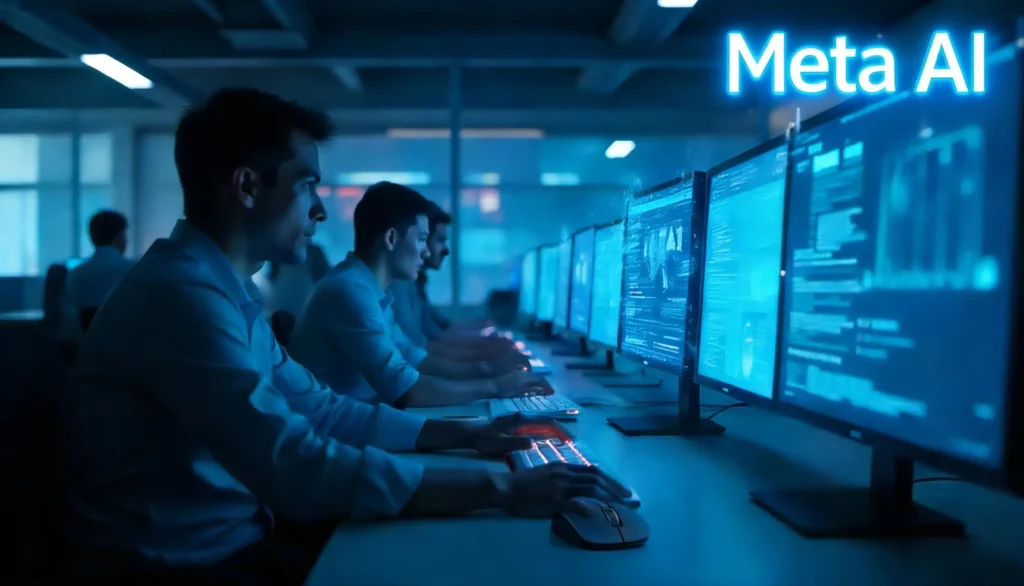


Catenaa, April 22, 2026 -Meta is introducing software that tracks employee mouse movements, clicks and keystrokes as part of a wider effort to train artificial intelligence systems, according to a report filed by Reuters.
The internal tool, known as the Model Capability Initiative, will run across work-related applications and websites used by US-based employees. It will also take occasional screen snapshots to help Meta improve AI systems that interact with computers.
According to internal company memos, the goal is to teach AI models how people complete common digital tasks. Those tasks include using dropdown menus, navigating apps and relying on keyboard shortcuts.
Meta said the collected information will not be used for performance reviews or disciplinary action. The company said safeguards are in place to block sensitive content from being gathered.
The move comes as Meta increases its push to automate more workplace functions through AI tools and software agents.
Meta has been restructuring its workforce around AI over the past year.
The company recently renamed its internal AI workplace program as the Agent Transformation Accelerator. Meta Chief Technology Officer Andrew Bosworth told staff the long-term goal is for AI agents to handle more day-to-day work tasks.
Bosworth said employees will increasingly supervise, review and improve the work completed by AI systems rather than perform every task themselves.
Meta has already urged staff to use AI for coding, research and internal operations. It has also started combining some job roles under a broader category called “AI builder.”
Last month, the company created a new Applied AI engineering team focused on improving coding tools and building more advanced AI agents.
Meta is also planning to reduce its workforce. The company expects to cut about 10% of its global staff beginning in May.
Implications
The company’s new monitoring program reflects a wider shift across the technology sector.
Large firms are racing to gather more data that can improve AI systems. Companies believe AI can reduce costs, speed up software development and replace some routine office tasks.
However, workplace monitoring raises privacy concerns.
Experts said tracking keystrokes and screen activity creates a much higher level of employee surveillance than many office workers are used to.
In the past, similar software was mainly used to detect misconduct or monitor remote workers. Meta’s approach goes further by turning everyday employee behavior into training material for AI models.
Critics argue that constant monitoring may make employees feel pressured, reduce trust and increase stress in the workplace.
Expert Views
Labor law specialists said US rules give employers broad freedom to monitor workers.
Ifeoma Ajunwa, a law professor at Yale University, said there are few federal limits on employee surveillance. In most cases, companies only need to notify workers that monitoring is taking place.
Valerio De Stefano, a professor at York University in Toronto, said similar monitoring practices would face much tougher legal barriers in Europe.
Countries such as Italy ban electronic monitoring for productivity tracking. German courts only allow keystroke logging in rare cases, such as suspected criminal activity.
De Stefano said Meta’s new program would likely face challenges under Europe’s General Data Protection Regulation.
Meta has become one of the most aggressive large technology companies in adopting AI. The company has invested heavily in AI infrastructure, internal automation and digital assistants. It has also reshaped teams to focus more directly on AI development.
Across the technology industry, companies including Amazon and Block have cut thousands of jobs while increasing spending on AI tools.
Many executives argue that AI can improve productivity and reduce costs. Critics warn that rapid automation could lead to fewer jobs and more intrusive forms of employee monitoring.
Meta’s new tracking system highlights how the push for AI may change the relationship between companies and workers in the coming years.