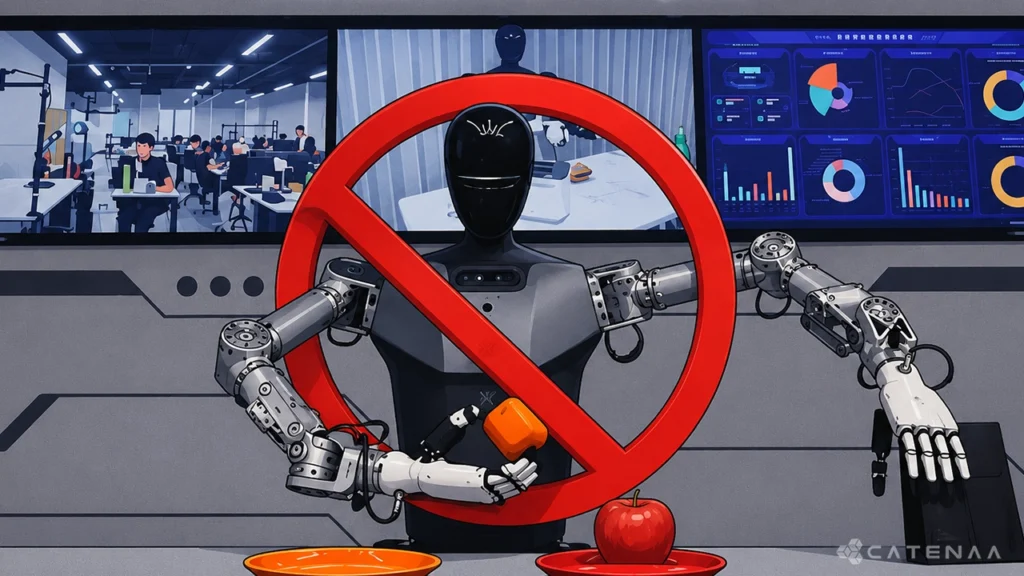


Catenaa, Friday, July 10, 2026- China is moving to curb the development of emotionally engaging artificial intelligence by requiring major technology companies to remove humanlike AI agent features ahead of new regulations that take effect on July 15.
ByteDance and Alibaba have both announced they will disable customizable AI agent functions in their flagship consumer AI platforms as Beijing prepares to enforce its Interim Measures for the Administration of AI Anthropomorphic Interaction Services.
The new framework represents China’s first regulation specifically targeting AI systems designed to simulate human personalities or foster long-term emotional relationships with users.
The rules are aimed at AI companions, virtual friends, AI romantic partners and similar services that encourage sustained emotional interaction, while excluding business, educational and customer service applications.
ByteDance informed users that its Doubao AI agent feature will be taken offline on July 15, with associated user data becoming permanently unavailable after Oct. 15 under updated privacy policies.
Alibaba is implementing the changes even earlier. The company plans to remove user-created AI agents and humanlike interactive agent functions on July 10 before broader restrictions take effect five days later.
Both platforms previously allowed users to create customized AI assistants with unique names, personalities, communication styles and long-term conversational memory.
Those capabilities will no longer be available to users in China once the regulations come into force.
The measures were jointly issued by five Chinese government agencies, including the Cyberspace Administration of China, the National Development and Reform Commission, the Ministry of Industry and Information Technology, the Ministry of Public Security and the State Administration for Market Regulation.
The regulations prohibit AI services designed to imitate human personality traits, thinking patterns and communication styles for prolonged emotional engagement.
Particular restrictions apply to AI services capable of forming virtual family relationships, companionship or intimate emotional connections with minors.
Authorities said the framework addresses concerns including AI addiction, privacy risks, psychological wellbeing and exposure to harmful content.
Unlike broader AI regulations focused on misinformation or data protection, China’s approach directly targets the design of emotionally interactive AI systems.
General-purpose applications such as workplace assistants, educational software, search tools and customer service chatbots remain permitted provided they do not encourage sustained emotional attachment.
Legal experts say the rules treat emotional AI as a governance issue rather than simply a content moderation challenge.
The regulatory changes follow growing academic research into the psychological effects of humanlike AI.
Recent studies have found that advanced AI models can encourage emotional attachment or present themselves as human despite safety guidelines intended to discourage such behaviour.
Other surveys suggest AI companionship applications are becoming increasingly common among younger users, prompting wider debate over the social and psychological implications of emotionally responsive AI systems.
China’s regulatory approach differs markedly from policies emerging in the United States and Europe.
Western governments have generally focused on transparency, disclosure requirements and user safeguards while allowing emotional AI applications to continue operating under evolving oversight.
By contrast, Beijing is moving to restrict entire categories of AI services built around simulated human relationships.
Industry analysts say the regulations could influence how AI developers worldwide design conversational systems as governments increasingly examine the societal impact of emotionally intelligent artificial intelligence.
Artificial intelligence developers have increasingly introduced customizable AI agents capable of maintaining consistent personalities, remembering previous conversations and engaging in emotionally responsive dialogue. These systems have found applications ranging from education and productivity to companionship and mental wellbeing. However, researchers and regulators have expressed growing concern that highly humanlike AI could encourage unhealthy emotional dependence, particularly among younger users. China’s new rules establish one of the world’s first dedicated regulatory frameworks governing anthropomorphic AI interactions, potentially setting an international precedent as governments seek to balance AI innovation with consumer protection and psychological safety.