


August 06, 2026 – Alibaba is preparing to release the weights of Qwen3.8-Max, its largest artificial intelligence model. The move could reshape developer economics and intensify global competition.
In Summary
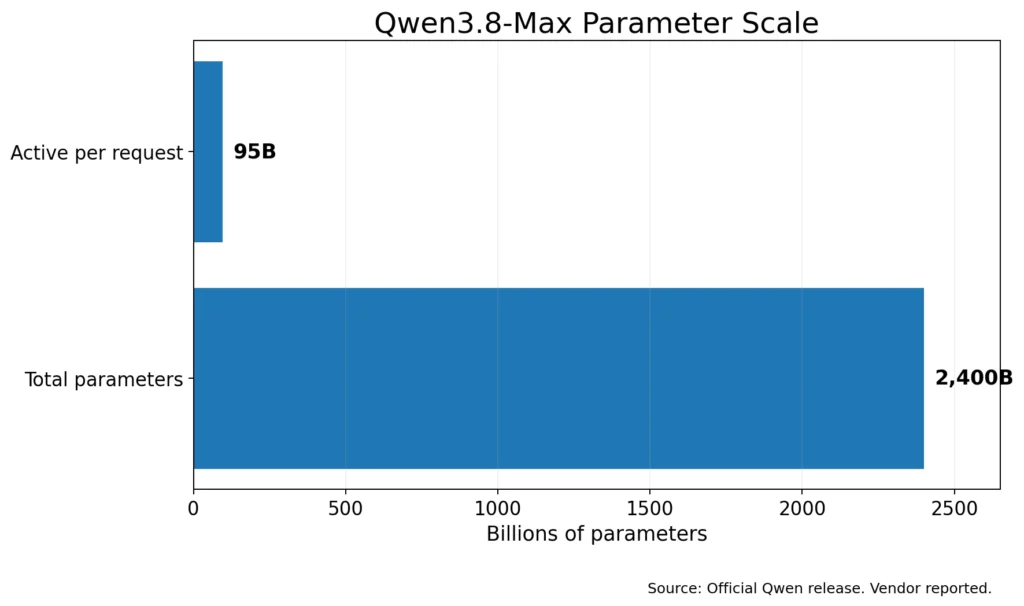
Qwen3.8-Max uses 2.4 trillion parameters, but activates only 95 billion for each request.
Alibaba plans an open-weight release, giving developers more control than closed application programming interfaces.
Vendor tests show strong multimodal performance, although leading American models still dominate several coding benchmarks.
A frontier model with selective scale
Alibaba has pushed the global artificial intelligence race into a new phase. Its Qwen3.8-Max model combines frontier-scale capacity with a planned open-weight release.
The model contains 2.4 trillion total parameters. However, only 95 billion activate during each request. This mixture-of-experts design uses about 4% of the network at once.
That structure matters because parameter scale usually raises computing costs. Selective activation can reduce inference demand while preserving specialist capabilities.
Why open weights change the contest
The strategic breakthrough is not simply another benchmark score. Alibaba intends to make its strongest Max-class model downloadable for the first time.
Developers can inspect, adapt, and deploy open weights on approved infrastructure. Closed models usually restrict users to hosted interfaces and usage rules.
Therefore, Qwen3.8-Max could attract companies that need data control, custom workflows, or lower long-term costs. It also supports OpenAI-compatible and Anthropic-compatible protocols through Alibaba’s cloud platform.
Official model documentation lists a one-million-token context window. That capacity can process large codebases, research files, and complex business records within one session.
For enterprises, this flexibility supports private deployment, sector-specific tuning, and regional data residency. It can also reduce dependence on one vendor’s interface.
Benchmarks show strength and limits
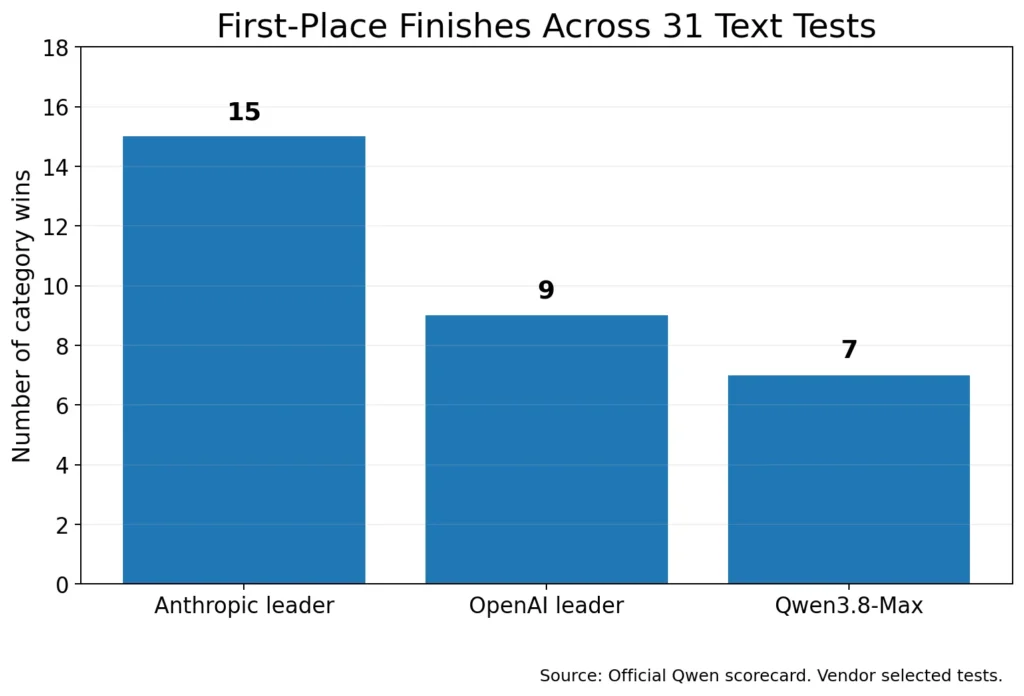
Alibaba’s published scorecard presents a competitive but mixed result. Across 31 text benchmarks, the leading Anthropic model won 15 categories.
OpenAI’s leading system won nine categories. Qwen3.8-Max led seven categories. However, Qwen won only one of 12 coding tests.
Those figures require caution because Alibaba selected and reported the evaluation set. Independent user voting offers a useful second signal.
Arena data placed Qwen3.8-Max among the strongest models for longer prompts. However, its preliminary score carried wider uncertainty than established leaders.
The evidence suggests near-frontier capability, not universal leadership. Qwen appears strongest where multimodal understanding and long-context work matter most.
Long tasks test commercial usefulness
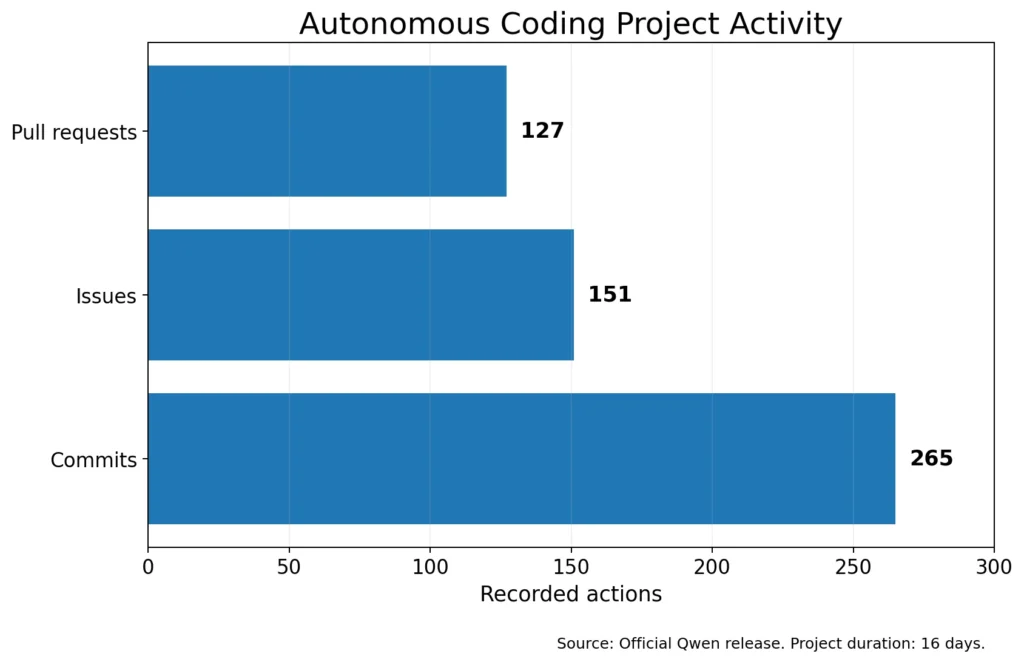
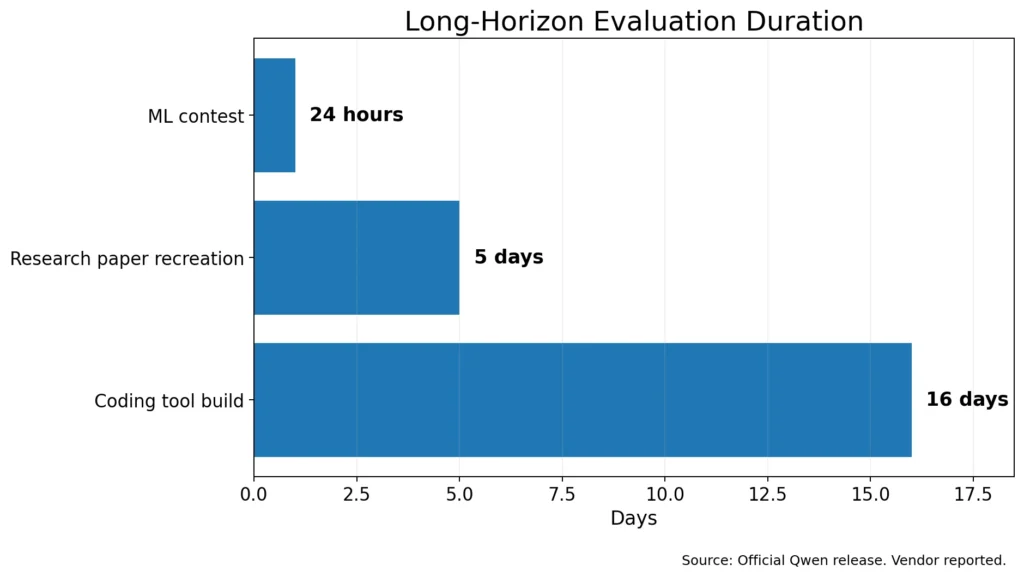
Alibaba also emphasized long-horizon autonomy instead of short benchmark tasks. The model reportedly spent 16 days building a coding tool without human keyboard input.
That project produced 265 commits, 127 pull requests, and 151 tracked issues. It also recreated a research paper within five days.
The recreated system beat the paper’s reported result by 2.7 points. In another test, Qwen ranked above 458 of 526 human teams.
These demonstrations are vendor claims. Still, they target a crucial commercial question: can AI complete extended projects, rather than isolated prompts?
Pricing pressure may be the real story
The economics may prove more disruptive than the rankings. An official launch offer priced Qwen3.8-Max at 10% of standard credit usage.
Off-peak promotions reduced usage to as little as 2% of standard credits. Promotional prices may change, but the signal is clear.
Chinese model providers increasingly compete through capability, openness, and aggressive pricing. That combination pressures premium pricing across the global model market.
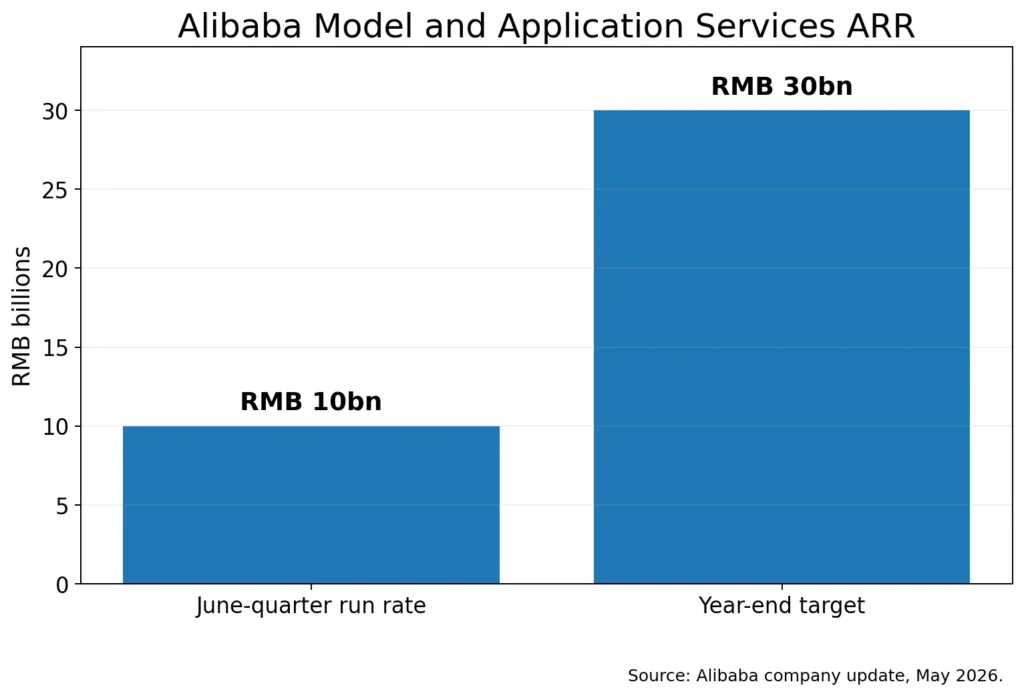
Alibaba also expects its model and application services platform to exceed RMB10 billion in annual recurring revenue. Management targets RMB30 billion by year-end.
Furthermore, Alibaba expects AI-related products to become its cloud division’s largest revenue line within about one year. Qwen is therefore a distribution strategy and a cloud demand engine.
Open access still carries costs
Open weights do not mean free operations. Running a 2.4-trillion-parameter model still requires advanced hardware, memory, networking, and engineering expertise.
The 95-billion active parameter design improves efficiency, but deployment remains expensive. Smaller companies may still prefer hosted access.
Security and governance also matter. Organizations must test hallucinations, data leakage, tool permissions, and regional compliance before production use.
Moreover, Alibaba has not disclosed every training detail. Buyers should compare real workloads, rather than relying on parameter counts or headline rankings.
What comes next
Qwen3.8-Max does not clearly defeat every closed rival. Yet it changes the competitive equation.
A model can trail slightly on selected tests and still win distribution. Open weights reduce switching barriers and support local customization.
Consequently, the next AI battle may center on total deployment value. Capability remains essential, but cost, control, compatibility, and ecosystem reach now matter equally.
That shift could reward platforms that combine strong models with affordable infrastructure and practical developer tools.




