

June 12, 2026 – Solana’s leading infrastructure firm absorbs the team behind ZK Compression to build a programmable onchain privacy layer.
In Summary
Helius acquired Solana privacy firm Light Protocol on June 10, 2026.
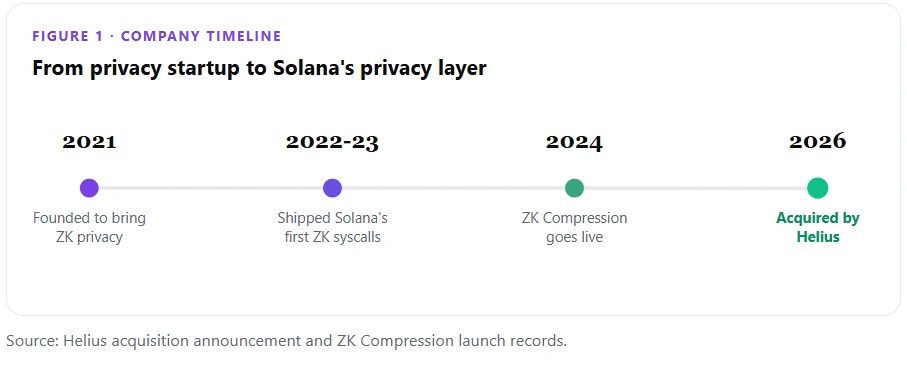
Light wrote Solana’s first zero-knowledge syscalls and built ZK Compression.
ZK Compression cuts some on-chain storage costs by up to 5,000x.
The planned layer targets private payments and private DeFi on Solana.
Helius expects to open the privacy tools to developers within months.
Helius has acquired Light Protocol, reshaping Solana’s privacy roadmap. Helius is the dominant RPC and infrastructure provider on the network. Founder Mert Mumtaz now folds Light’s cryptography team into his stack. Both sides announced the deal on June 10, 2026. As a result, Light Protocol returns to its founding mission.
This Helius is the Solana infrastructure company, not the unrelated medical-device firm with a similar name. That distinction matters for accuracy, because several outlets mixed the two up. The buyer here builds developer tools for Solana, including nodes, webhooks, and indexing.
Who Light Protocol is
Light Protocol launched in 2021 with one clear goal. The team wanted to bring zero-knowledge privacy to Solana. However, the runtime initially lacked the necessary cryptographic primitives. Therefore, the founders simply wrote them.
According to Helius, Light authored Solana’s original ZK syscalls. These included the sol_poseidon hash and the alt_bn128 pairing operations. Consequently, nearly every Solana privacy app now builds on that foundation. In other words, Light shipped the plumbing that made onchain privacy possible.
ZK Compression changed the cost math
Light later tackled Solana’s account storage problem. The team built ZK Compression, which launched in 2024. The system uses zero-knowledge proofs to shrink on-chain state. Moreover, it stores only a tiny fingerprint on-chain. The full data then sits in cheaper ledger space.
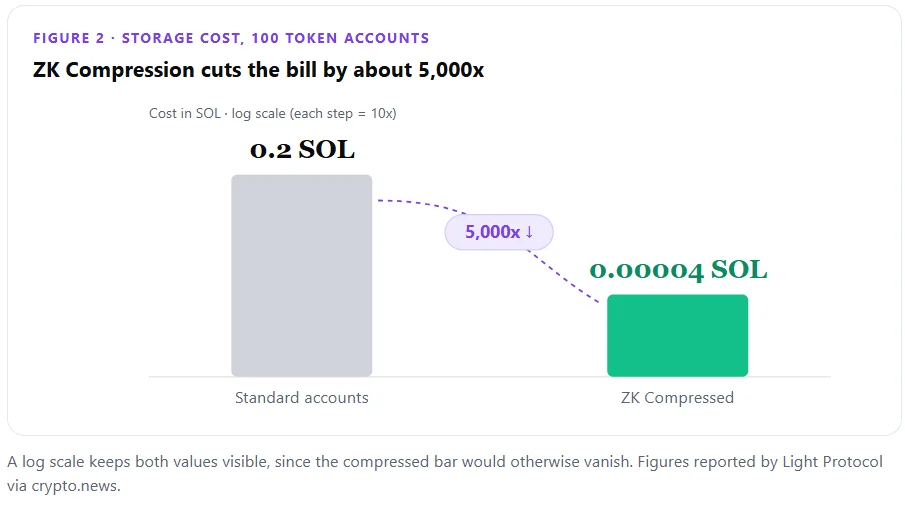
The savings look dramatic. Storing 100 token accounts once cost about 0.2 SOL. With compression, that figure drops to roughly 0.00004 SOL. crypto.news reported this 5,000x reduction. In addition, creating a small data account becomes about 160 times cheaper.
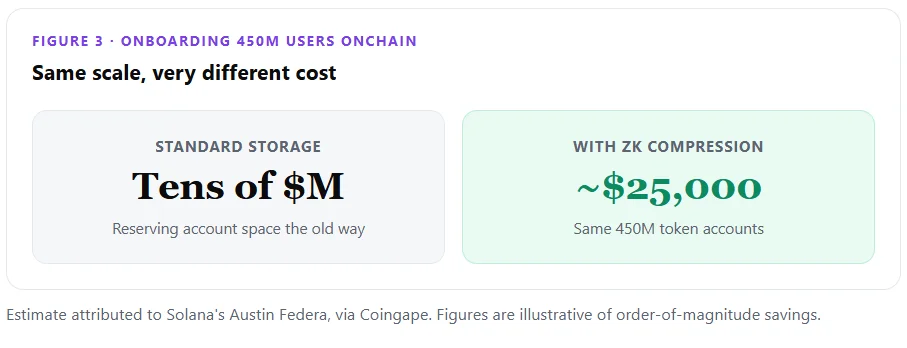
These gains are not only theoretical. Solana strategist Austin Federa offered a vivid example. Onboarding 450 million users with token accounts could cost tens of millions of dollars. With compression, Coingape reported that bill falls to roughly $25,000.
Why Helius wants privacy
Helius treats privacy as the next scaling frontier. Public blockchains expose every balance and trade by default. That openness blocks many serious institutions. Therefore, private settlement becomes a precondition for adoption.
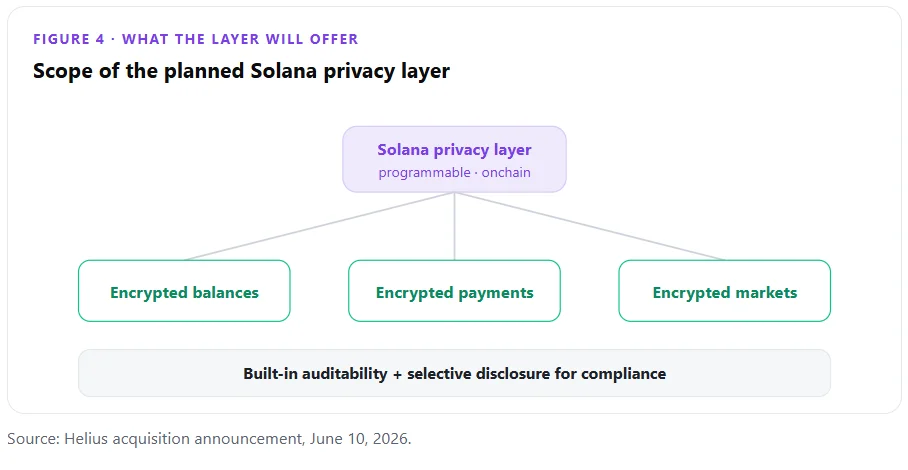
The firm plans encrypted balances, encrypted payments, and encrypted markets. In addition, the layer will support auditability and selective disclosure. CryptoBriefing notes that this design directly targets institutional adoption. By buying rather than partnering, Helius also gains full control of the roadmap.
What changes for developers
Existing ZK Compression users keep their tools. However, the maintaining team now has more engineers behind it. Meanwhile, Light Token SDK features will be sunset. Helius plans to open the privacy layer to builders in the coming months.
Jorrit Palfner, the chief executive of Light Protocol, framed the stakes plainly. He said the team can finally “finish what we started.” For him, joining Helius brings the depth and distribution to make privacy the default.
Privacy is the precondition for Solana to become the chain that traditional finance operates on.Jorrit Palfner, CEO, Light Protocol
The bigger picture
The deal lands during a wave of crypto consolidation. Venture funding has slowed sharply across the sector. Consequently, weaker projects wind down while funded firms expand through acquisition. At the same time, interest in privacy continues to rise rapidly.
The Ethereum Foundation, for instance, now backs several privacy initiatives. Helius clearly wants Solana to lead that same shift. Still, privacy carries real regulatory weight. Mixers and shielded transfers draw scrutiny worldwide.
For that reason, Helius stresses auditability and selective disclosure up front. That approach aims to reassure compliance teams and regulators. Whether watchdogs accept it remains an open question. For now, Solana is gaining serious momentum toward private, on-chain finance.




