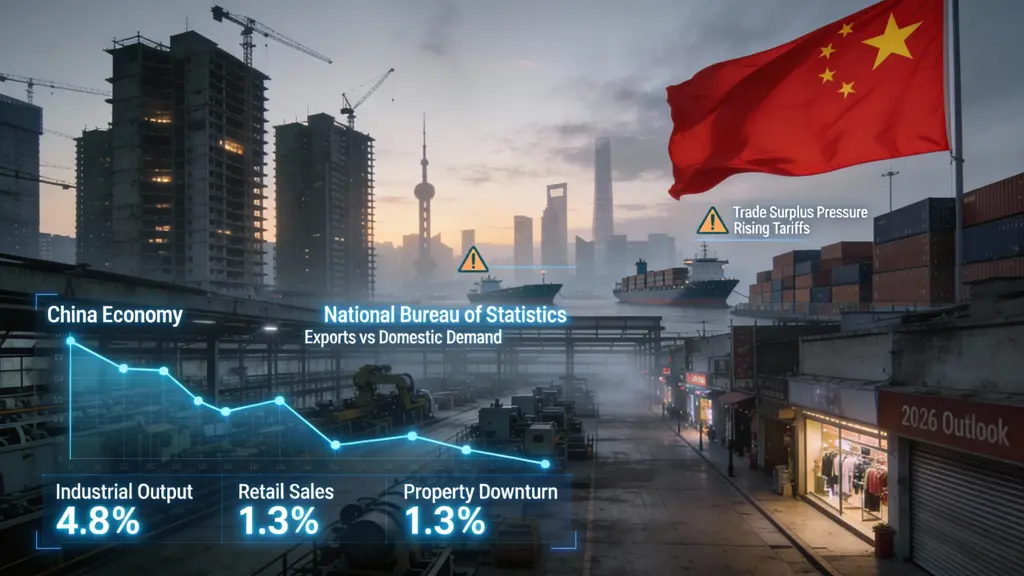


Catenaa, Sunday, December 21, 2025- China’s economy lost momentum in November, with factory output and retail sales growing at their weakest pace in more than a year, intensifying pressure on policymakers to shift away from export-led growth ahead of 2026.
Industrial output rose 4.8% year on year, the slowest pace since August 2024, according to data released Monday by the National Bureau of Statistics. The reading missed market expectations and eased from 4.9% growth in October. Retail sales increased just 1.3%, marking their weakest performance since December 2022 and signaling fragile consumer demand.
The data highlighted persistent strains from a prolonged property downturn, fading consumer trade-in subsidies and weak household confidence. Fixed asset investment fell 2.6% in the January to November period, driven largely by a sharp decline in property investment. New home prices fell again in November, while annual car sales dropped 8.5%, the steepest fall in 10 months.
Exports have remained a key support for growth, but that strategy is facing mounting obstacles. China posted a record trade surplus near $1 trillion, drawing pushback from major trading partners. Several countries have signaled plans to raise tariffs or tighten trade barriers, raising doubts over how long exports can offset weak domestic demand.
The slowdown weighed on Chinese stocks, alongside renewed concerns over the property sector as major developers worked to avoid debt defaults. The sector once accounted for about a quarter of gross domestic product.
Economists expect growth to remain under pressure in 2026, even as authorities pledge proactive fiscal policy to support consumption and investment. International institutions have urged faster structural reforms to address property risks and rebalance the economy toward household spending.