

May 10, 2026 – Enterprise AI, satellite technology, and biotech dominated the week’s 10 biggest U.S. funding rounds. Sierra’s landmark $950M raise set the pace for a blockbuster week in venture capital.
In Summary
Sierra raised $950M at a $15 billion valuation, the week’s largest deal by far
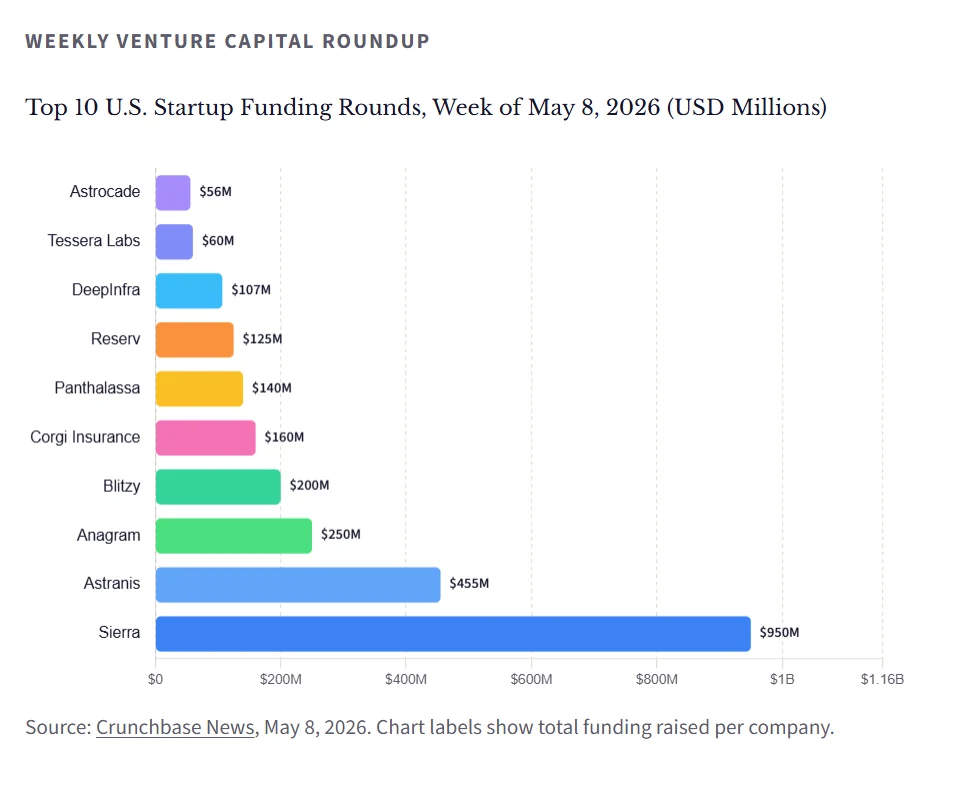
The top 10 deals combined exceeded $2.5 billion in a single week
AI companies claimed six of the 10 biggest funding rounds
Astranis secured $455M in equity and credit for advanced satellite development
Blackstone Life Sciences backed Anagram Therapeutics with $250M for a rare disease pill

Enterprise AI is reshaping how venture capital moves in 2026. This week, 10 U.S. startups raised a combined $2.5 billion. One AI company captured nearly $1 billion in a single round. The deals span customer service AI, satellite technology, biotech, and ocean energy. Each reflects a distinct investor thesis. Together, they reveal where institutional capital is flowing heading into mid-2026. All data in this article comes from the Crunchbase News weekly funding roundup published May 8, 2026.
Sierra Leads With a $950M Mega-Round
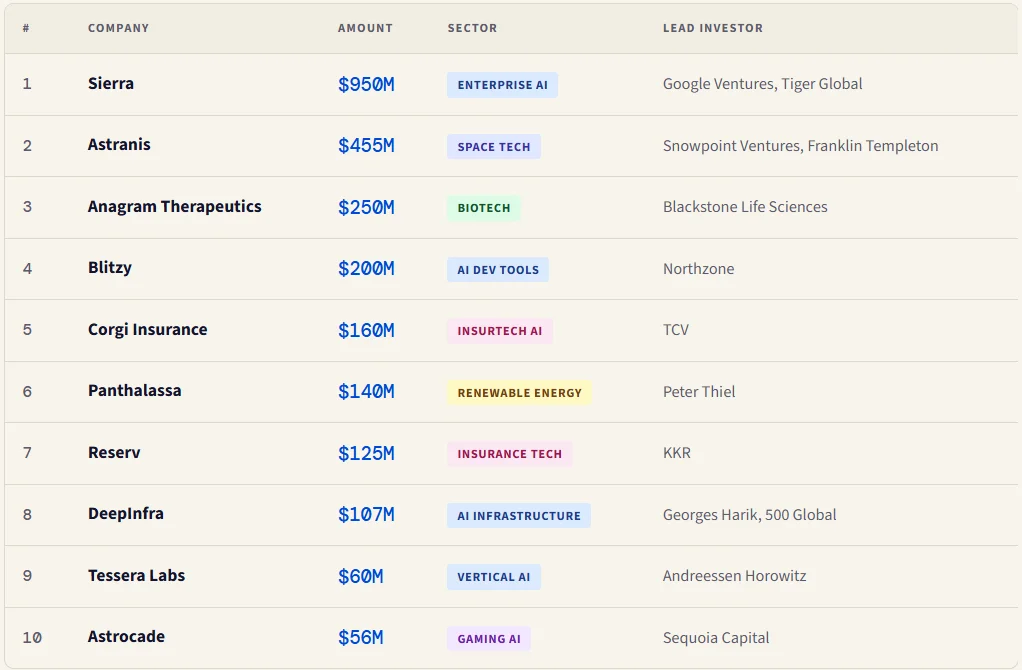
Sierra raised $950 million in new funding this week. The San Francisco-based company is just three years old. Google Ventures and Tiger Global co-led the financing. The round values Sierra at $15 billion. That figure places it among the most valuable enterprise AI startups globally. Sierra builds AI tools for customer experience management. Its platform helps brands automate and personalise customer interactions at scale.
The $950 million raise stands out for several reasons. First, it is one of the largest single AI funding rounds of 2026 to date. Second, it arrived as a single tranche from marquee institutional investors. Third, it signals strong confidence in enterprise AI as a revenue generator. Customer experience AI is a fast-growing and lucrative market. Enterprise software budgets are shifting toward AI-native solutions. Sierra’s raise confirms that investors see real commercial potential, not just hype.
Astranis Secures $455M for Satellite Development
Satellite developer Astranis raised $455 million in a mix of equity and debt. The financing included a $300 million Series E equity round. Snowpoint Ventures and Franklin Templeton led that equity portion. Trinity Capital added up to $155 million in credit financing. Astranis develops advanced satellites for high-altitude orbital slots. This orbital category is increasingly valuable for global broadband connectivity.
The deal ranks as the second-largest of the week. It reflects growing investor conviction in commercial space infrastructure. Government and private broadband demand are both accelerating the sector. Analysts widely expect the commercial space industry to grow significantly over the next decade. Astranis is positioning itself as a key infrastructure provider. The financing structure, combining equity and credit, also signals mature capital discipline.
Anagram Therapeutics Raises $250M for Rare Disease
Anagram Therapeutics closed $250 million in new funding. Blackstone Life Sciences provided the entire amount. The Natick, Massachusetts biotech is developing an oral pill for exocrine pancreatic insufficiency. This condition affects patients with cystic fibrosis, pancreatic cancer, and related digestive disorders. Existing treatment options for the condition remain limited. A successful oral therapy could serve hundreds of thousands of patients worldwide.
The Blackstone-backed round reflects growing interest in rare disease biotechnology. Private equity is increasingly active in life sciences. Blackstone Life Sciences has deployed billions in drug development since its 2018 launch. This investment fits a clear thesis: back high-value disease targets with strong scientific foundations. The Anagram deal is one of the clearest examples of conviction-driven biotech investing this week.
AI Dominates the Remaining Top Deals
Six of the week’s 10 biggest rounds went to AI-focused companies. Blitzy, a Cambridge, Massachusetts startup, raised $200 million. Northzone led the deal, valuing Blitzy at $1.4 billion. The company builds an autonomous software development platform. Corgi Insurance, a San Francisco insurtech, raised $160 million in a TCV-led Series B. Its valuation reached $1.3 billion. Corgi provides AI-native insurance products designed specifically for startups.
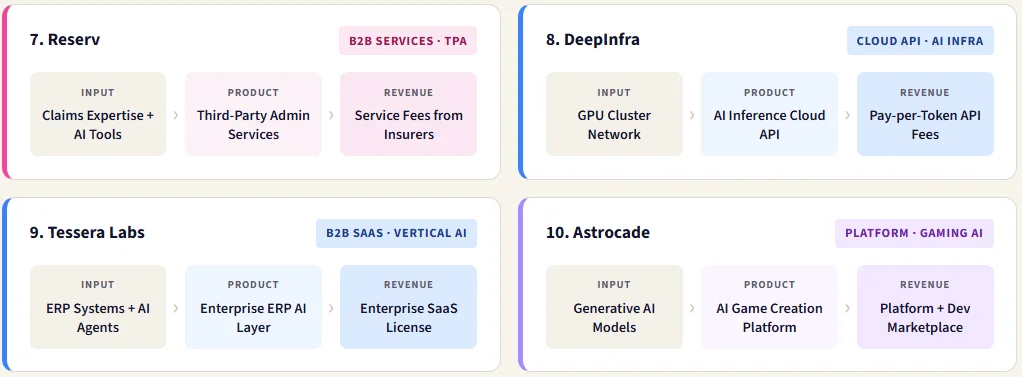
DeepInfra, a Palo Alto cloud platform, raised $107 million in Series B funding. It delivers high-throughput AI inference infrastructure to enterprise clients. Tessera Labs raised $60 million from Andreessen Horowitz. Its platform adds AI capabilities to enterprise ERP systems. Astrocade, a gaming AI startup based in Los Altos, raised $56 million led by Sequoia Capital. Each company targets a distinct market, but all are unified by AI as a core product layer. The breadth of use cases shows how pervasive AI has become across industries.
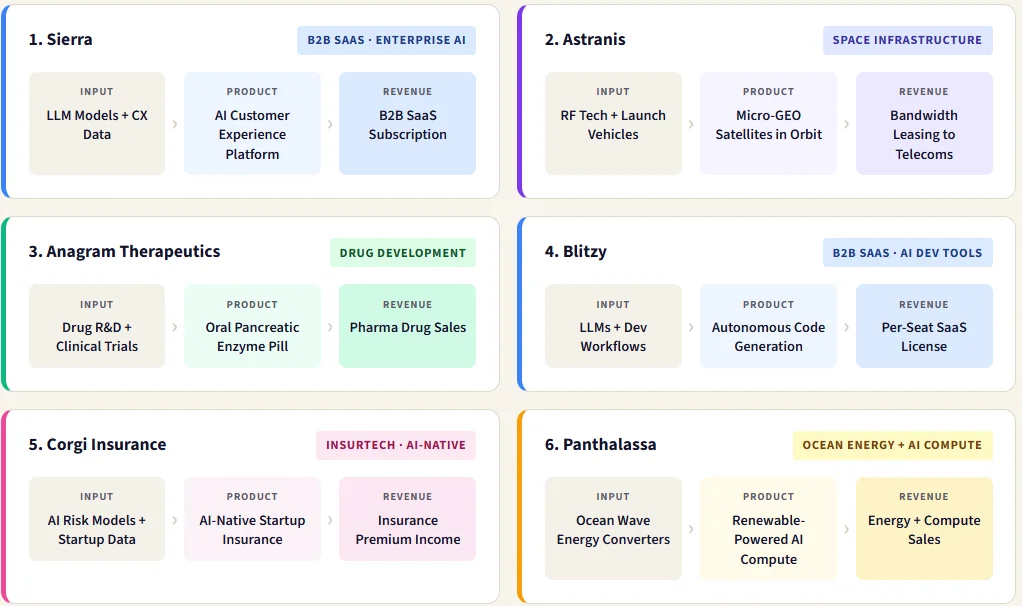
Business Model Breakdown
Each company this week runs a distinct model for creating and capturing value. The diagrams below trace that path from core inputs through to the delivered product and the revenue earned.
Ocean Energy and Insurance Also Attract Capital
Panthalassa raised $140 million in a Series B led by Peter Thiel. The Portland, Oregon, startup has an unconventional but ambitious plan. It aims to power AI inference computing using energy generated from ocean waves. If successful, this would offer a carbon-free alternative to traditional data centre power. The deal is notable for both its scale and its scientific novelty. It signals that investors are open to high-risk, high-potential bets in green computing.
Reserv, a New York-based insurtech, raised $125 million in a KKR-led Series C. The company provides third-party administrator services to the insurance sector. Reserv launched in 2022 and has now raised over $200 million in total funding. KKR’s involvement signals that institutional capital sees long-term value in insurance technology infrastructure. Together, Panthalassa and Reserv show that transformative ideas beyond pure AI software are also finding capital.
Sector Breakdown: AI Leads, But the Field Is Wide
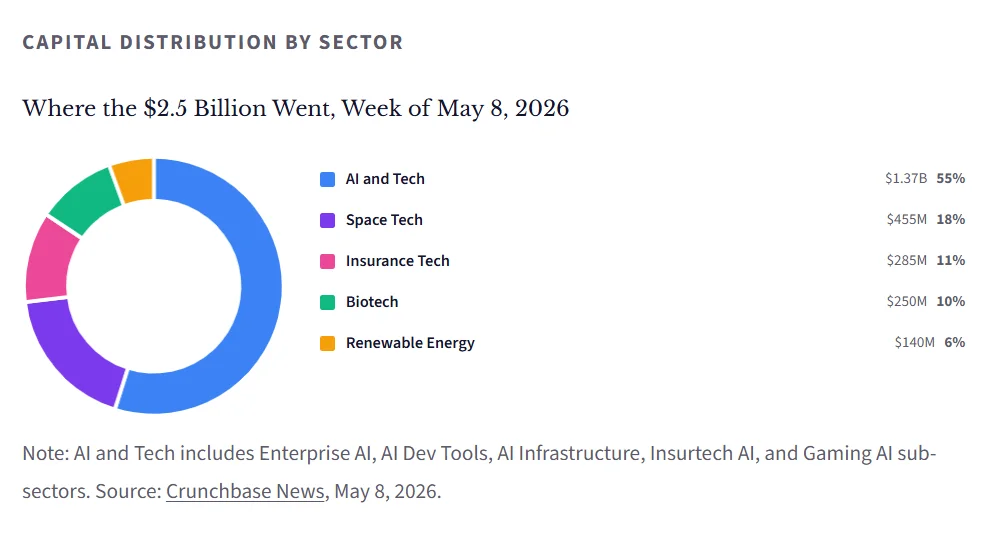
Enterprise AI and AI infrastructure together claimed over $1.3 billion this week. Space tech ranked second, driven entirely by Astranis at $455 million. Insurance tech raised $285 million across two deals: Corgi and Reserv. Biotech secured $250 million via the Anagram round. Renewable energy and gaming each contributed one deal to the top 10. This spread reflects broad investor confidence. Capital is not concentrated in a single sector. Instead, investors are building exposure across multiple high-growth technology themes.
A Record Year Sets the Stage for Big Rounds
This week’s activity fits 2026’s broader venture capital story. Global startup funding hit record highs in Q1 2026, according to Crunchbase data. AI companies are capturing the majority of new venture dollars. The enterprise AI sub-sector is especially hot. Investors increasingly favour startups with defined revenue models and clear customer segments.
This week’s mix of early- to late-stage deals reflects that thesis. Capital is flowing to companies that can demonstrate real-world AI impact. The macro environment for venture investing remains supportive. A stable interest rate environment and improving IPO prospects are encouraging risk appetite. Institutional allocators who pulled back in 2023 and 2024 are returning to the market. The result is a faster and larger flow of capital into high-conviction bets.
What This Week’s Data Signals
Sierra’s $950 million raise is a defining moment for enterprise AI. It confirms that late-stage AI startups can command valuations once reserved for public companies. However, this week showed that biotech, space tech, and clean energy are also attracting serious capital. The diversity of sectors in the top 10 is a healthy market signal. Investors are not just chasing AI hype.
They are backing transformative ideas across multiple industries. Execution, not just ambition, will ultimately determine which of these bets pays off. Founders with strong technology, clear markets, and disciplined teams are finding capital available. That broad conviction bodes well for startup ecosystems heading into the second half of 2026. Watch this space: the pace of large rounds shows no sign of slowing.




