


April 08, 2026 – The largest bank-fintech deal in history is official. Capital One now owns the bank, the payment network, and the AI spend software. Here is what the numbers reveal.
In Summary
Capital One closed its Brex acquisition on April 7, 2026, confirmed via SEC Form 8-K.
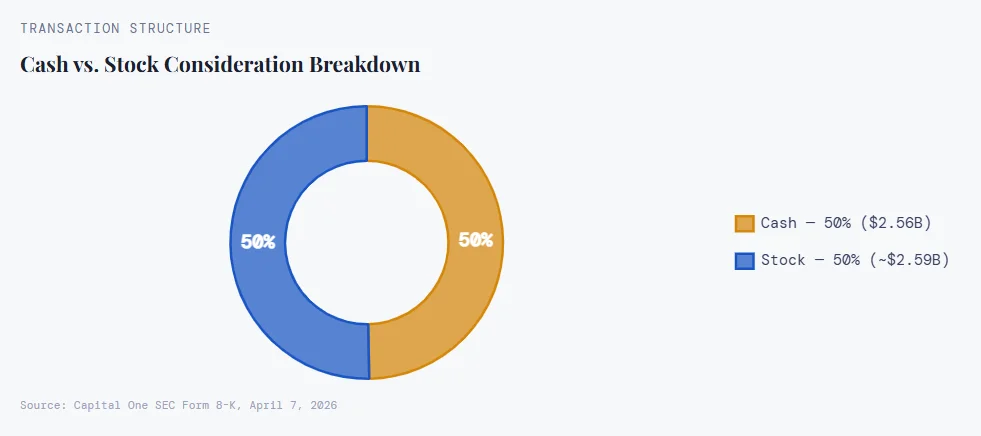
The total deal is $5.15B, split 50% cash ($2.56B) and 50% stock (10.6M COF shares).
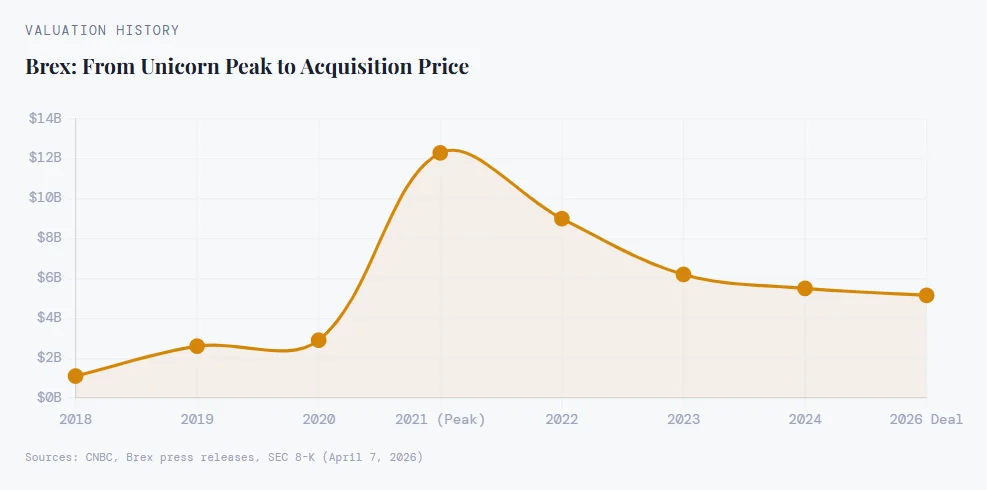
Brex’s exit price is 58% below its $12.3B venture-era peak, reflecting the wider fintech reset.
Capital One now controls a full-stack trifecta: the bank, the Discover network, and Brex’s AI software.
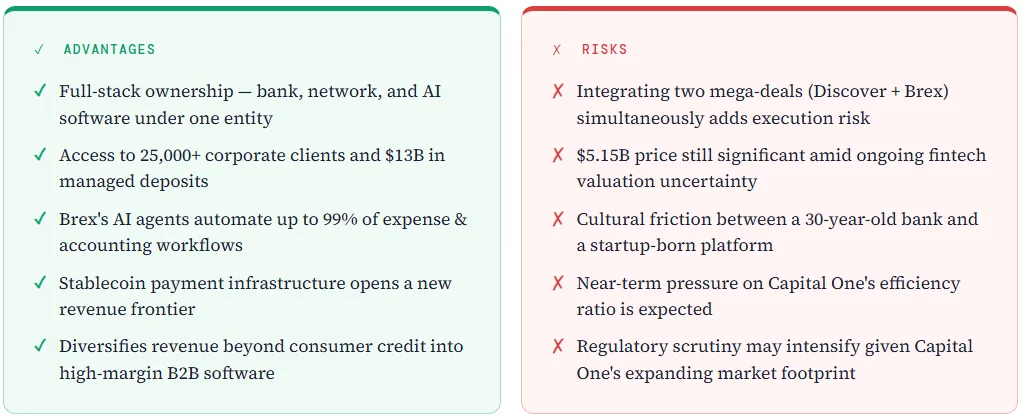
Brex serves 25,000+ companies across 50+ countries and manages ~$13B in customer deposits.
Executive Frank LaPrade received 11,041 RSUs ($2M) to incentivize seamless integration.

Capital One Financial Corporation (NYSE: COF) officially closed its acquisition of Brex Inc. on April 7, 2026. The deal was confirmed in a Form 8-K filed with the SEC that same day. It marks the largest bank-fintech merger in U.S. history.
The transaction originated from an Agreement and Plan of Merger signed January 22, 2026. Capital One paid approximately $2.56 billion in cash. It also issued 10,646,306 shares of common stock. The stock portion was placed privately under Section 4(a)(2) of the Securities Act.
A Fintech Valuation Reset in Numbers
Brex was previously valued at $12.3 billion at its venture peak. The $5.15 billion exit price marks a sharp 58% discount. Higher interest rates squeezed fintech multiples across the board. The reset reflects the end of the “growth-at-any-cost” era in private markets.
Why Brex? The Strategic Rationale
Founded in 2017, Brex pioneered AI-native corporate spend management. Its platform combines corporate cards, expense automation, and real-time banking. It operates in more than 50 countries. It manages roughly $13 billion in customer deposits.
About 60% of Brex’s recent originations were to non-tech companies. Clients include Anthropic, Robinhood, Coinbase, TikTok, and DoorDash. The customer diversity validates Brex well beyond its startup roots.
“Acquiring Brex accelerates this journey, especially in the business payments marketplace.” – Richard D. Fairbank, Founder & CEO, Capital One
Brex also announced plans to launch native stablecoin payments in late 2025. The feature attracted firms like Solana, Figure, and Alchemy to its waitlist. Capital One inherits this next-generation payment infrastructure as part of the deal.
The Vertical Integration Power Play
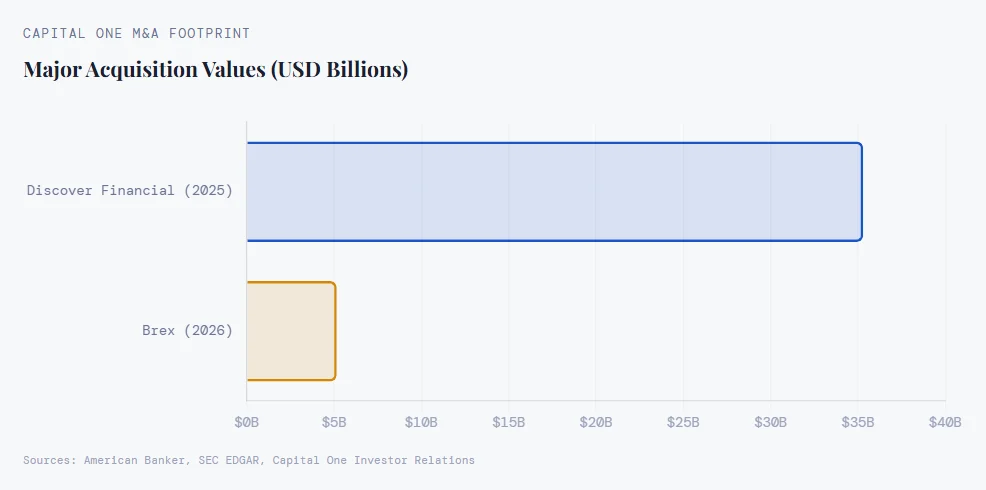
This acquisition follows Capital One’s $35.3 billion acquisition of Discover Financial, completed in 2025. That deal gave Capital One control over the Discover payment network. Adding Brex creates a rare “full-stack” financial institution. Capital One now owns the bank, the payment rails, and the spend management software.
Competitors like Ramp, Mercury, and Expensify now face a formidable adversary. The Capital One-Brex entity operates with a much lower cost of capital. American Express and JPMorgan Chase face growing pressure to modernize their software offerings.
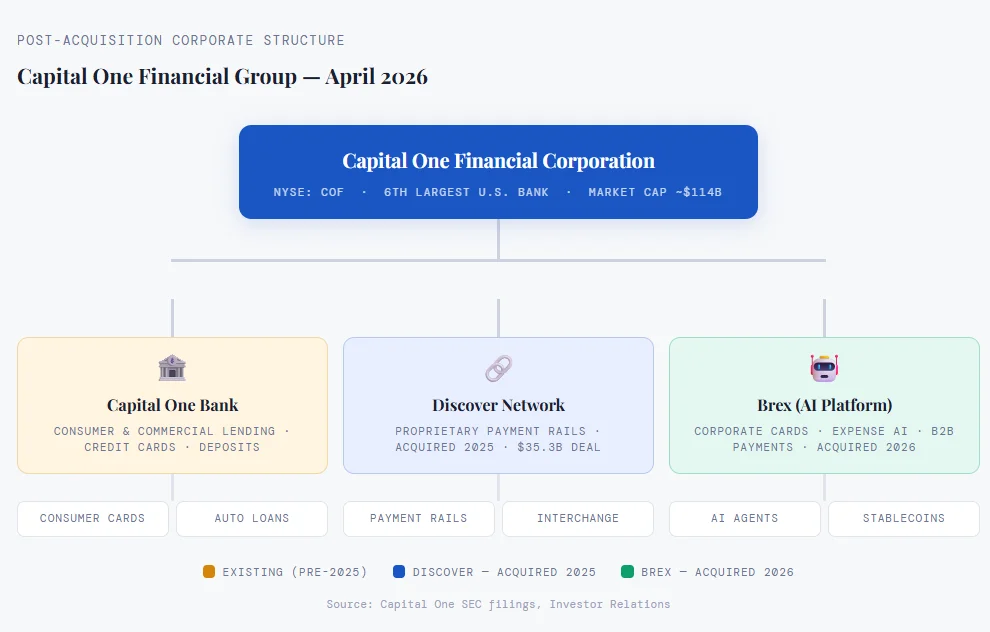
Key Insight: Capital One is no longer just a credit card issuer. It is now a vertically integrated payments platform that owns the bank, the network, and the AI software layer. This trifecta is unprecedented among U.S. commercial banks.
Acquisition: Pros & Cons at a Glance
Executive Pay Tied to Integration
Alongside the closing, the board approved a targeted RSU grant. Frank LaPrade, Chief Enterprise Services Officer, received 11,041 restricted stock units. The grant-date value was approximately $2.0 million. Units vest in three equal annual installments.
This compensation structure is not incidental. It directly ties LaPrade’s payout to Capital One’s post-merger stock performance. Integration success is now a direct financial incentive for senior leadership.
What Comes Next
The deal closed ahead of its originally projected mid-2026 target. Brex CEO Pedro Franceschi will continue to lead Brex within Capital One. Integration of Brex’s agentic AI tools with Capital One’s commercial bank clients begins now.
Analysts will watch adoption rates of Brex’s platform among Capital One’s enterprise base. Fee revenue from software services could hedge against potential consumer credit rate caps. The combined entity’s ability to cross-sell will define near-term financial performance.
For businesses, the message is direct: the era of fragmented financial tools is ending. Banking, payments, and spend software are converging under one roof. Capital One has placed the largest bet yet on where business finance is headed.