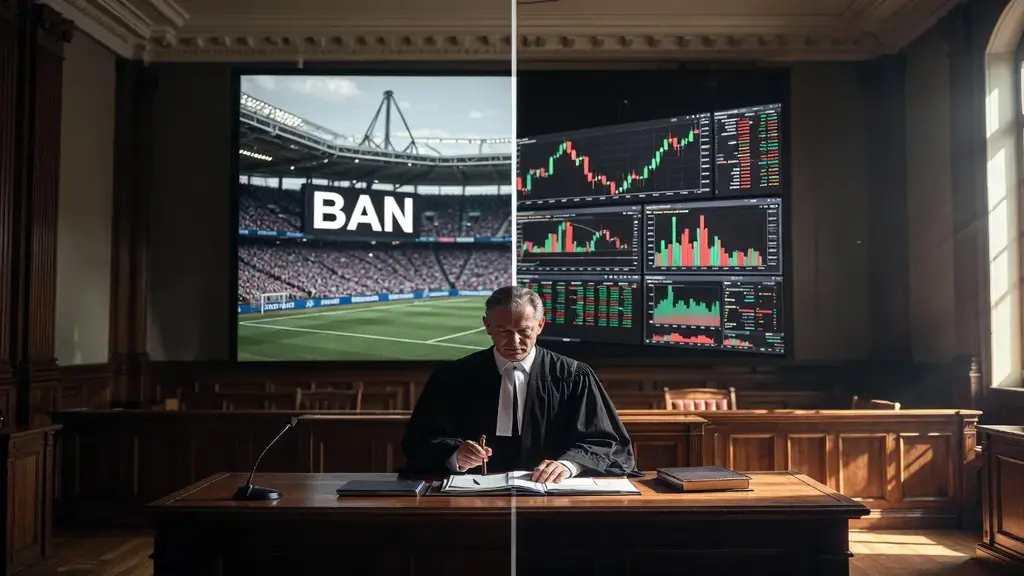


Catenaa, Monday, April 06, 2026- A Nevada state judge on Friday extended a ban on prediction market platform Kalshi, ruling that its sports event contracts closely resemble gambling and supporting a preliminary injunction sought by state regulators.
Judge Jason Woodbury of Nevada’s First Judicial District Court said contracts tied to sports outcomes on Kalshi mirror traditional betting. He extended a temporary restraining order first issued in March while finalizing a broader injunction.
The ruling places Nevada at the center of a growing legal battle over whether prediction markets fall under financial regulation or state gambling laws.
Federal vs State Authority Clash
Kalshi has argued its contracts qualify as financial swaps regulated by the Commodity Futures Trading Commission. The federal regulator has backed that position in related disputes.
The Nevada court rejected that view for now. The decision reflects a wider conflict between federal oversight claims and state-level enforcement of gambling laws.
The case has drawn attention across the US as regulators and courts attempt to define how prediction markets should be treated.
Legal developments unfolded across multiple states on the same day. In Arizona, a federal judge heard arguments on whether to block criminal charges against Kalshi tied to unlicensed wagering allegations.
Arizona authorities filed misdemeanor charges earlier this year, marking the first criminal case against a prediction market operator. The CFTC has also taken legal action against several states, seeking to assert federal jurisdiction.
Court decisions have been mixed. Some rulings have supported Kalshi’s position, while others have sided with state regulators. Analysts expect the dispute may ultimately reach the US Supreme Court.
Regulatory Pressure Intensifies
Lawmakers are also stepping in. A bipartisan Senate proposal seeks to restrict federally regulated platforms from offering sports and casino-style contracts.
Sports leagues have raised concerns as well. Industry groups argue that certain contracts could affect the integrity of games or resemble traditional betting markets.
The regulatory push reflects growing unease over the rapid expansion of prediction markets and their overlap with established gambling systems.
Market Growth Continues Despite Challenges
Despite legal pressure, Kalshi’s business has expanded. The platform has reported strong trading volumes and secured partnerships with major media and financial platforms.
Its valuation has climbed sharply, reflecting investor interest in prediction markets as a new financial category. The company argues that restrictions could push activity to offshore platforms beyond regulatory reach.
Industry Implications
The outcome of these cases could shape the future of prediction markets in the US. A ruling in favor of federal oversight may open the door for broader adoption under financial rules.
A state-led approach could limit expansion and subject platforms to gambling regulations. That would reshape how these products are offered and who can access them.
The uncertainty has created a fragmented legal environment, with different states taking varied approaches.
Prediction markets allow users to trade contracts based on the outcome of real-world events, including sports, elections, and economic indicators. Supporters view them as financial tools for price discovery, while critics see them as a form of betting.
The sector has grown rapidly alongside advances in digital trading platforms. Regulatory frameworks have struggled to keep pace, leading to overlapping claims between financial and gaming authorities.
The dispute involving Kalshi reflects broader tensions as new financial models challenge existing legal definitions.