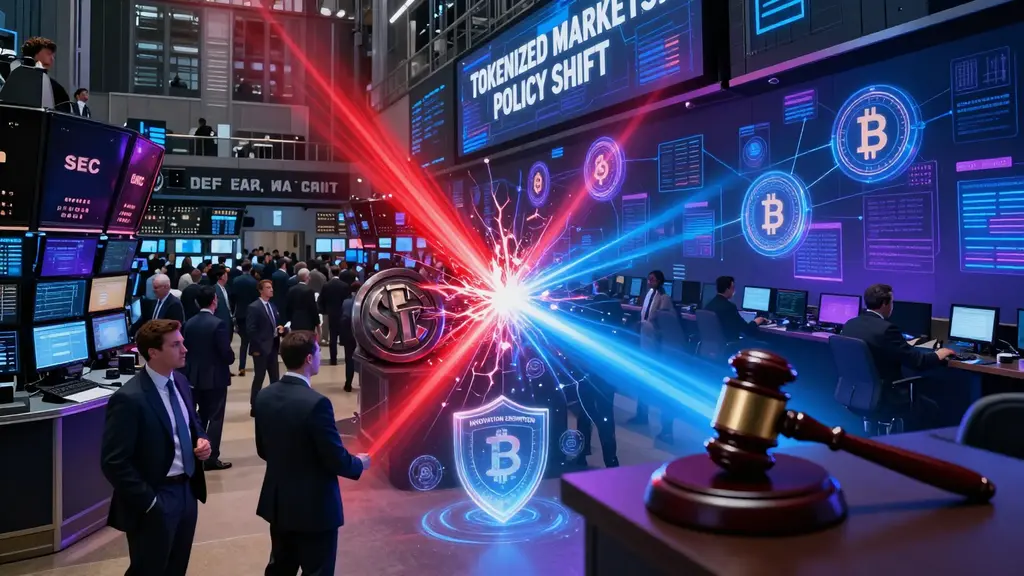


Catenaa, Thursday, April 09, 2026- A dispute between the Blockchain Association and Citadel Securities over how the Securities and Exchange Commission should regulate decentralized finance has intensified, as US regulators weigh an innovation exemption that could reshape tokenized markets.
The Blockchain Association this week urged the SEC to move ahead with an innovation exemption framework that would allow tokenized equity trading under tailored regulatory relief, rejecting Citadel’s call for stricter oversight through formal rulemaking.
Citadel argued earlier that many DeFi protocols function like exchanges because they use automated systems to match buyers and sellers, and should therefore fall under existing securities laws. The firm pushed for a full notice-and-comment process, warning that exemptions risk weakening investor protections.
The Blockchain Association countered that DeFi protocols operate as neutral infrastructure rather than intermediaries, stating that developers and validators do not act as brokers or dealers. The group said applying legacy rules to autonomous systems would misclassify how blockchain networks function.
The exchange comes as SEC Chair Paul Atkins signals a broader shift toward regulatory flexibility, including a potential sandbox-style exemption for onchain financial activity.
The outcome of this debate could define how tokenized securities develop in the US. An exemption framework would allow firms to experiment with blockchain-based trading models without immediate full compliance burdens, potentially accelerating adoption.
Supporters argue that tokenization can improve settlement speed, reduce costs, and expand market access by enabling continuous trading on blockchain rails. If approved, the exemption could attract capital and innovation back to the US after years of regulatory uncertainty.
Opponents warn that loosening oversight may create gaps in investor protection, particularly if DeFi platforms operate without clear accountability. They argue that algorithmic systems performing exchange-like functions should face the same regulatory standards as traditional market venues.
The debate also reflects growing tension between decentralized technology models and established financial institutions, which are seeking to maintain consistent regulatory frameworks across markets.
Legal analysts say the SEC faces a complex balancing act between fostering innovation and maintaining market integrity. Some view the exemption as a practical step to test new technologies within controlled boundaries.
Others caution that defining what constitutes “neutral infrastructure” will be central to any framework, as the distinction determines whether protocols fall inside or outside securities regulation.
Market observers note that institutional interest in tokenization is rising, with exchanges and financial firms exploring blockchain-based trading systems. Clear regulatory direction could accelerate these efforts.
The clash between DeFi advocates and traditional market participants highlights a turning point in US financial regulation. The SEC’s decision on an innovation exemption may determine how quickly blockchain-based markets gain traction domestically.
Decentralized finance has grown rapidly over the past several years, offering financial services through automated smart contracts rather than centralized intermediaries. This model challenges existing regulatory categories built around identifiable operators such as brokers and exchanges.
At the same time, tokenization has gained momentum as firms seek to bring traditional assets like equities onto blockchain networks. Regulators have acknowledged these developments but continue to assert that tokenized assets remain subject to securities laws.
The SEC has previously used exemptive relief to support financial innovation, including in early electronic trading systems. The current proposal builds on that precedent, though its application to decentralized systems presents new legal questions.
As the agency prepares to seek public input, the competing views from industry groups and traditional firms reflect broader uncertainty over how emerging technologies should fit within established regulatory frameworks.