

April 04, 2026 – Hawkish U.S. rhetoric on Iran sent Bitcoin tumbling from a 24-hour high of $69,000. Analysts now flag $65,500 as the make-or-break support level for crypto markets.

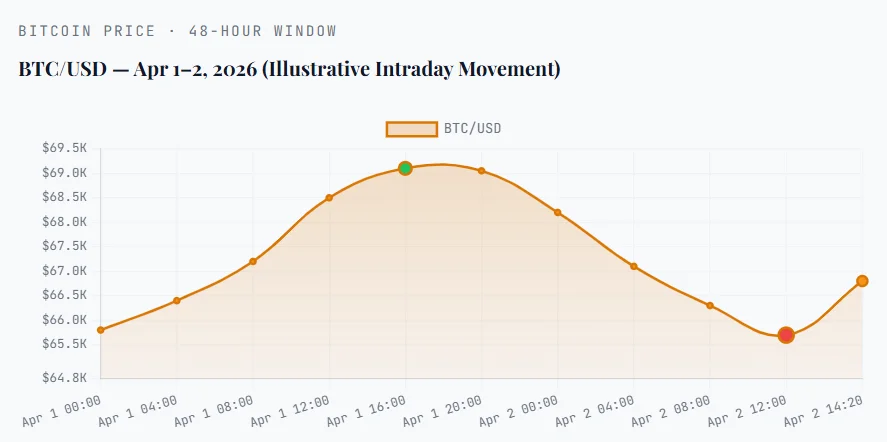
Bitcoin fell sharply on April 2, 2026. President Donald Trump’s hardline remarks about Iran lit the fuse. His threat to bomb Iran “back to the Stone Age” reversed the prior day’s diplomatic optimism. Within hours, Bitcoin dipped to a session low of $65,696.
The swing was dramatic. Just 24 hours earlier, BTC had twice broken above $69,000. A brief window of de-escalation rhetoric had spurred that rally. Wednesday’s aggressive pivot shattered that sentiment. Bitcoin staged a short-lived rebound past $67,000. But momentum quickly faded. By 2:20 p.m. EST, BTC traded near $66,800.
The Scale of the Damage
The sell-off was not a quiet retreat. It exposed the fragility of leveraged crypto positions. Bitcoin had already erased its March gains heading into April. This latest drop confirmed that trend.
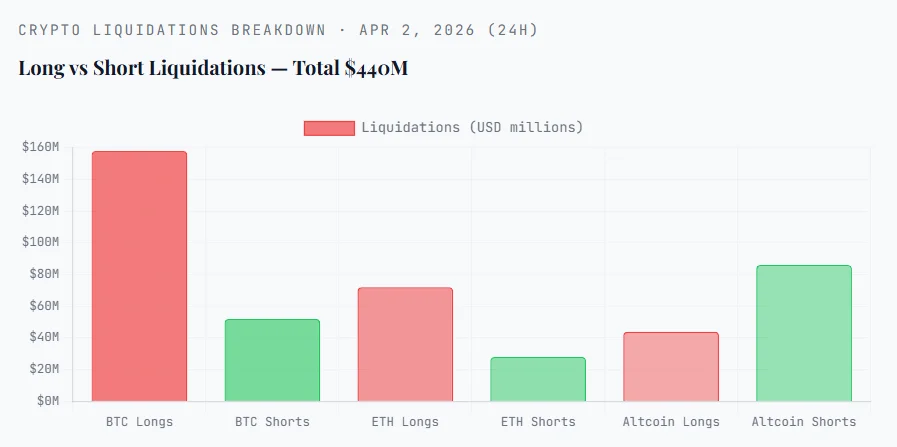
Over 12 hours, liquidations totalled $48 million. Over a full 24 hours, that figure rose to $103 million. Across all digital assets, total crypto liquidations exceeded $440 million. Long positions bore the heaviest losses, accounting for $274 million of that total.
Bitcoin’s market capitalisation shed $40 billion. It dropped from $1.37 trillion to $1.33 trillion. The broader crypto economy fell to $2.38 trillion in tandem.
A 48-Hour Sentiment Whiplash
Markets are reacting more to Trump’s words than to his actions. That is the pattern analysts now document. Tuesday’s conciliatory tone sent Bitcoin surging. Wednesday’s aggression reversed every gain.
“Bitcoin now acts as a barometer of risk. Each presidential statement moves the market within hours.”— Market analysts, Bitcoin.com News, April 2026
This volatility reflects deeper anxiety. Traders are no longer pricing only crypto fundamentals. They are pricing geopolitical uncertainty. That is a structural shift — and a dangerous one for leveraged players.
Iran, the Strait, and Dollar Dominance
The geopolitical backdrop explains the outsized reaction. The Strait of Hormuz remains a critical chokepoint. Reports indicate Iran is now charging transit fees in Chinese yuan and cryptocurrency. Analysts call this a direct challenge to U.S. dollar hegemony.
If this practice hardens, it marks a strategic defeat for Washington. Decades of petrodollar infrastructure could fracture. NATO allies have declined to join the conflict. The U.S. stands increasingly isolated on the global stage. That isolation explains the growing volatility in Trump’s public messaging.
Why Crypto Feels the Pressure First
Digital assets are the most liquid, risk-sensitive market in the world. They trade 24/7 with no circuit breakers. When fear spikes, leveraged positions collapse fast. That is exactly what happened on April 2.
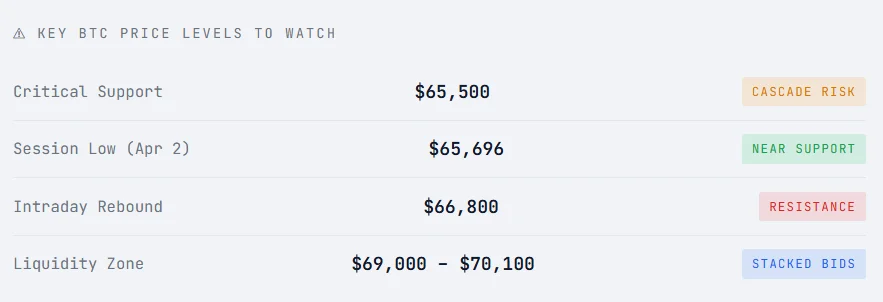
Bitcoin has struggled to hold key levels amid persistent selling pressure. Demand-side conviction remains weak. Recent rallies have capped out near $68,000. Liquidity clusters remain concentrated between $69,000 and $70,100.
The $65,500 Line in the Sand
One number is dominating analyst conversations: $65,500. This level is the structural test for Bitcoin. A breach below it could trigger a cascade of forced liquidations. Energy shocks or further military escalation are the most likely triggers. Both remain plausible given current geopolitics.
For now, Bitcoin holds above that threshold. But the margin is thin. Market participants are watching closely. The next presidential statement or diplomatic breakthrough could decide the near-term direction.
What This Means for Investors
Short-term traders face a high-noise environment. News-driven moves make technical analysis unreliable. Stop-losses around the $65,500 zone are especially vulnerable to sharp wicks.
Longer-term holders face a different question. Bitcoin’s role as a “risk barometer” is evolving rapidly. Geopolitical correlation was once modest. It is now significant and growing. Portfolio risk models need updating.
The $440 million wipeout is a reminder. In leveraged markets, rhetoric carries real financial weight. Until the U.S.-Iran situation resolves or stabilises expect continued turbulence across digital assets.