

April 08, 2026 – Pakistan brokered a fragile two-week truce on April 7, 2026. It halted planned US strikes. Bitcoin hit $71,720 within minutes.
In Summary
Trump declared a ceasefire with Iran on April 7, 2026.
The announcement came at 6:32 PM EDT via Truth Social.
Pakistan’s Sharif and Field Marshal Munir brokered the deal.
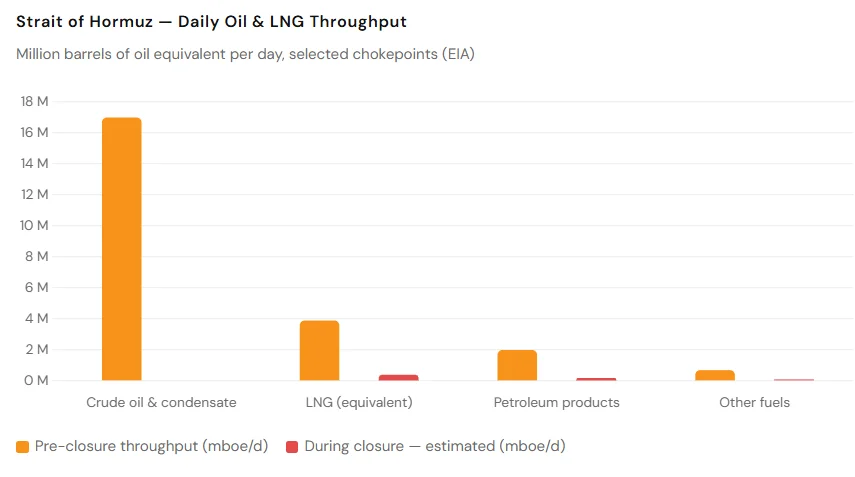
The Strait of Hormuz carries 20.3 million barrels of oil daily.
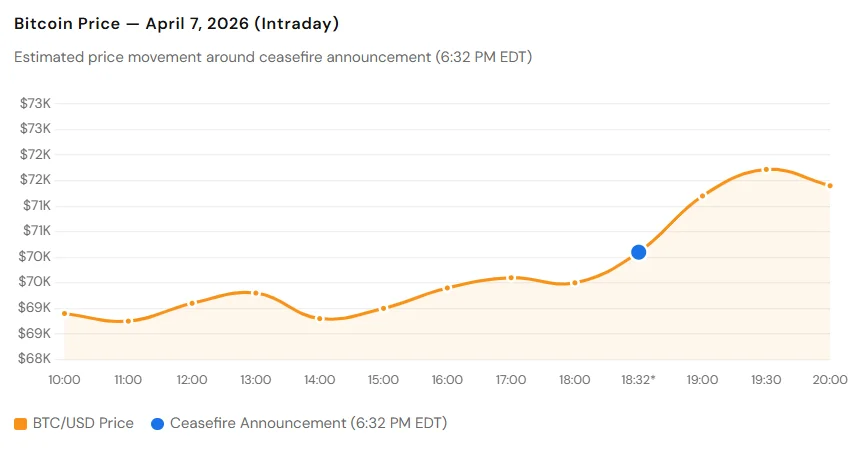
Bitcoin jumped to an intraday high of $71,720, a 3% gain.

The Announcement That Moved Markets
President Donald Trump posted to Truth Social at 6:32 PM EDT on April 7, 2026. He suspended planned military strikes on Iran. The post came just 88 minutes before an 8:00 PM deadline. Financial markets, even with Wall Street closed. responded instantly. Bitcoin climbed to $71,720 on Bitstamp, a 3% intraday gain.
The move signals a new dynamic in geopolitical risk pricing. Bitcoin is increasingly treated as a safe-haven hedge. Its rapid reaction predates any formal statement from the White House.
Pakistan’s Diplomatic Breakthrough
Prime Minister Shehbaz Sharif and Field Marshal Asim Munir personally requested the pause. Trump credited both leaders directly in his post. Their rapport with Washington was built during a September 2025 White House visit. This relationship provided a critical back-channel when diplomacy seemed exhausted.
“Based on conversations with Prime Minister Shehbaz Sharif and Field Marshal Asim Munir, I agree to suspend the bombing of Iran for two weeks.”
– President Donald Trump, Truth Social, April 7, 2026
Iran had submitted a 10-point proposal through mediators. Trump described it as a “workable basis” for talks. He stated that most major disagreements had already been resolved. The two-week window is now the bridge toward a permanent agreement.
The Strait of Hormuz: Why It Matters
The strait is the world’s most critical oil chokepoint. According to the US Energy Information Administration (EIA), it carries approximately 20.3 million barrels of oil daily. That figure represents roughly 25% of all seaborne oil globally.
Iran closed the strait following US and Israeli strikes on Iranian targets. The closure rattled energy markets worldwide. Analysts at BCA Research estimated a 50% recession risk for Europe and Japan. Any prolonged closure would trigger supply shocks far beyond the Middle East.
Bitcoin as a Geopolitical Barometer
The 3% move within minutes is analytically significant. Traditional safe havens, gold, Treasuries require market-open sessions to price in risk. Bitcoin trades 24/7. It reacted before equity markets could open. This positions BTC as a real-time geopolitical sentiment indicator.
Bitcoin.com News reported the price spike alongside the ceasefire announcement. The correlation is clear: reduced conflict risk removes a key macro headwind for risk assets. Bitcoin benefits first.
Analyst note: The ceasefire is conditional. Iran has not formally confirmed all terms as of publication. A breakdown in talks could sharply reverse BTC’s gains and re-pressurize energy markets.
What Happens Next
The two-week window expires around April 21, 2026. Iran must allow the full reopening of the Strait of Hormuz. That is the non-negotiable condition for the pause to hold. Israel has reportedly accepted the ceasefire terms. Iran’s formal response was still pending as of press time.
Markets will track three indicators closely over the coming days. First: Strait of Hormuz shipping data and oil tanker movements. Second: Bitcoin price action as a sentiment proxy. Third: Any formal statement from Tehran confirming or rejecting the 10-point framework.
If the deal holds, it would mark the most significant shift in US-Iran relations since the 2015 nuclear agreement. The crypto market’s reaction suggests traders are pricing in cautious optimism for now.