

April 05, 2026 – Ripple’s integration into the SWIFT Certified Partner Program marks a shift from blockchain disruption to institutional collaboration.
In Summary
Ripple Treasury now connects to SWIFT’s Alliance Lite2 for direct bank access.
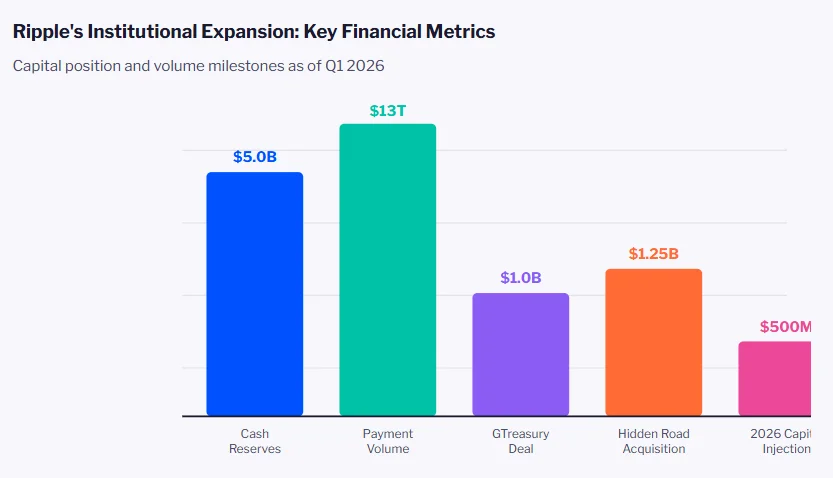
The platform processed $13 trillion in payments last year, all in fiat.
Companies can settle via SWIFT or blockchain using XRP and RLUSD.
Ripple Prime secured a BBB investment-grade rating from KBRA.
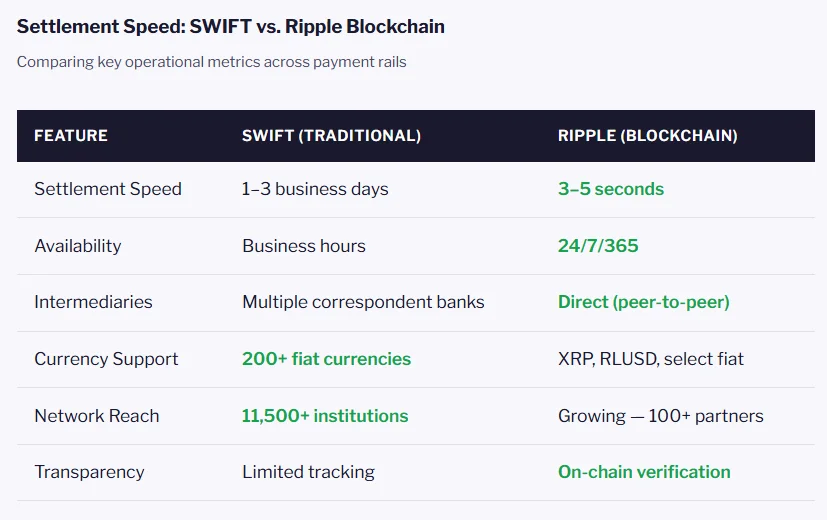
SWIFT handles over 68 million messages daily across 11,500+ institutions.
Ripple Treasury has joined the SWIFT Certified Partner Program. The move connects blockchain-based settlement tools to the world’s largest interbank messaging network. It also reframes Ripple’s strategy from disruption to integration.
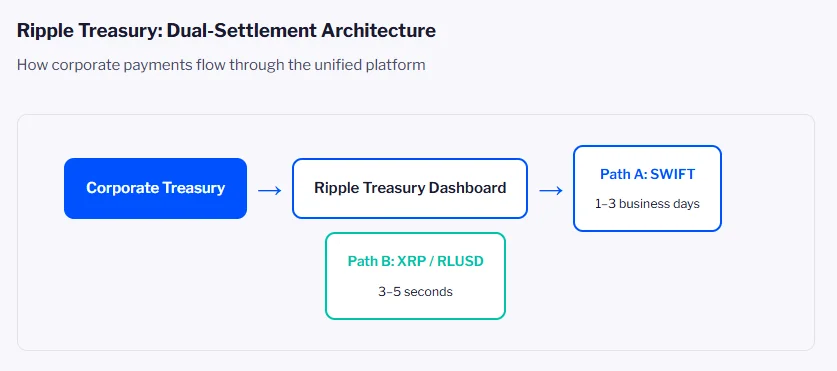
The platform was built through Ripple’s $1 billion acquisition of GTreasury. It combines traditional cash management with digital asset operations. Treasury teams can now manage fiat, XRP, and RLUSD from a single dashboard.

How the Dual-Settlement Model Works
Ripple Treasury introduces two parallel payment rails. Firms can route transactions through SWIFT’s traditional network. Alternatively, they can settle on-chain using XRP or RLUSD.
Blockchain-based settlements complete in three to five seconds. SWIFT transfers follow standard processing timelines. This dual structure lets firms retain existing banking relationships. It simultaneously unlocks faster settlement where speed matters.
Institutional Credibility Is Building Fast
Two days ago, KBRA assigned a BBB issuer rating to Ripple Prime. The rating covers Ripple’s prime brokerage arm, formerly Hidden Road. Ripple acquired Hidden Road for $1.25 billion in late 2025.
KBRA cited a strong capital position supporting the rating. Ripple holds nearly $5 billion in cash reserves. It also holds over 40 billion XRP tokens. An additional $500 million capital injection is expected in 2026.
The BBB rating unlocks access to institutional counterparties. Pension funds and insurance companies typically require investment-grade partners. Without this rating, Ripple Prime would face structural barriers.
The Broader Market Context
Ripple’s SWIFT integration arrives at a pivotal moment. A Ripple survey of 1,000+ finance leaders reveals a clear shift. Seventy percent said firms must offer digital asset solutions. Stablecoins ranked as the most compelling use case for treasuries.
Meanwhile, SWIFT itself is evolving. The network recorded double-digit traffic growth in 2025. It processed a record 68 million messages in a single day. SWIFT also announced a blockchain-based shared ledger initiative with 30+ banks.
Regulatory Tailwinds Add Momentum
The OCC finalized a rule on April 1 expanding trust bank permissions. It allows national trust banks to engage in non-fiduciary activities. This creates broader banking access for crypto-native firms like Ripple.
Ripple also partnered with Convera for stablecoin-enabled cross-border payments. Convera manages the client-facing experience. Ripple provides backend liquidity and blockchain-based settlement.
CEO Brad Garlinghouse has set an ambitious target. He stated XRP could capture 14% of SWIFT’s global volume within five years. That claim now carries more weight with certified partner status.
What It Means Going Forward
Ripple’s SWIFT certification signals a strategic pivot. The company is no longer positioning as a SWIFT competitor. Instead, it is embedding itself within the existing financial system.
The dual-settlement model is the key differentiator. Corporates retain familiar banking workflows. They gain blockchain speed when they need it. This hybrid approach could accelerate institutional adoption.
However, risks remain. KBRA flagged that Ripple’s revenue depends heavily on XRP sales. Crypto market volatility could still pressure earnings. The BBB rating, while investment-grade, sits at the lowest qualifying tier.
The integration represents a bet on coexistence over disruption. Whether Ripple can convert a $13 trillion payment pipeline into meaningful digital asset volume will define this chapter of its story.