
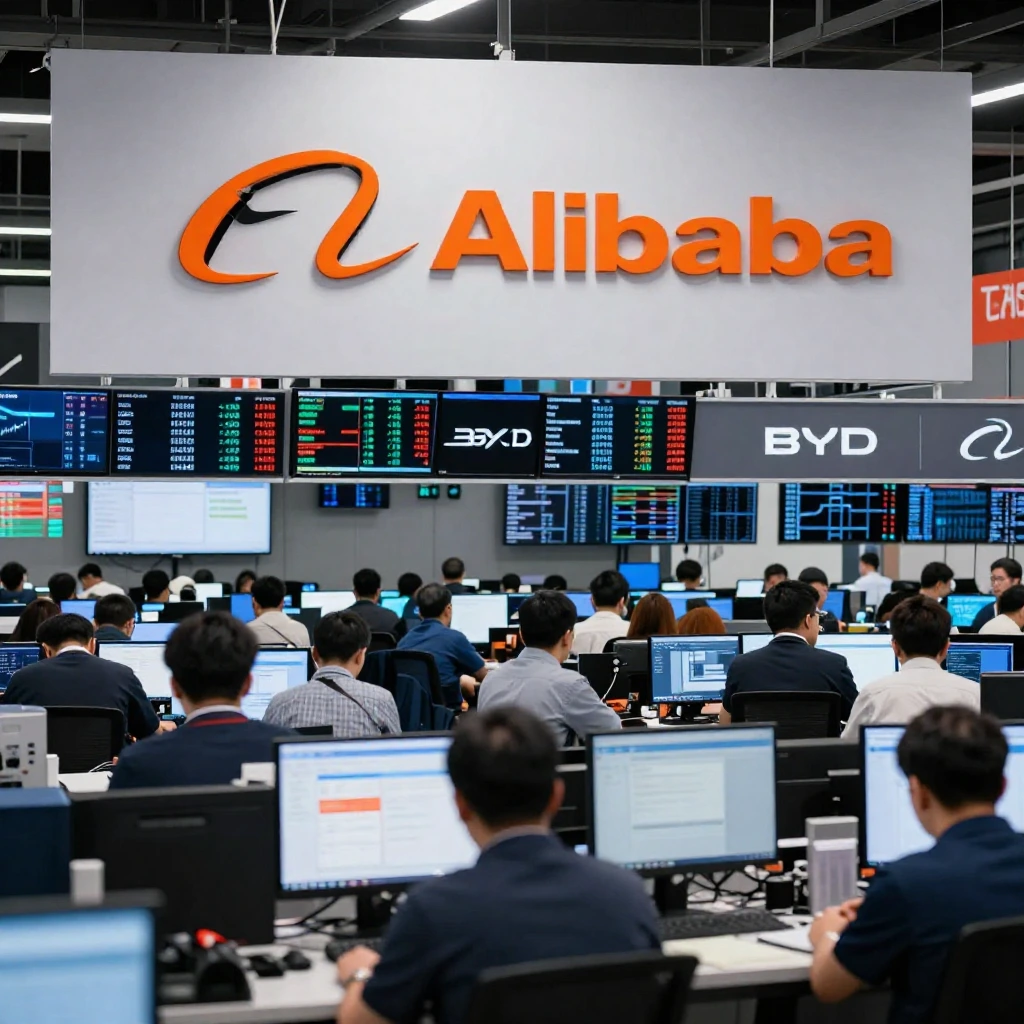
Catenaa, February 15, 2026 – The United States has added Alibaba and BYD to a government watchlist, intensifying scrutiny of major Chinese companies. The move signals renewed pressure in the ongoing US-China tech rivalry.
The watchlist designation does not immediately trigger sanctions. However, it increases regulatory oversight and limits certain government dealings. Analysts say the step raises geopolitical risk for global investors.
Alibaba, one of China’s largest technology firms, has already faced domestic regulatory challenges. Additional US scrutiny may weigh on investor sentiment. Shares could see higher volatility as compliance costs rise.
BYD, a leading electric vehicle maker, is expanding rapidly in global markets. The company competes directly with Western automakers in Europe and emerging economies. Inclusion on the watchlist may complicate future US partnerships.
Washington has tightened restrictions on Chinese technology and advanced manufacturing sectors. Officials cite national security concerns and supply chain resilience. The latest move fits within that broader strategy.
For investors, the development underscores rising political risk in cross-border portfolios. Chinese equities remain sensitive to regulatory headlines. Fund managers may reassess exposure to firms with US ties.
The decision also reflects growing scrutiny of electric vehicle supply chains. Batteries, semiconductors, and software systems are increasingly seen as strategic assets. Policymakers want greater domestic control over these industries.
Market reaction may depend on whether further sanctions follow. If restrictions expand, capital flows between the two economies could slow. That would pressure multinational firms operating in both markets.
The broader impact extends beyond two companies. The move reinforces structural decoupling between the US and China. Businesses must now navigate regulatory uncertainty alongside competitive pressures.
As geopolitical tensions persist, investors will watch for retaliatory measures. The listing marks another step in a long-running economic contest between the world’s two largest economies.