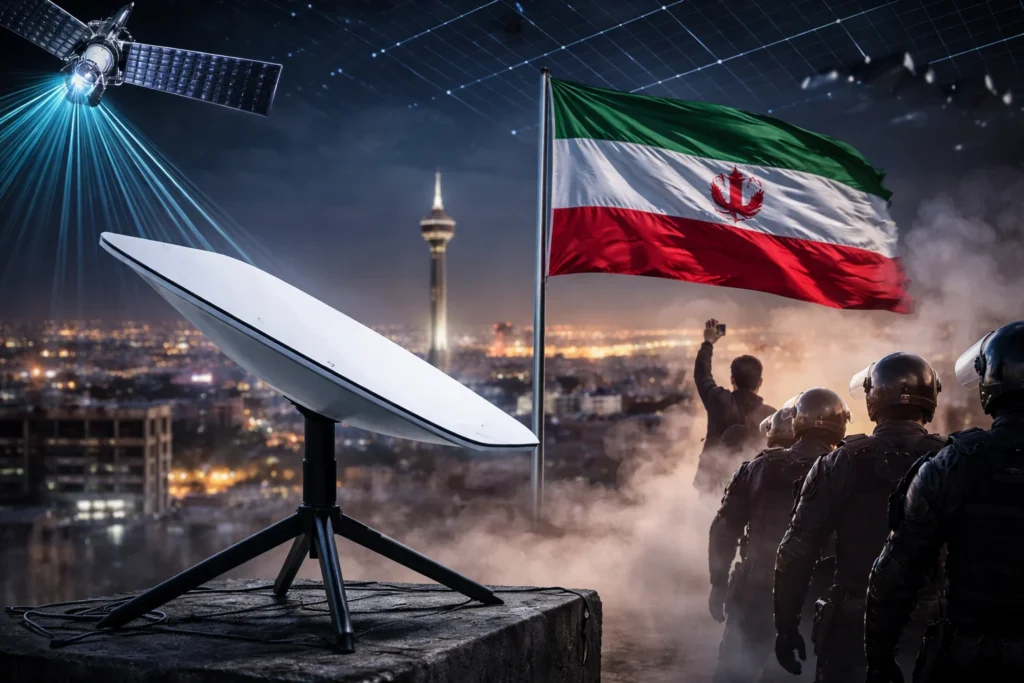
January 17, 2026 – Elon Musk’s Starlink satellite network, often touted as a tool for digital freedom, is confronting its most sensitive geopolitical challenge yet: bypassing state censorship during Iran’s latest crackdown on dissent. As Iranian authorities intensify internet restrictions following recent protests, activists and tech experts are testing Starlink’s capacity to deliver uncensored access under authoritarian conditions.
Iran’s information blackout is not new, but Starlink presents a unique disruption to this pattern. By enabling satellite-based internet independent of ground infrastructure, it offers a way to circumvent local control. However, deployment faces logistical and legal hurdles. Terminals must be smuggled into the country and remain at risk of confiscation or tracking. Even with signals reaching Iranian airspace, user safety and operational stealth remain critical concerns.
From a policy standpoint, the situation places Musk and SpaceX at the intersection of global tech diplomacy and national security. U.S. regulators, already wary of the risks of escalation with Iran, are watching closely. Experts note that Starlink’s involvement in high-tension zones could invite retaliatory cyber or physical action against its infrastructure or affiliates.
Analysts also highlight broader implications: if Starlink succeeds in maintaining a persistent presence despite Iranian efforts to block it, the model could influence digital resistance strategies elsewhere, especially in autocratic regimes. Yet, success depends not just on technology but on secure distribution, local partnerships, and international political cover.
For Musk, the Iran challenge is less about brand visibility and more a litmus test of Starlink’s global role. Is it merely a broadband provider or a geopolitical actor reshaping how access to information is contested?