
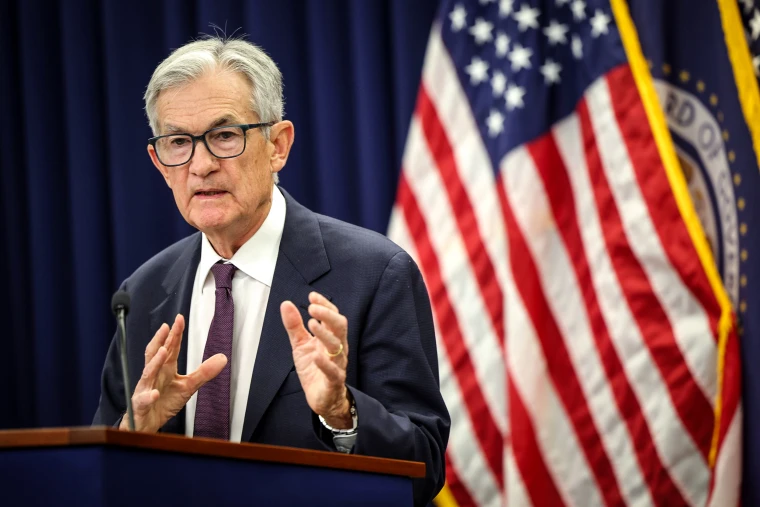
Catenaa, Thursday, April 02, 2026- The International Monetary Fund thinks that the US Federal Reserve has little room to go for rate cuts this year as inflation is on course to return to 2% target in the first half of 2027.
IMF staff expect a single rate reduction by the end of 2026, according to the Washington-based lender’s annual review of the US economy, known as an Article IV consultation. “On balance, staff see little scope to lower the policy rate over the coming year.”
“A larger monetary easing would need to be predicated on a material worsening in labor market prospects and an absence of increasing inflationary pressures, including from higher near-term inflation expectations due to rising oil and commodity prices,” the IMF staff said in the statement.
IMF executive directors, in a separate statement on the Article IV, said that with the Fed’s current policy stance being close to neutral, “there is little room to cut interest rates in 2026, particularly given the rise in energy prices, the likely passthrough to core inflation and the upside risks to global commodity prices that are likely to further delay the return to the inflation target.”
Under the IMF staff’s baseline outlook, the Fed’s benchmark rate will reach a 3.25% to 3.5% target by year-end.
It’s currently at 3.5% to 3.75%. “This would allow the economy to return to full employment and 2% inflation” by the first half of 2027, the fund said.
Thursday’s release was a full version of the Article IV report, following a summary that was published in February.
The IMF assessment on the US economy was conducted before the US-Israeli attack against Iran on Feb. 28, so it doesn’t address the conflict in the Middle East broadly. The IMF did state that the war may “further incentivize US energy production.”
The fund continues to predict 2.4% GDP growth for the country in 2026, supported by fiscal policy and a lower policy rate. Growth is seen slowing to 2.1% next year.
On President Donald Trump’s hiking of import duties, the IMF said: “evidence suggests that the tariffs are, so far, largely being paid by US firms and, to a lesser extent, consumers.” The fund assumed an average applied effective tariff rate of around 7% to 8.5%.
“Given the costs and time needed to reshape supply chains in the face of these tariffs, the negative growth effects are likely to be largest in the near-term but are expected to be persistent,” IMF staff added.