

March 20, 2026 – National debt surges $2.8 trillion in 14 months. Rising interest costs, military spending, and inflation now threaten a fiscal tipping point.
| KEY TAKEAWAYS • U.S. gross national debt crossed $39 trillion on March 18, 2026. • Debt grew by $2.8 trillion in just 14 months since January 2025. • Peter Schiff projects $50 trillion by 2029 under current conditions. • Annual interest payments now exceed $880 billion, rivalling defence. |
The U.S. national debt officially breached $39 trillion on March 18, 2026. This milestone arrives just five months after crossing the $38 trillion mark in October 2025. The pace of accumulation is accelerating sharply under current fiscal conditions.
Economist Peter Schiff issued a stark warning on Wednesday. He argued that higher interest rates, military spending, and falling revenues could push the debt to $50 trillion within three years. That would represent a $28 trillion increase in under a decade.
The numbers support his concern. Since January 2025, the gross national debt has surged by $2.8 trillion. That translates to roughly $7.2 billion added per day, according to the Joint Economic Committee of the U.S. Senate. On a per-household basis, the debt now stands at approximately $288,283.
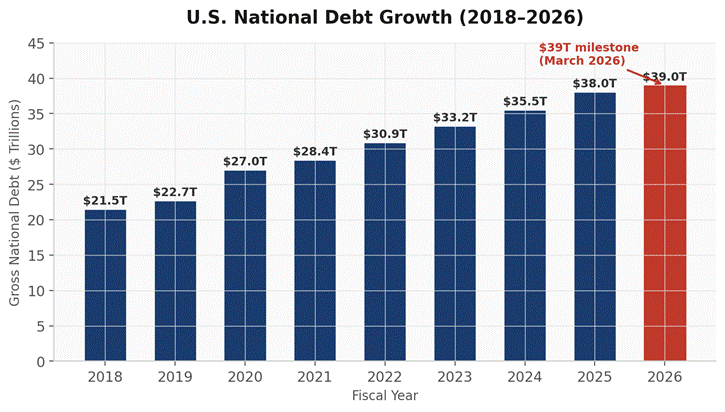
Fig. 1: U.S. National Debt Growth, 2018–2026 | Source: U.S. Treasury Fiscal Data
Inflation and Interest Costs Compound the Problem
Fresh inflation data adds fuel to the fire. The Bureau of Labour Statistics reported that the producer price index rose 0.7% month-over-month in February. Annual PPI hit 3.4%, while core inflation climbed to 3.9%. These figures reduce the likelihood of near-term rate cuts by the Federal Reserve.
Interest payments on the national debt have become the fastest-growing federal expense. In fiscal year 2024, interest costs exceeded $880 billion. That figure rivals spending on Medicare and national defence combined. The average interest rate on marketable debt now sits at 3.355%, more than double the 1.5% rate from five years ago.
The Committee for a Responsible Federal Budget (CRFB) warned that by 2031, borrowing costs will exceed GDP growth. This creates a fiscal dynamic where debt grows indefinitely regardless of policy changes.
Fig. 2: Projected Debt Trajectory Under Schiff’s Warning Scenario | Source: Stocktwits, CRFB
Structural Drivers Behind the Surge
Several structural forces are driving the acceleration. Rising defence spending tied to Middle East tensions has increased military outlays. Social Security and Medicare costs continue to grow due to ageing demographics. The 2.8% cost-of-living adjustment for Social Security beneficiaries in January 2026 added further pressure.
The CBO estimates that the One Big Beautiful Bill Act could add $4.7 trillion to deficits through 2035. Meanwhile, the CRFB has warned of a looming debt spiral where interest costs alone could consume nearly 15% of federal outlays by 2028.
Maya MacGuineas, president of CRFB, called the milestone embarrassing. She noted that deficits are approaching $2 trillion annually. This figure is twice the 3% of GDP threshold many economists consider sustainable.
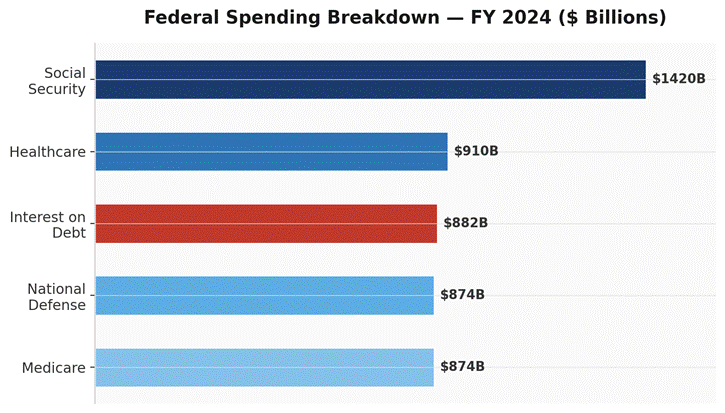
Fig. 3: Federal Spending Breakdown — FY 2024 | Source: Pew Research Center, BLS
What Comes Next
Markets are watching the Federal Reserve closely. The March policy decision is expected later today. Investors want clarity on how rising oil prices and persistent inflation will shape monetary policy. A hawkish signal would further increase borrowing costs for the U.S. government.
The Government Accountability Office has outlined the real-world impact on Americans. Higher government borrowing costs translate to more expensive mortgages, auto loans, and consumer goods. Lower available investment capital could suppress wages over time.
Michael Peterson of the Peter G. Peterson Foundation urged policymakers to address this growth rate. He warned that the current trajectory places a significant financial burden on the next generation. With neither party proposing meaningful deficit reduction, the path to $40 trillion appears inevitable, and $50 trillion may be closer than expected.