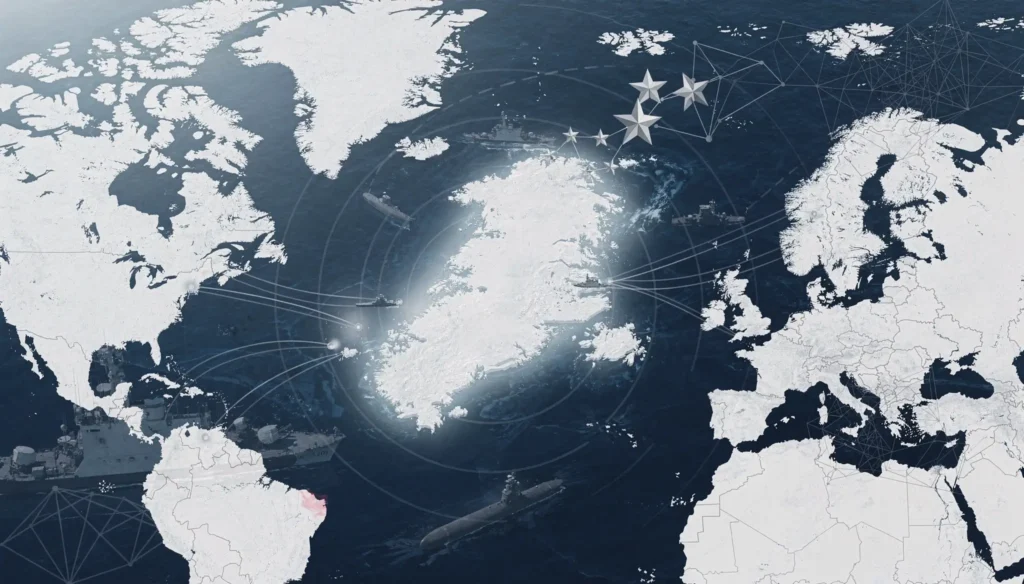
The recent warning issued by US President Donald Trump to annex Greenland has made Europe alarmed, triggering another geopolitical tension. The warning not only highlights major tensions in the transatlantic alliance but also raises important questions about the future of NATO.
According to Trump, Greenland is critical to the national security of the US, citing Russian and Chinese activities in the Arctic region. Further, he emphasised that Washington would act whether they like it or not. Also, he hinted that there may be circumstances in which force could be used if a deal cannot be negotiated. This rhetoric is after a controversial US military operation in Venezuela, according to European capitals, is an indication that there is a move to unilateral American geopolitics.
Danish and Greenlandic leaders have reacted with unprecedented cohesiveness, denying any US claim. Greenland political parties claimed that they do not want to be Americans and demand liberty and sovereignty, stressing that the future of the island shall be decided by their people. Danish Prime Minister Mette Frederiksen threatened that an American move to annex Greenland would affect NATO since the aggression of one of its members towards another would amount to the nullification of the principle of collective defence in the alliance.
The governments of Europe, whether in Berlin, Paris, or London, have united with Denmark and Greenland in support of their sovereignty and issued a statement declaring territorial integrity non-negotiable. However, their reaction also demonstrates its limits: their denunciations move faster than actual preventive actions, and Europe is not yet able to protect the Arctic alone.
Various analysts suggested that, with Trump continuing in his way, Europe might be forced to recalibrate its defence posture, spend more on Arctic security, or face a fundamental erosion of the transatlantic security architecture.
The Greenland standoff poses a challenge to NATO unity. Is the alliance capable of coping with the internal power politics without undermining the framework that has spurred European security over the decades?