
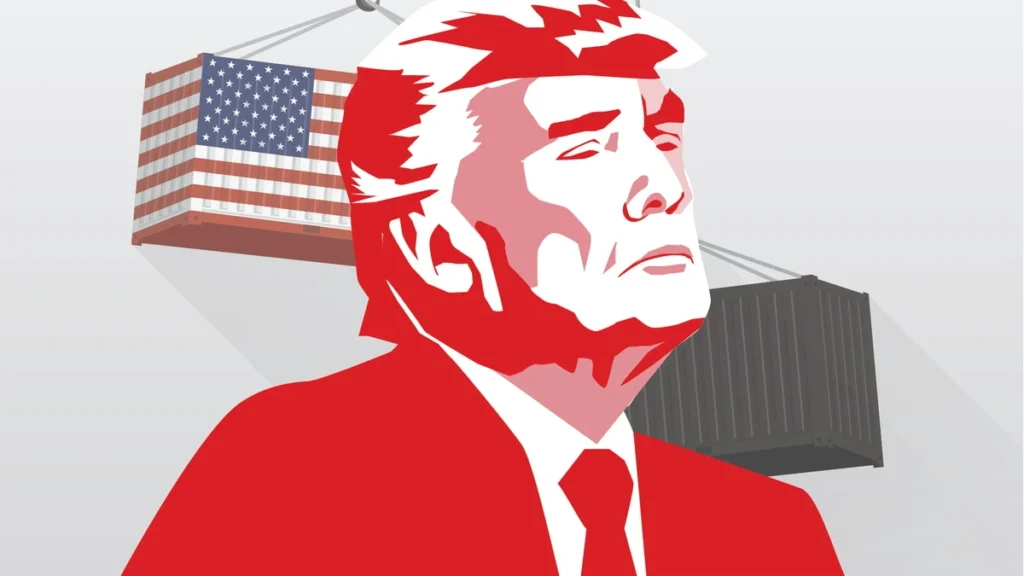
February 21, 2026 – In a 6-3 ruling on February 20, the Supreme Court dealt a historic blow to President Trump’s trade agenda. Chief Justice John Roberts authored the majority opinion. The court ruled Trump exceeded his authority under the International Emergency Economic Powers Act (IEEPA) to impose sweeping global tariffs.
The decision invalidates billions in tariff revenue. But it does not end the trade war.
What the Court Actually Decided
The justices were clear: IEEPA does not grant tariff authority. The law, enacted in 1977, was designed for national emergencies, not broad trade policy. Roberts wrote that Trump must show “clear congressional authorisation” for such sweeping powers. He could not.
The ruling voids most of Trump’s “reciprocal” tariffs on nearly every US trading partner. It leaves intact the steel and aluminium duties imposed under different laws. An estimated $175 billion in collected tariffs may need to be refunded, according to the Penn Wharton Budget Model.
Trump’s Rapid Counter-Move
Hours after the ruling, Trump signed an executive order imposing a new 10% global tariff. He invoked Section 122 of the Trade Act of 1974. The new levy takes effect on February 24.
There is a catch. Section 122 tariffs can only remain in place for 150 days without congressional approval. That sets up a potential standoff with lawmakers.
Treasury Secretary Scott Bessent was quick to reassure markets. He said alternative legal authorities, including Section 232 and Section 301, would replace IEEPA tariffs. Bessent projected “virtually unchanged tariff revenue in 2026”.
The Market and Business Reaction
Stocks rallied on news of the ruling. Businesses that challenged the tariffs called the decision a victory. For China specifically, the shake-up is significant. The new global tariff replaces two IEEPA-based 10% duties, maintaining China’s total rate at 35%.
The bigger uncertainty is refunds. Lower courts, specifically the Court of International Trade, will likely determine whether importers recover their money.
The Bottom Line
The ruling limits how Trump can impose tariffs, not whether he can. The administration has already signalled it will use every available legal tool to preserve its trade strategy. Markets should expect continued uncertainty, just under different legal packaging.