
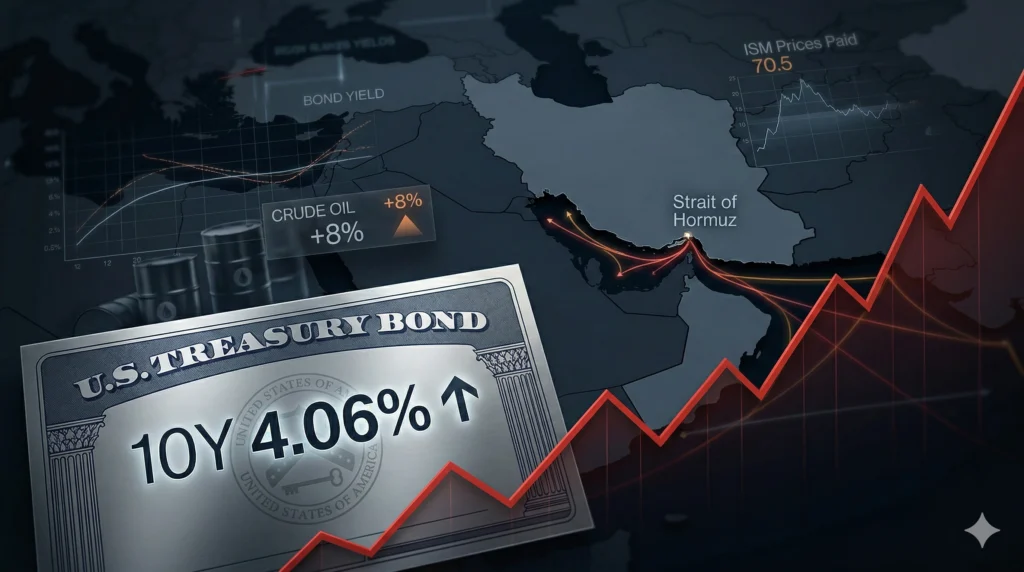
March 04, 2026 – The surge in treasury yields, triggered by Iran’s war, showed no sign of slowing on Tuesday. The benchmark 10-year yield edged above 4.06%. Bonds defied the classic safe-haven pattern. Instead of buying government debt for protection, investors aggressively sold Treasuries. The signal is clear: inflation anxiety now outweighs the instinct for safety.
Oil prices surged more than 8% as the conflict entered its fourth day. Iran’s reported closure of the Strait of Hormuz rattled energy markets worldwide. About 20% of global crude oil transits through that critical chokepoint daily. Tanker traffic has nearly stopped. War-risk insurance premiums spiked sharply over the weekend.
Why Treasury Yields Iran’s War Keeps Pushing Higher
Geopolitical risk alone does not explain the selloff. Monday’s ISM Manufacturing Index added fresh fuel. The prices-paid component jumped 11.5 points to 70.5. That reading signals accelerating factory input costs across the country. Energy disruption and sticky inflation now reinforce each other.
Futures traders have sharply reduced expectations for Fed rate cuts this year. The 2-year yield rose nearly 2 basis points to 3.51%. Markets increasingly doubt the Federal Reserve can ease monetary policy. Energy-driven price pressures leave little room for accommodation. The upward path of treasury yields, now set, looks firmly entrenched.
What the Treasury Yields Iran Outlook Signals Next
The critical variable is the war’s duration. President Trump warned it could extend far beyond four weeks. The U.S. Embassy in Riyadh was attacked Tuesday, widening the conflict across the region. Israel simultaneously struck both Iran and Lebanon. Hezbollah launched retaliatory missiles toward Tel Aviv. If Brent crude sustains above $80, economists warn that consumer spending could buckle.
Analysts at JPMorgan warned that prolonged Hormuz disruption could push Brent into the $100–$120 range. At those levels, recession fears would replace inflation concerns. The trajectory of treasury yields, which Iran’s conflict has reshaped, would likely reverse sharply. But for now, the bond market’s direction favours sellers. Inflation risk dominates every other signal. The traditional flight-to-safety playbook has been shelved entirely.