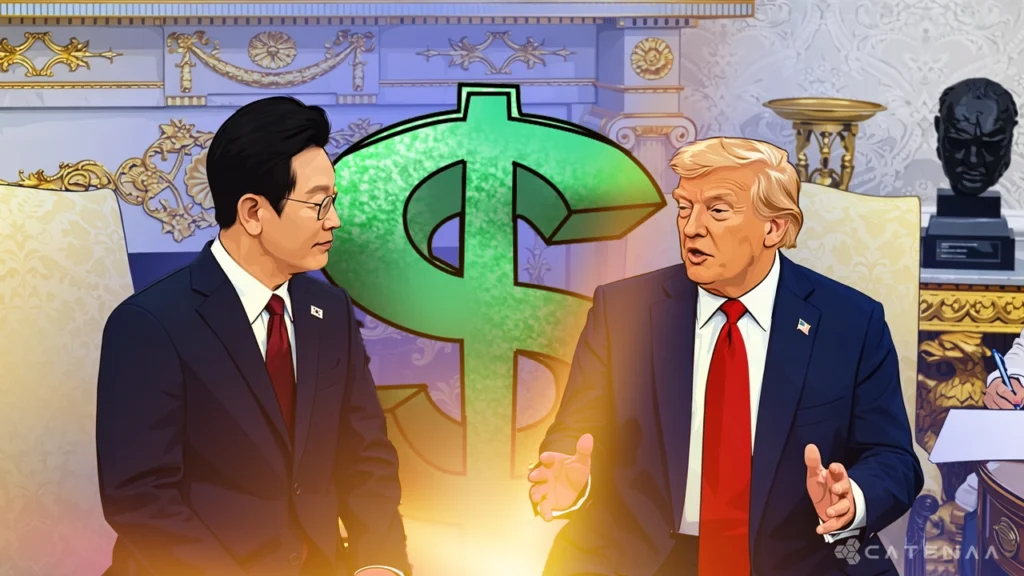
March 19, 2026 – Seoul commits nearly 82% of its foreign reserves to a strategic US investment. Washington and Seoul now enter the implementation phase.
Trade officials from the US and South Korea are meeting in Washington this week. They are discussing specific investments under a $350 billion fund. The fund targets American energy projects and strategic industries.
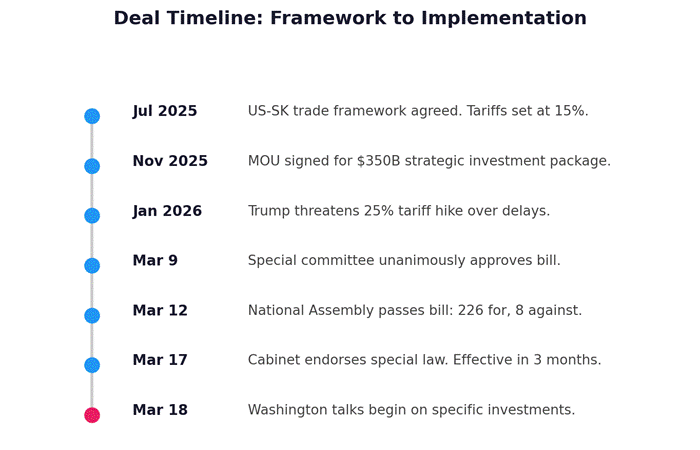
The talks involve the US Commerce Department and Trump’s National Energy Dominance Council. South Korean delegates will present their implementation roadmap. This follows the National Assembly’s passage of a special bill on March 12, 2026. The bill received 226 votes in favor, with only 8 against.
| $350 BILLION Total committed investment, roughly 82% of South Korea’s $428 billion in foreign reserves. |
How Will the $350 Billion Be Allocated?
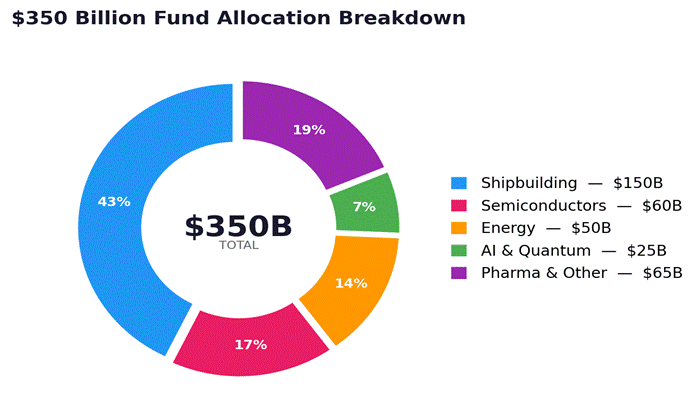
The fund splits into two major pillars. Shipbuilding receives $150 billion, a nod to Korea’s global dominance. The remaining $200 billion flows into strategic sectors. These include semiconductors, energy, AI, quantum computing, and pharmaceuticals.
The Pressure Behind the Deal
This deal did not emerge in a vacuum. Trump threatened 25% tariffs on South Korea in January 2026. The original trade agreement from July 2025 set tariffs at 15%. Seoul faced an ultimatum: legislate or face higher duties.
The Cabinet endorsed the special law on March 17, 2026. It takes effect three months after promulgation. The Korea-US Strategic Investment Corporation will manage all funds.
Why This Matters for Markets
The $350 billion figure equals roughly 82% of Korea’s $428 billion foreign reserves. The commitment runs until January 2029. Procurement extends over a much longer period. Annual direct investment caps at $20 billion.
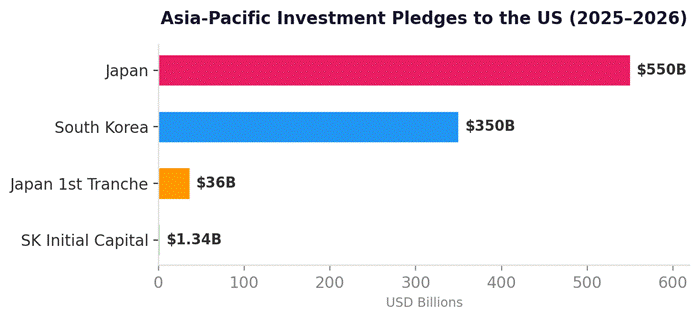
The corporation starts with 2 trillion won ($1.34 billion) in seed capital. It will raise additional funds through international bond issuances. The Korean government guarantees these bonds. A three-member board with 10+ years of financial experience will lead it.
South Korea’s GDP growth is projected at 1.9% for 2026. The current account surplus reached 6.1% of GDP through Q3 2025. These figures suggest Seoul can absorb the fiscal pressure.
The Bottom Line
This is the largest bilateral investment pledge in Asia-Pacific history. It dwarfs previous trade-linked commitments. Only Japan’s $550 billion fund is larger. Both signal a new era of deal-driven diplomacy under Trump.
For investors, the semiconductor and energy sectors stand to gain the most. For Seoul, the risk is clear: overexposure relative to reserves. The next 90 days will determine whether ambition turns into action.