
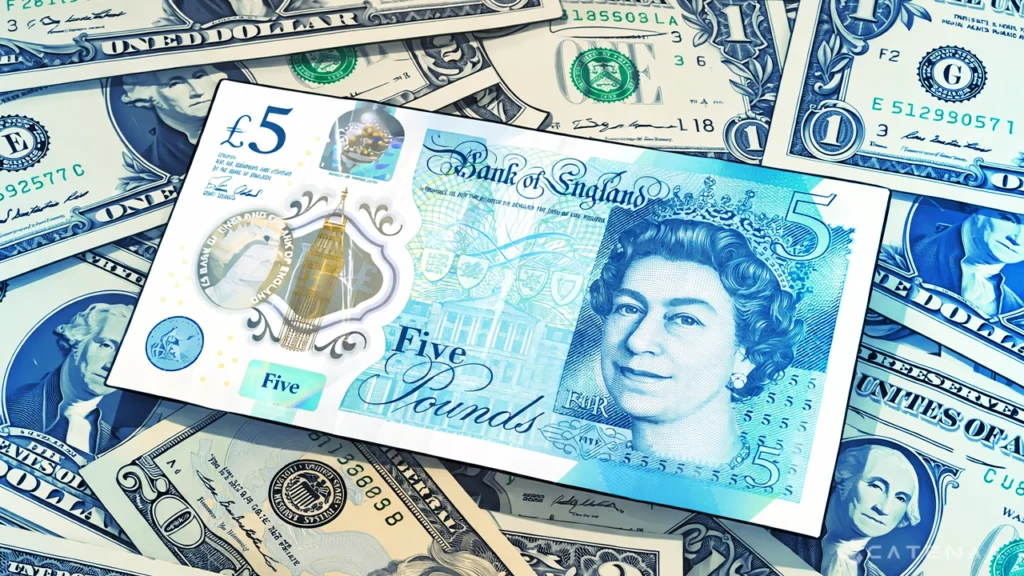
Sterling gains 0.6% against the dollar amid expectations of a rate hold. Oil above $100 raises inflation fears for both economies.
| KEY TAKEAWAYS 1. GBP/USD rises 0.6% to $1.3299; dollar index falls 0.5% 2. Fed expected to hold rates at 3.50– 3.75% on Wednesday 3. BoE likely to maintain 3.75% rate on Thursday 4. Oil above $100/bbl; Oxford Economics warns of UK recession risk |
Sterling Surges on Dollar Weakness
On Monday, the British pound climbed to a one-week high against the US dollar. Sterling reached $1.3299, consequently gaining 0.6% in early London trading. This move came ahead of critical rate decisions from two major central banks.
Meanwhile, forex markets are positioned cautiously before Wednesday’s Federal Reserve announcement. Most economists expect policymakers to hold the benchmark rate steady. As a result, the current federal funds range remains at 3.50% to 3.75%.
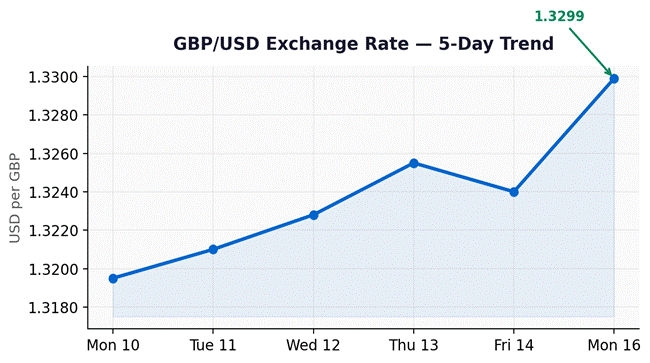
Figure 1: GBP/USD exchange rate movement, March 10–16, 2026. Source: Yahoo Finance.
Why Inflation Risks Keep Rate Cuts on Hold
Persistent inflation pressures have pushed rate cut expectations further out. Consequently, many analysts now forecast the next Fed cut will not arrive until September 2026. In addition, the US dollar index fell 0.5%, reflecting growing policy uncertainty.
Carol Kong, Commonwealth Bank of Australia: “The war poses downside risk to growth and upside risks to inflation. Therefore, central bank responses depend on whether inflation is above or below target.”
How the Euro Reacted to Pound Strength
Against the euro, the pound held steady at €1.1575 on Monday. However, currency traders are weighing divergent signals from each economy. Although UK growth data has softened, the eurozone recovery also remains fragile.
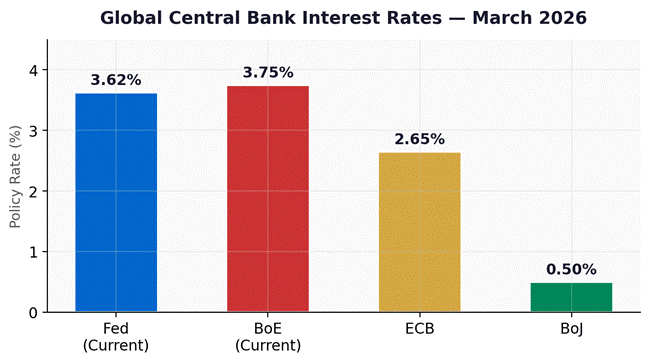
Figure 2: Comparison of global central bank policy rates as of March 2026. Source: Fed, BoE, ECB, BoJ.
Bank of England Faces an Inflation-Growth Dilemma
Similarly, the BoE is expected to keep borrowing costs unchanged at 3.75% on Thursday. Policymakers face a difficult balancing act between sticky inflation and slowing output. Moreover, oil prices above $100 per barrel add further complexity to the decision.
Oxford Economics warned: “A worst-case scenario with oil at $140 per barrel would push UK inflation significantly higher. As a result, it could tip the economy into a mild recession.”
UK Equities Rally on Energy Gains
In equities, the FTSE 100 index rose 1% to 10,370 points on Monday afternoon. Notably, energy stocks led gains because Brent crude remained elevated. For instance, Shell and BP both advanced more than 1% during the session.
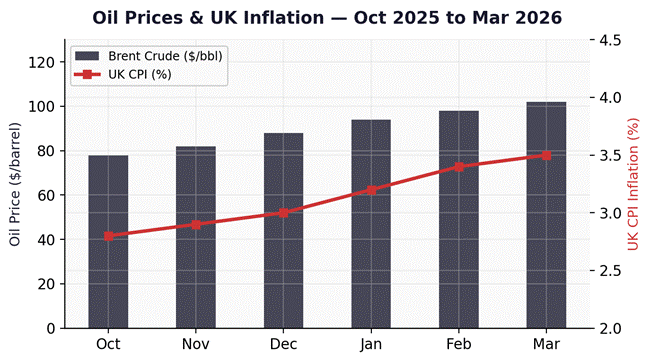
Figure 3: Brent crude prices vs. UK CPI inflation trend, October 2025–March 2026. Source: ONS, ICE.
What Traders Are Watching This Week
On Wednesday, the Fed’s dot plot and Chair Powell’s press conference will be closely scrutinised. Specifically, markets want clarity on whether the September rate cut timeline remains intact. Furthermore, any hawkish surprise could cause the dollar to surge sharply.
Thursday’s BoE decision carries similar weight for sterling. In particular, traders will parse the MPC voting split for signs of disagreement. Additionally, a dovish tilt could accelerate expectations for a summer rate cut.
Finally, geopolitical risks remain elevated with oil prices above $100 a barrel. Because of the Strait of Hormuz situation, commodity markets continue to face headwinds. Consequently, energy-driven inflation could force both central banks to delay easing further.
SOURCES & METHODOLOGY
[1] Yahoo Finance UK – GBP/USD, DXY, and FTSE 100 live market data (March 16, 2026)
[2] Commonwealth Bank of Australia – Carol Kong, Currency Strategist, analyst commentary
[3] Oxford Economics – UK oil price scenario analysis and recession risk modelling
[4] US Federal Reserve – Federal funds rate target range (3.50%–3.75%)
[5] Bank of England – Bank Rate decision schedule (March 20, 2026)
[6] ICE Futures Europe – Brent crude oil benchmark pricing
[7] UK Office for National Statistics (ONS) – Consumer Price Index data