
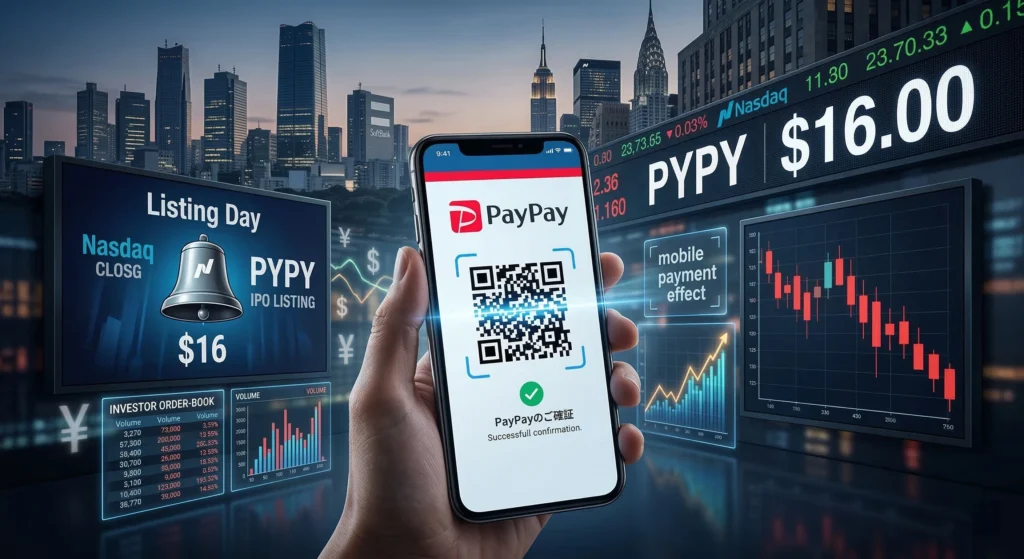
March 12, 2026 – PayPay Corporation is pricing its U.S. initial public offering at $16 per share. This falls below the originally marketed range of $17 to $20 per ADS. The Japanese digital wallet giant will sell approximately 55 million American depositary receipts. The deal is set to raise roughly $880 million despite ongoing market volatility.
The pricing decision reflects cautious investor sentiment. Geopolitical tensions in the Middle East have unsettled global equity markets. Yet the IPO order book was more than five times oversubscribed. This signals a strong underlying demand for the fintech platform.
PayPay IPO: Deal Terms at a Glance
| Detail | Marketed Range | Final Guidance |
| Price Per ADS | $17 – $20 | $16 |
| ADSs Offered | ~55 million | ~55 million |
| Gross Proceeds | $935M – $1.1B | ~$880M |
| Target Valuation | $11.4B – $13.4B | ~$10.7B |
| Cornerstone Investors | QIA, Visa, ADIA | ~$220M committed |
| Listing Exchange | Nasdaq (PAYP) | Nasdaq (PAYP) |
Table 1: PayPay IPO terms — marketed range vs. final pricing guidance.
Sources: Bloomberg, Reuters, SEC F-1 Filing (Feb 2026), Renaissance Capital
SoftBank Group Corp. will remain the controlling shareholder post-listing. The selling shareholder, SVF II Piranha (DE) LLC, is a SoftBank Vision Fund 2 entity. Cornerstone investors include Qatar Investment Authority, Visa, and Abu Dhabi Investment Authority. These three institutions committed approximately $220 million.
Goldman Sachs, J.P. Morgan, Mizuho, and Morgan Stanley lead the offering. Tencent, Ant Group’s Alipay, and Alphabet’s Google also committed to invest. The float remains low at roughly 8.2% of shares outstanding.
Financial Performance: Profits Surge Over 250%
| Metric (9 Months to Dec) | 2024 | 2025 |
| Revenue | ¥220.4B (~$1.44B) | ¥278.5B (~$1.82B) |
| Revenue Growth (YoY) | — | +26.4% |
| Net Profit | ¥29.0B (~$190M) | ¥103.3B (~$675M) |
| Profit Growth (YoY) | — | +256.6% |
| Operating Profit | ~¥30B | ¥61B (~$387M) |
| Registered Users | ~66M | 72M |
Table 2: PayPay financial highlights for the nine months ended December 31.
Sources: PayPay SEC F-1 Filing (Feb 2026), Reuters, MarketScreener
PayPay’s financials show impressive momentum. Revenue rose 26% year-over-year to ¥278.5 billion. Net profit surged more than 250% to ¥103.3 billion ($675 million). Operating profit more than doubled to ¥61 billion.
Matt Kennedy, senior strategist at Renaissance Capital, noted: “Only a handful of companies have this growth and margin profile.” The company’s path from heavy promotional spending to sustained profitability validates its strategy.
Japan’s Digital Payments Market: Explosive Growth Ahead
| Market Segment | 2025 Est. | 2030 Forecast |
| Japan Mobile Payments | $280B | $1.07T (31% CAGR) |
| Japan Digital Payments | $469B | $1.32T (12.2% CAGR) |
| Prepaid & Digital Wallet | $205B | $324B (9.3% CAGR) |
| Cashless Ratio (Japan) | 42.8% | Target: >50% |
Table 3: Japan digital payments market size and projections by segment.
Sources: Mordor Intelligence (2025), Renub Research, GlobeNewsWire, Japan Cabinet Office
PayPay operates in one of the world’s fastest-growing digital payments markets. Japan’s mobile payments sector alone is projected to reach $1.07 trillion by 2030. The country’s cashless ratio surpassed 42.8% in 2024. The government’s original 40% target has already been exceeded.
Japan’s smartphone penetration rate stands at 91.6%. Over 90 million people now use digital payment services. These macro trends provide a strong tailwind for PayPay’s growth trajectory.
PayPay’s Market Dominance: Key Operating Metrics
| PayPay Operating Metric (FY2024) | Value |
| Total GMV Processed | ¥12.5 trillion (~$85B) |
| Total App Transactions | 7.8 billion |
| QR-Code Market Share (Japan) | ~66% of all QR transactions |
| Avg. Monthly GMV per User | ¥35,600 (~$233) |
| Participating Merchants | 4+ million |
Table 4: PayPay platform operating data for fiscal year 2024.
Sources: PayPay SEC F-1 Filing, Host Merchant Services, Capital.com
PayPay commands roughly two-thirds of Japan’s QR-code payment market. The platform processed ¥12.5 trillion ($85 billion) in gross merchandise value in FY2024. Its 72 million registered users represent about 75% of Japanese smartphone owners.
The company is also expanding its financial ecosystem. It recently acquired majority stakes in PayPay Bank and PayPay Securities. A 40% acquisition of Binance Japan positions it in the digital assets space. This super-app strategy mirrors platforms like WeChat Pay and Alipay in China.
What This Means for the U.S. IPO Market
PayPay’s listing marks a milestone for cross-border fintech offerings. It is the first U.S. listing of a SoftBank majority investment since Arm’s 2023 IPO. Arm debuted at a $54.5 billion valuation, and its market cap has since risen to nearly $130 billion.
Goldman Sachs has forecast that U.S. IPO proceeds could quadruple to a record $160 billion in 2026. Potential debuts from SpaceX, OpenAI, and Anthropic could further energize the market. PayPay’s offering provides an early test of investor appetite.
The pricing below range is a pragmatic move. Most recent fintech IPOs have traded below their offer prices. PayPay’s conservative pricing, combined with heavy oversubscription, could set the stage for a strong first-day trading performance.