
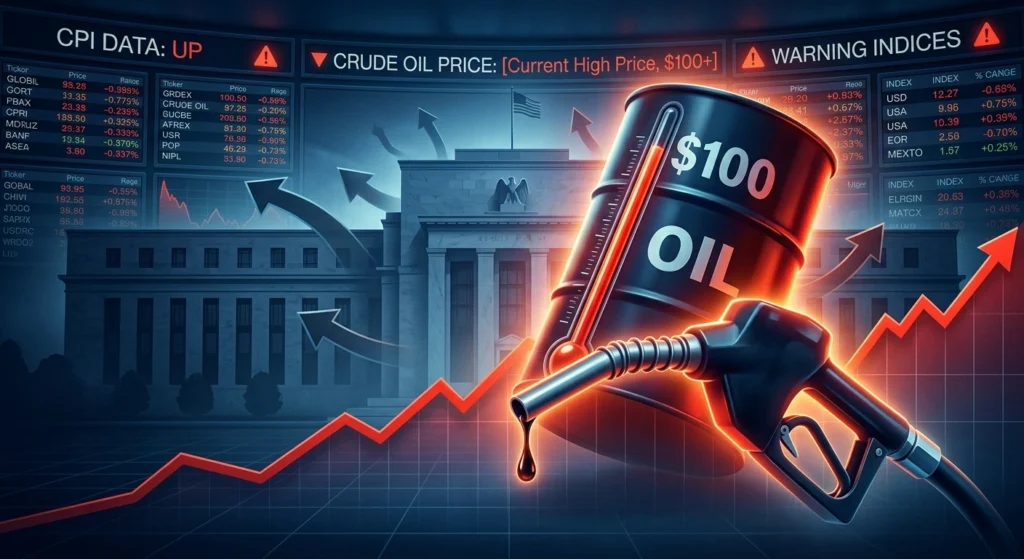
March 08, 2026 – A surge in crude oil prices toward $100 per barrel is raising fresh inflation concerns across Wall Street. Barclays analysts warn the spike would push headline consumer prices higher in the near term. However, the lasting economic damage depends entirely on how long prices stay elevated.
Headline Inflation Feels the Heat First
According to Barclays, a 10% sustained rise in crude prices adds roughly 0.2 percentage points to headline CPI. That impact typically surfaces within one to two months. Gasoline prices drive most of this effect, since crude accounts for only about half the retail fuel cost. Refining and distribution margins absorb the rest. The bank estimates that gas prices reflect 50–60% of crude oil moves. This adjustment usually plays out over two to three weeks.
Core Inflation Stays Shielded For Now
The pass-through to core inflation is expected to be smaller and slower. Energy shocks hit headline figures directly but take longer to seep into underlying price measures. Today’s economic backdrop also differs sharply from the 2022 oil spike triggered by Russia’s invasion of Ukraine. Back then, strained supply chains and heavy fiscal stimulus amplified inflation pressures. Now, consumer spending is cooling, the labor market has more slack, and inflation has come in below expectations in 11 of the past 12 months.
What It Means for the Fed
Under its baseline scenario, Barclays forecasts headline CPI at 2.7% and core CPI at 2.8% by December 2026. Those projections assume oil does not remain elevated for an extended period. A prolonged stay near $100, however, could push headline inflation closer to 3% by late 2026. That scenario risks delaying Federal Reserve rate cuts, especially if inflation expectations start climbing.
The key takeaway for markets is clear. Oil price spikes grab headlines, but persistence determines policy outcomes. A brief surge may fade without consequence. A sustained rally could reshape the Fed’s entire rate path for the year ahead.