
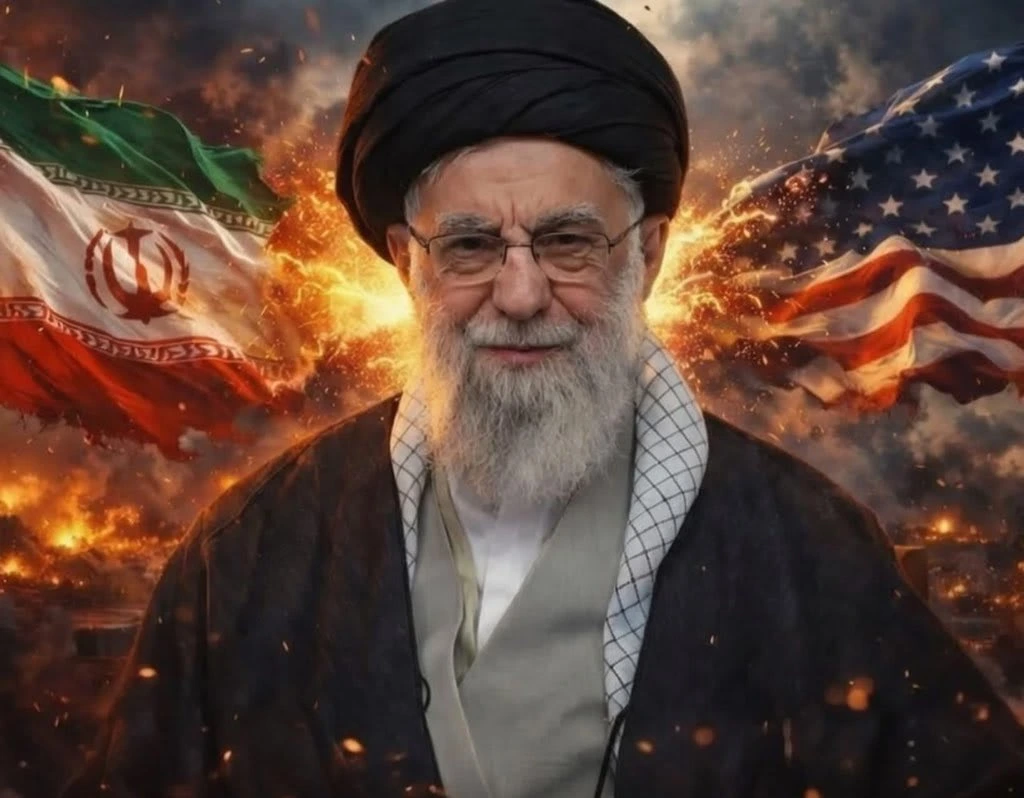
• Iranian state media confirmed Supreme Leader Ayatollah Ali Khamenei’s death in joint U.S.-Israel strikes.
• Tehran retaliated with missile strikes on U.S. bases in Bahrain, Kuwait, Qatar, the UAE, and Israel.
• Ayatollah Alireza Arafi now leads an interim council alongside President Pezeshkian.
• Over 1,400 Middle East flights cancelled; Israel launched additional strike waves on Tehran.
• Iran’s Revolutionary Guard issued warnings restricting Strait of Hormuz passage.
• The UAE ordered nationwide remote schooling; Congress plans a war powers vote.
• Khamenei’s daughter, son-in-law, and grandchild also died in the strikes.
• NetBlocks reported internet restrictions across Iran during the political transition.
ANALYSIS
A Generational Shock for Iran
A joint U.S.-Israeli military campaign struck Tehran early Saturday, killing Supreme Leader Ayatollah Ali Khamenei. The Pentagon named the operation “Epic Fury,” while Israel called it “Roaring Lion.” As a result, strikes destroyed Khamenei’s compound in Tehran’s secure Pasteur district. His daughter, son-in-law, and grandchild also perished in the attack. Consequently, this marks Iran’s most consequential leadership crisis since the 1979 revolution.
Tehran Retaliates Across the Region
In response, Tehran launched missile strikes against U.S. military bases in five Gulf states. Bahrain, Kuwait, Qatar, the UAE, and Jordan all confirmed intercepting incoming projectiles. Simultaneously, Israel came under direct attack from Iranian forces. Furthermore, Dubai International Airport suspended all operations. Airlines cancelled more than 1,400 regional flights on Sunday. Additionally, the UAE ordered schools nationwide to switch to remote learning through Wednesday.
Political Transition and Internal Turmoil
On the domestic front, Iran faces deep political uncertainty. Cleric Ayatollah Alireza Arafi now leads an interim council alongside President Pezeshkian. Pezeshkian declared Khamenei a martyr and vowed to avenge his killing. Meanwhile, security chief Ali Larijani warned secessionist groups to expect a harsh crackdown. At the same time, NetBlocks reported sweeping internet restrictions across the country.
Energy Markets Brace for Disruption
For global investors, the energy market outlook looks especially alarming. Iran’s Revolutionary Guard reportedly issued warnings restricting passage through the Strait of Hormuz. About one-fifth of the world’s crude oil moves through this critical waterway every day. As a consequence, several major trading firms paused Gulf shipments over the weekend. Brent crude closed Friday at $72.48 per barrel. However, analysts widely expect a $5 to $10 surge when Asian exchanges open Sunday evening. If Hormuz remains restricted, prices could climb above $100.
Geopolitical Ripple Effects
China faces particularly acute exposure to this crisis. Roughly half of its crude imports flow through the Strait of Hormuz. Despite this, Beijing has urged de-escalation without offering direct support to Tehran. Similarly, Russia condemned the strikes but appears unwilling to provide military aid. In short, neither ally seems positioned to back Iran in a meaningful way. Moreover, analysts warn that years of Iranian détente-building with Gulf neighbours may now collapse.
What Comes Next
Israel has already launched additional strike waves targeting Tehran’s missile defences. Trump signalled that operations would continue throughout the week. At the same time, Congress is preparing to vote on a war powers resolution. Ultimately, the conflict’s duration, not its opening salvo, will shape the true market fallout. Therefore, investors should prepare for a volatile and unpredictable week ahead. determine the true market impact. Investors should prepare for a volatile and unpredictable week ahead.