
In Summary
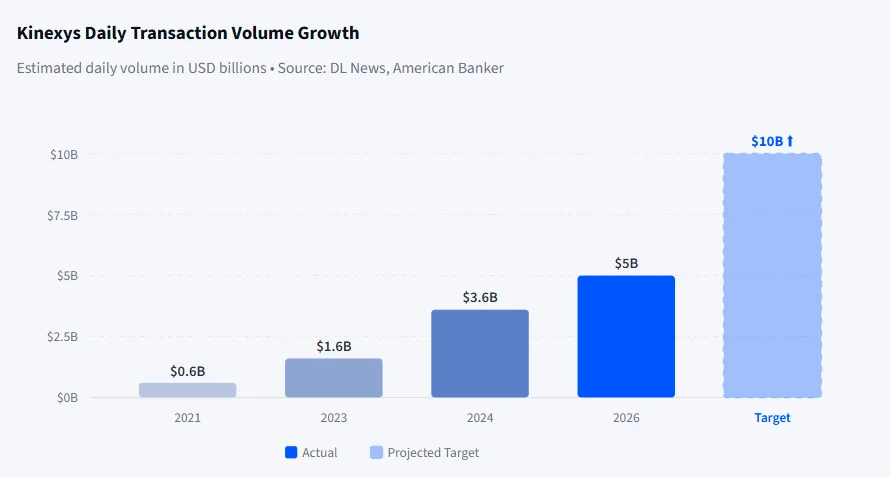
JPMorgan’s Kinexys blockchain platform now processes $5B daily across five continents.
A new Mitsubishi partnership marks the first Japanese corporation to join Kinexys.
The bank targets $10B in daily transaction volume in the near term.
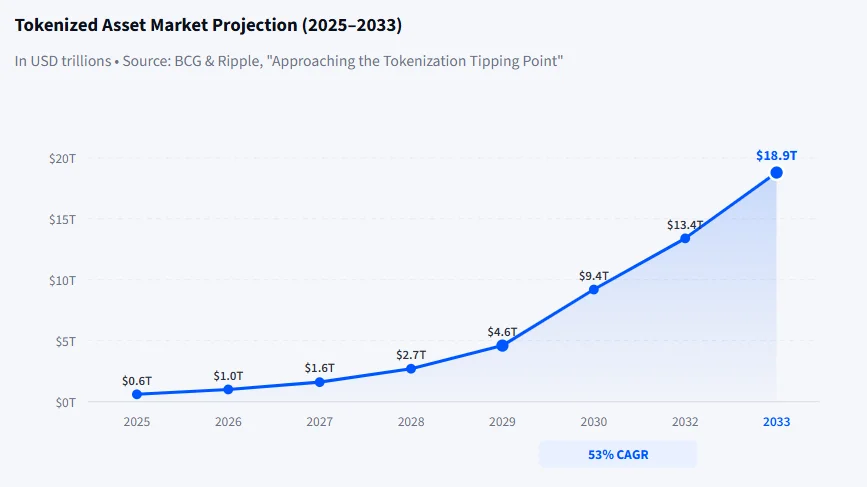
Tokenised asset markets could reach $18.9 trillion by 2033, per BCG and Ripple.
JPMorgan Chase is doubling down on blockchain infrastructure. Its digital asset unit, Kinexys, now aims for $10 billion in daily transaction value. The ambition is backed by a new deal with Mitsubishi Corporation.
The partnership makes Mitsubishi the first Japanese firm on Kinexys. It will use JPMorgan’s blockchain rails for cross-border treasury management. This signals growing Asian institutional appetite for on-chain payment solutions.
Kinexys by the Numbers
Since launching in 2020, Kinexys has processed over $3 trillion in total value. The platform currently handles around $5 billion daily across five continents. It serves hundreds of institutional clients. These include central banks and major commercial banks.
Its deposit token, JPMD, sits at the core of the system. Unlike stablecoins, JPMD represents actual bank deposits. It enables near-instant settlements without intermediaries. It also moves freely between on-chain and off-chain bank accounts.
Why This Deal Matters
Mitsubishi operates across dozens of industries globally. Its treasury needs span multiple currencies and jurisdictions. Traditional cross-border payments are slow and expensive. Kinexys offers real-time, programmable settlement.
This deal also validates blockchain adoption in Japan’s corporate sector. It could encourage other Asia-Pacific conglomerates to follow. Kinexys’ head of business development, Zack Chestnut, expects the client pipeline to remain robust throughout 2026.
Wall Street’s Broader Blockchain Shift
JPMorgan is not moving alone. Wall Street is accelerating its blockchain strategy across the board. Mastercard recently acquired crypto firm BVNK for $1.8 billion. Stripe launched its own blockchain. PayPal expanded its stablecoin offering.
JPMorgan itself arranged Galaxy Digital’s commercial paper issuance on Solana. It also deployed its JPM Coin deposit token on Coinbase’s Base network. The bank’s move from private to public blockchain is driven by institutional demand.
According to JPMorgan research, nearly $130 billion flowed into digital assets in 2025. The bank expects institutional investors to drive even higher inflows in 2026.
The Tokenisation Tailwind
JPMorgan’s expansion is part of a broader tokenisation wave. A joint study by Boston Consulting Group and Ripple projects this market at $18.9 trillion by 2033. That implies a compound annual growth rate of 53%.
Today, the tokenised asset market sits at roughly $600 billion. Real estate, government bonds, and private credit are the leading segments. As regulatory clarity improves in the U.S. and Asia, adoption is expected to accelerate sharply.
SEC Chairman Paul Atkins has voiced support for tokenisation. He called it a key innovation for capital markets. This regulatory endorsement adds momentum for banks like JPMorgan to scale their blockchain operations.
What’s Next for Kinexys
JPMorgan plans to expand JPM Coin to multiple blockchains. The bank is integrating with the Canton Network. It is also active on Coinbase’s Base and Solana. Multi-chain deployment could significantly broaden its institutional reach.
However, challenges remain. Regulatory fragmentation across jurisdictions slows deployment. Interoperability between private and public blockchains is still evolving. Despite these hurdles, the bank’s trajectory is clear.
Kinexys has already processed $3 trillion and aims to double daily volumes. It is fast becoming Wall Street’s go-to blockchain payments rail. The Mitsubishi deal cements JPMorgan’s first-mover edge in this space.