

March 19, 2026 – Rising bond yields, AI-driven concentration, and a disconnect with central banks challenge traditional portfolio strategies heading into 2026.
BlackRock’s Investment Institute issued a stark warning this week. Traditional portfolio diversification is failing investors. The firm’s weekly commentary calls this the “diversification mirage.” It is now one of three core themes in its 2026 global outlook.
AI Mega Force Drives Record Market Concentration
A growing share of S&P 500 returns is tied to a single common driver. BlackRock’s analysis strips out traditional factors like value and momentum. What remains is one dominant force: artificial intelligence. The top 10 S&P 500 holdings now account for roughly 41% of the index, nearly double the 19% share seen in 2015.
Nearly 40% of the S&P 500’s total 2025 return came from just five stocks. NVIDIA, Broadcom, Alphabet, Microsoft, and Palantir led the charge. The index closed 2025 at 6,845 with a 16.39% annual gain. Yet this masks extreme concentration risk beneath the surface.
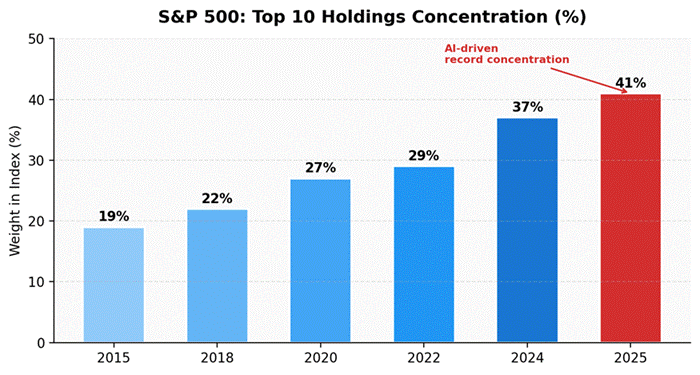
Fig 1: S&P 500 top 10 holdings weight has surged from 19% (2015) to 41% (2025). Source: Bloomberg, Apollo Chief Economist.
Global Bond Yields Spike, Eroding Traditional Hedges
Long-term government bonds no longer provide reliable portfolio ballast. That is BlackRock’s blunt assessment. Japanese 30-year yields hit a record 3.39% in December, up over 100 basis points year-to-date. A government fiscal spending package and a Bank of Japan rate hike signal an accelerated move.
U.S. 10-year Treasury yields rose to three-month highs near 4.20%. The selloff was global. Australia and Canada have shifted their tone on rates. Both flagged potential hikes or an end to cuts. This synchronized bond market stress underscores fears about fiscal sustainability.
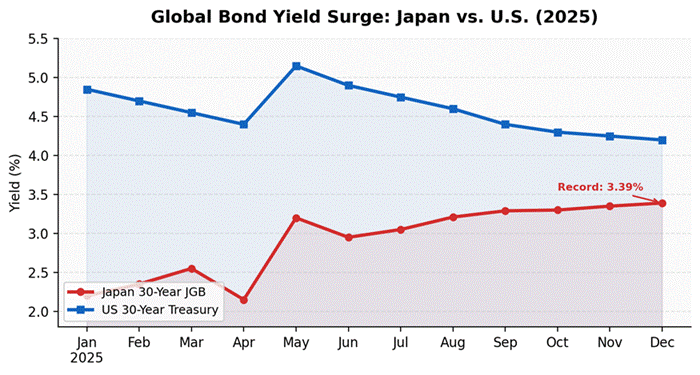
Fig 2: Japan 30-year JGB yields surged to record highs in 2025, outpacing the U.S. selloff. Source: Bloomberg, TradingView.
Central Bank Disconnect Poses 2026 Risk
BlackRock identifies a growing policy divergence heading into 2026. The U.S. Federal Reserve remains relatively dovish despite stronger growth. Its December decision drew three dissents — the most since 2019. Other developed-market central banks are turning hawkish amid weaker economic data.
The Fed projects further easing into 2026. Yet Japan’s government debt market tells a different story. The Bank of Japan is signaling rate hikes. The ECB is holding steady but turning more hawkish. This divergence could reignite inflation pressures. It also raises concerns about global debt sustainability.
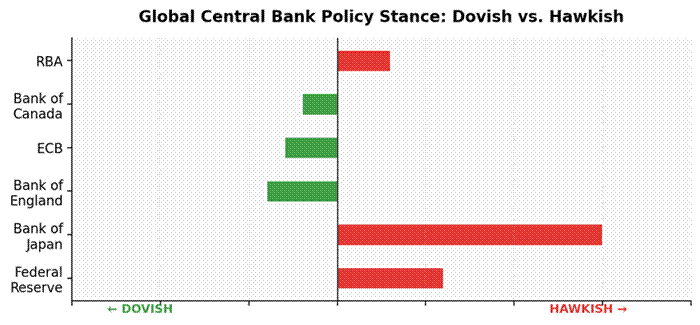
Fig 3: Global central bank policy stances are diverging sharply heading into 2026. Source: BlackRock Investment Institute.
What This Means for Investors
BlackRock’s bottom line: a “neutral” portfolio allocation no longer exists. The firm recommends a dynamic, active approach. It favors private markets and hedge funds for uncorrelated returns. It stays pro-risk on AI equities. Short-term Treasuries are preferred over long-dated bonds.
Investors should focus less on spreading risk and more on owning it deliberately. With mega forces like AI reshaping returns, seeking idiosyncratic alpha is now essential. The diversification mirage, once theoretical, is now unfolding in real time.