

March 20, 2026 – The exchange’s dual-liquidity model and sub-10ms matching engine target a sector where algorithmic bots now execute 60% of trades on major platforms.
KEY TAKEAWAYS
- Zoomex recorded $62.7M in BTC spot depth within ±2% of mid-price, per CryptoRank data.
- AI trading bots now execute roughly 60% of volume on major crypto exchanges.
- The global algorithmic trading market is projected to reach $20.23B in 2026, with a 7.87% CAGR through 2031.
- Zoomex’s dual-liquidity model claims to offer 30% greater order-book redundancy under stress.
- The platform holds MSB and NFA registrations and has been audited by Hacken.
Cryptocurrency exchange Zoomex has strengthened its trading infrastructure. The upgrade targets rising demand from AI-powered algorithmic systems. According to a CryptoRank liquidity analysis, the platform recorded over $62.7 million in BTC spot depth. This measurement captures liquidity within ±2% of the mid-price.
Why It Matters
Algorithmic trading now dominates cryptocurrency execution globally. Trading bots handle roughly 60% of volume on major exchanges, per Technavio’s 2026 report. The global algorithmic trading market reached $20.23 billion in 2026. Analysts at Mordor Intelligence project it will hit $29.54 billion by 2031. That reflects a compound annual growth rate of 7.87%.
Industry R&D budgets for AI-powered trading tools rose 20% in the past year. Firms now prioritise execution speed, slippage control, and order book transparency. These metrics matter more to algorithms than brand reputation or token listings.
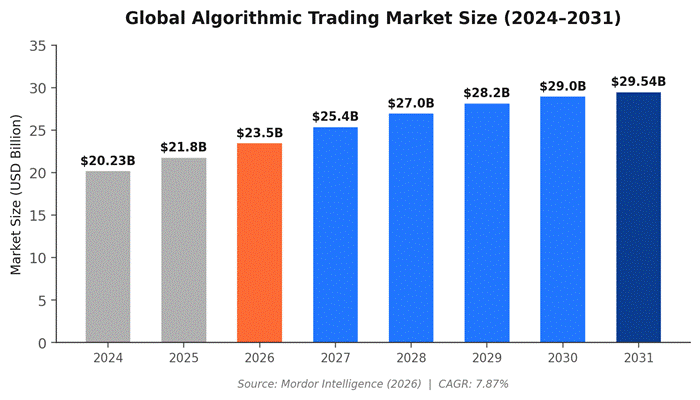
Figure 1: Algorithmic trading market projected to grow at 7.87% CAGR through 2031.
The Ghost Liquidity Problem
Many exchanges display deep order books that collapse under real pressure. This “ghost liquidity” misleads both human traders and algorithms alike. Orders vanish amid volatility, leading to unexpected slippage and execution failures. Automated systems suffer more than humans because they cannot adapt on instinct.
Zoomex addresses this gap through a dual-liquidity pool model. It blends internal order flow with aggregated external market depth. Platform disclosures claim 30% greater order book redundancy during stress events. This architecture reduces concentration risk in leveraged perpetual contracts.
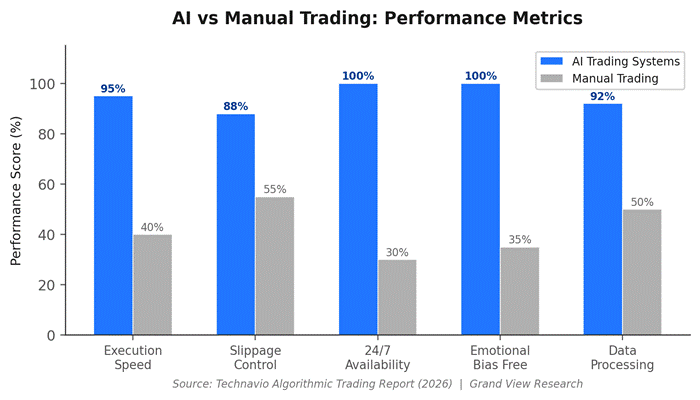
Figure 2: AI trading systems outperform manual trading across key execution metrics.
Zoomex by the Numbers
Founded in 2021, Zoomex now serves over 3 million users in 35+ countries. The platform offers more than 700 trading pairs and 590+ perpetual contracts. Its matching engine operates with interface latency under 10 milliseconds. For context, most AI strategies require sub-50ms execution to remain competitive.
The exchange holds regulatory registrations across multiple jurisdictions. These include Canada MSB, U.S. MSB, U.S. NFA, and Australia AUSTRAC. Blockchain security firm Hacken has audited the platform’s security infrastructure. Asset custody uses a multi-signature cold- and hot-wallet structure.
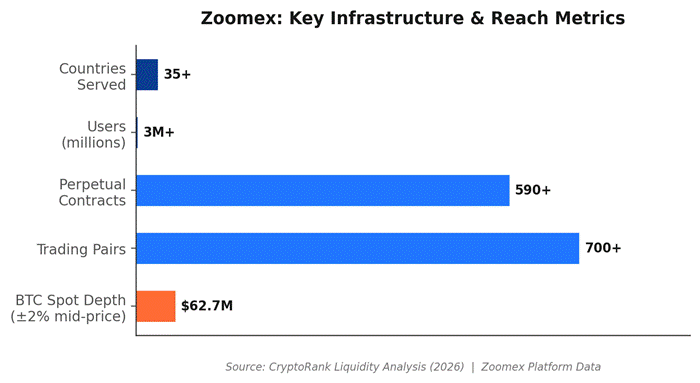
Figure 3: Zoomex infrastructure and global reach at a glance.
The Bigger Picture
The AI trading platform market is expanding at an even faster pace. Precedence Research values it at $13.52 billion in 2025. By 2034, analysts expect it to reach $69.95 billion at a 20.04% CAGR. Cloud-based platforms are accelerating adoption among smaller trading firms. They cut development cycles by roughly 30% compared to on-premise setups.
Zoomex’s AI component, called COSIGN, uses machine learning for market analysis. It processes 24/7 data streams to detect order book imbalances in real time. The goal is structural optimisation, not speculative price forecasting. This aligns with institutional demands for fairness and transparency in execution.
The Bottom Line
As AI reshapes crypto trading, infrastructure quality is replacing marketing hype. Exchanges now compete on execution speed, genuine liquidity, and API reliability. Zoomex’s investment in dual-pool architecture positions it for this shift. Whether its model scales under sustained institutional pressure remains the key test.