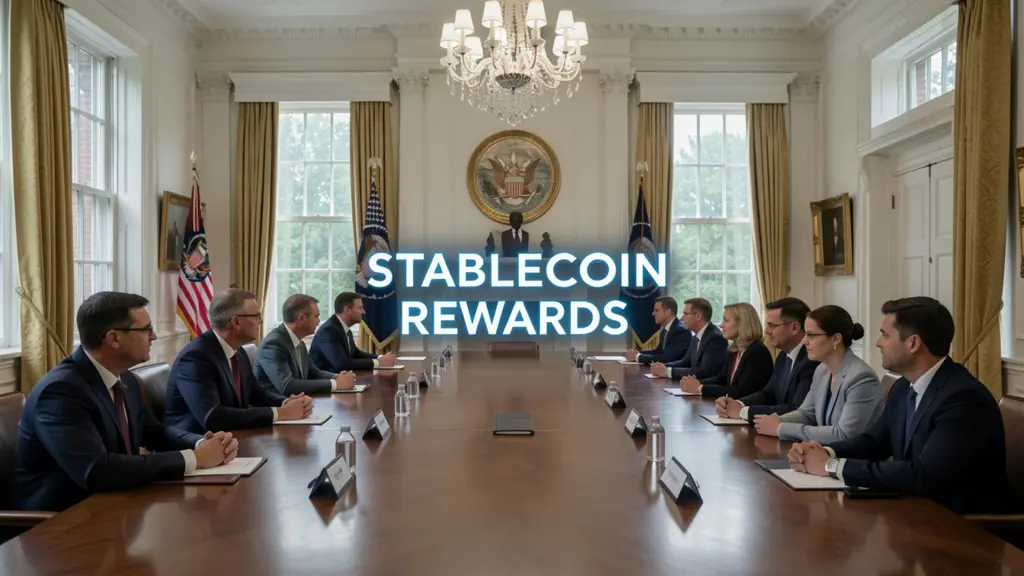


Catenaa, Monday, February 03, 2026- US administration officials have convened crypto firms and banking groups at the White House to address disputes over stablecoin rewards, a sticking point slowing digital asset legislation in Congress.
Participants described the session as broad and contentious, with bank groups taking a firm stance and limited flexibility to negotiate.
However no agreement was reached, but attendees identified areas where concessions may be possible.
White House officials plan to narrow future meetings to push toward concrete decisions and compromises.
The meeting brought together representatives from Coinbase, major crypto trade associations and banking organizations to discuss whether third parties should be allowed to offer rewards tied to stablecoins.
Patrick Witt of the President’s Council of Advisors for Digital Assets led the talks, according to people familiar with the meeting.
The issue has gained urgency as Senate committees move competing bills to regulate the crypto sector, including proposals dividing oversight between the Securities and Exchange Commission and the Commodity Futures Trading Commission.
Lawmakers remain split over how stablecoin rewards fit into those frameworks.
Banks have opposed allowing rewards through platforms such as Coinbase, arguing deposits could shift away from traditional institutions, harming community banks and local lending.
Crypto firms counter that the matter was debated during passage of the GENIUS stablecoin law, which bars issuers from paying direct interest but does not restrict third-party rewards.
Several participants said a path remains open to settle the issue before the end of February, a timeline that could unlock progress on broader market structure legislation.
Banking groups said any outcome must protect financial stability and lending to families and small businesses. Crypto advocates warned that limiting rewards could restrain competition and consumer choice as lawmakers debate the future of digital assets in the US.




