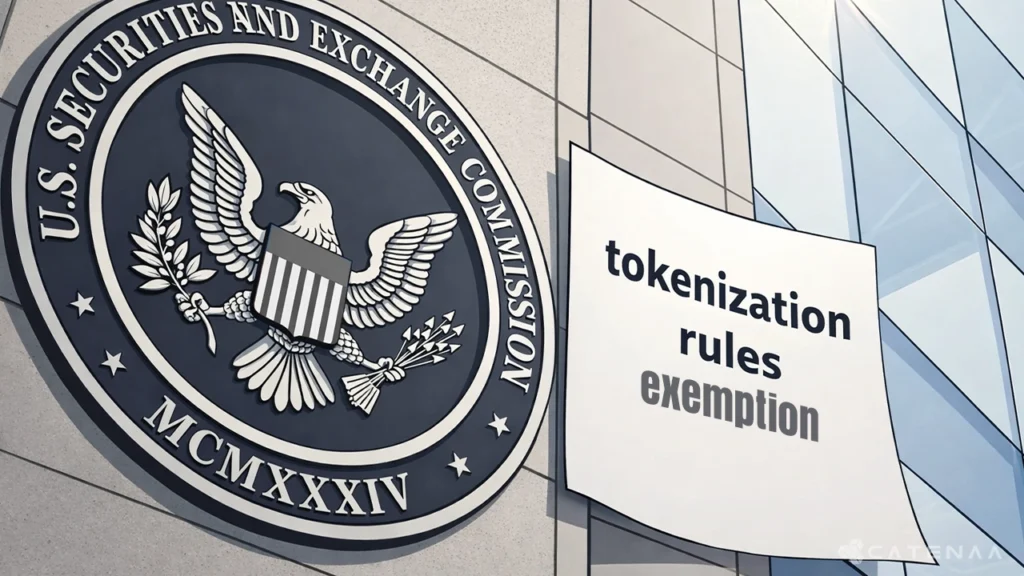
Catenaa, Monday, March 30, 2026-US lawmakers and regulators are moving closer to formalizing rules for tokenized securities as the US Securities and Exchange Commission prepares a potential innovation exemption, while Congress debates how to balance financial innovation with investor protection.
At a House Financial Services Committee hearing on Wednesday, policymakers signaled broad agreement that tokenization is gaining traction across capital markets, even as divisions remain over regulatory safeguards. Lawmakers examined how blockchain-based securities could reshape trading, settlement and investor access.
Republican Rep. Andy Barr said tokenization is already taking hold and requires updated rules to ensure the US remains competitive while maintaining investor protections. He stressed the need for modernization without weakening oversight standards.
The SEC has already taken steps toward integrating tokenized assets into regulated markets. In December, it authorized the Depository Trust & Clearing Corporation to tokenize certain assets under a limited framework. More recently, it approved changes allowing Nasdaq to support tokenized share trading.
The New York Stock Exchange is also developing infrastructure for blockchain-based securities trading with potential round-the-clock access, reflecting a broader industry shift toward continuous markets.
SEC Chair Paul Atkins has indicated the agency will soon seek public input on a proposed exemption that could act as a regulatory sandbox for tokenized assets. The plan is expected to allow limited experimentation under defined conditions.
However, some lawmakers raised concerns about uneven oversight. Democratic Rep. Brad Sherman warned that exemptions could create a two-tiered system where blockchain-based securities face lighter regulation than traditional assets.
Top committee Democrat Maxine Waters said tokenization could improve efficiency and broaden participation but cautioned against repeating past financial mistakes tied to complex innovations.
Tokenization has gained momentum as financial institutions explore blockchain-based representations of stocks, bonds and funds. Firms including BlackRock and Franklin Templeton have launched tokenized products, while exchanges and brokers expand digital asset capabilities.
Advocacy groups such as the Blockchain Association argue that clearer rules are needed to keep innovation within US borders, as other jurisdictions move faster to adopt digital asset frameworks.
The outcome of the SEC’s exemption proposal could shape the future of tokenized markets in the US. A flexible framework may accelerate adoption and attract investment, while stricter rules could slow development but strengthen investor safeguards.
The debate also highlights growing competition between jurisdictions to host digital finance innovation, with regulatory clarity emerging as a decisive factor.
Industry representatives say tokenization can reduce settlement times and costs while enabling continuous trading. However, traditional finance groups, including the Securities Industry and Financial Markets Association, have called for transparent rulemaking processes and caution against bypassing existing legal frameworks.
Analysts say collaboration between regulators and industry will be critical to ensure both innovation and market stability.
Tokenization involves converting traditional financial assets into digital tokens recorded on blockchain networks. The approach allows faster settlement, improved transparency and programmable ownership features. Adoption has accelerated in recent years as advances in infrastructure and regulatory engagement make it easier for institutions to test blockchain-based systems. Global estimates suggest tokenized assets could reach trillions of dollars in value over the next decade, driven by demand for efficiency and expanded market access. Regulators worldwide are now working to define frameworks that integrate these assets into existing financial systems without compromising oversight.