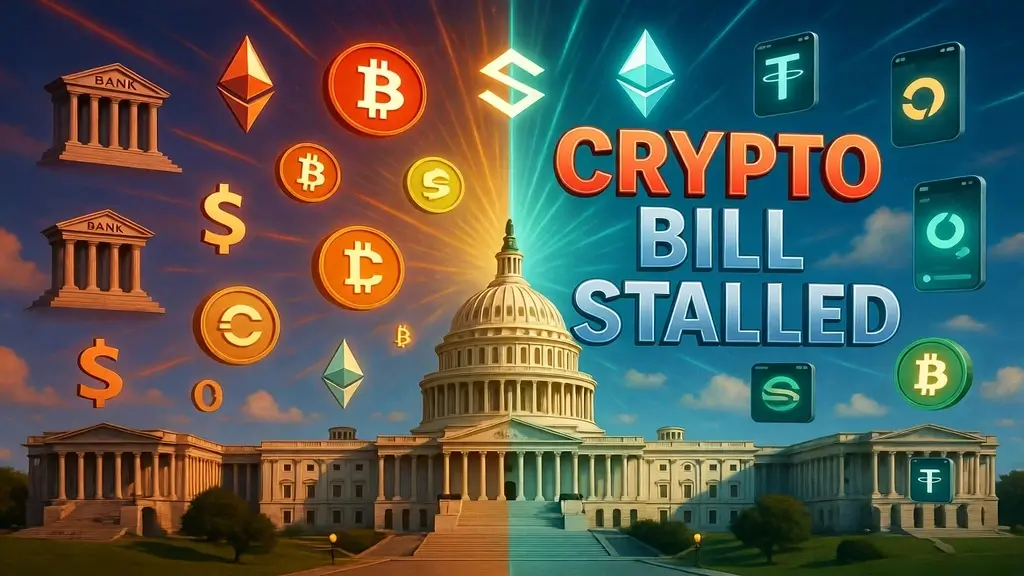
Catenaa, Sunday, March 29, 2026- A major US cryptocurrency market structure bill has stalled in the Senate as disputes over stablecoin rewards intensify, delaying efforts to establish clearer rules for the digital asset sector.
The legislation, commonly known as the CLARITY Act, seeks to define oversight of digital assets, including jurisdiction between regulators, disclosure requirements and compliance standards. While it advanced in the House, Senate negotiations have slowed, with disagreements over stablecoin reward mechanisms emerging as the primary obstacle.
Industry participants remain split. Crypto firms support allowing rewards through third-party platforms, arguing it supports adoption and innovation. Banking groups oppose such provisions, warning they could draw deposits away from traditional financial institutions and affect liquidity.
The dispute has delayed consensus despite multiple mediation attempts involving policymakers, financial institutions and crypto representatives. Analysts say the unresolved issue now threatens the broader bill’s timeline.
The current debate builds on provisions from the GENIUS Act, a 2025 law that restricts stablecoin issuers from offering direct interest while permitting certain platform-based rewards. Lawmakers are now weighing whether to tighten those allowances within a broader regulatory framework.
The CLARITY Act also incorporates elements of the Blockchain Regulatory Certainty framework, which aims to shield non-custodial developers from money transmitter rules. This provision has strong backing from policy groups focused on preserving decentralized innovation.
Tensions escalated after draft language proposed new restrictions on rewards distributed through platforms such as Coinbase. The proposal triggered backlash from parts of the crypto industry, which view such limits as restrictive.
The ongoing deadlock risks delaying comprehensive crypto regulation in the United States. Without agreement, lawmakers may struggle to establish a consistent framework governing digital assets, leaving regulatory uncertainty for businesses and investors.
Delays could also impact the competitiveness of US crypto firms, particularly as other jurisdictions move at different speeds in shaping their own regulatory environments. Analysts warn that prolonged uncertainty may discourage innovation or shift activity to more favorable regions.
The outcome of the stablecoin rewards debate will likely influence how financial products tied to digital assets evolve, including their integration with traditional banking systems.
Policy analysts say the dispute reflects deeper tensions between innovation and financial stability. Some industry representatives argue that restricting rewards could limit user participation and slow market development.
Others acknowledge concerns from banks, noting that unchecked reward systems may affect deposit flows. Observers familiar with negotiations describe repeated efforts to reach compromise, though none have yet succeeded.
There is cautious optimism among some stakeholders that a revised proposal could emerge in the coming weeks, potentially addressing both regulatory concerns and industry demands.
The United States has allowed cryptocurrency donations and financial activity under varying regulatory interpretations for more than a decade, with oversight shared among agencies such as the Federal Election Commission and financial regulators.
In recent election cycles, crypto-related political spending has increased, with groups like Fairshake raising more than $200 million in 2024. At the same time, lawmakers have sought clearer rules to address risks tied to digital assets, including fraud, market stability and transparency.
The CLARITY Act represents one of the most extensive attempts to define a unified framework for the sector. However, disagreements over specific provisions, particularly stablecoin rewards, have slowed progress and raised uncertainty about its passage timeline.
With Congress currently in recess and a Senate Banking Committee review expected in April, the path forward remains unclear. Analysts say failure to resolve the dispute soon could push action beyond the 2026 midterm elections.