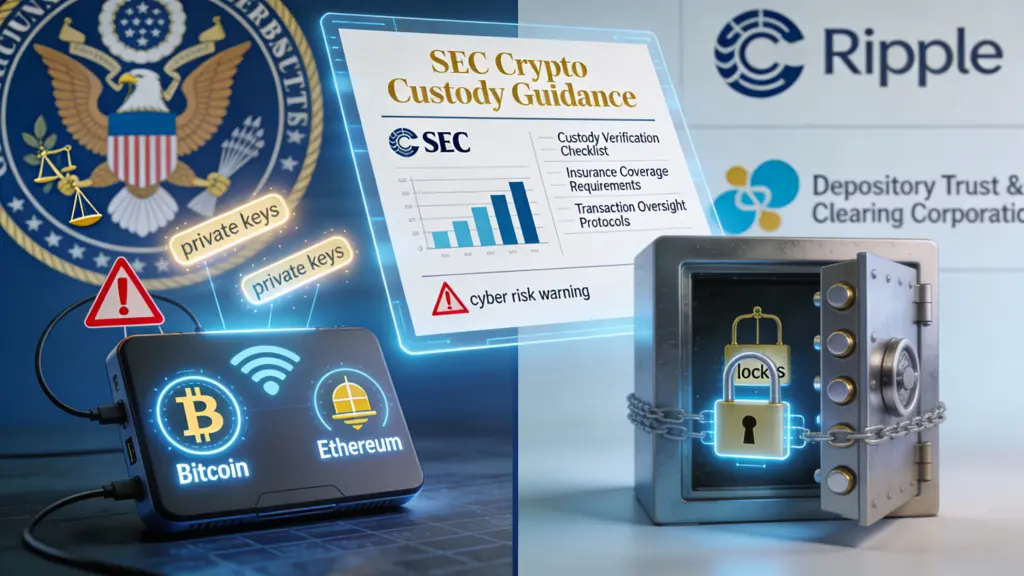


Catenaa, Thursday, December 18, 2025-The US Securities and Exchange Commission is advising retail investors to carefully assess crypto custody options and risks as digital assets increasingly integrate into the banking system.
The SEC’s Office of Investor Education and Assistance issued guidance outlining the differences between self-managed wallets and third-party custodians, emphasizing the importance of private key security.
Custody involves storing and accessing private keys, which authorize transactions and prove ownership. Losing a key results in permanent asset loss, while compromised keys can lead to theft with no recourse.
The bulletin highlights hot wallets connected to the internet, offering convenience but higher cyber risk, and cold wallets, which store assets offline for stronger protection but reduced portability.
Investors managing their own keys bear full responsibility for security and backups.
Those using custodians should verify asset protection measures, insurance coverage, and transaction fees, and check for practices like rehypothecation or asset commingling.
The guidance coincides with a regulatory shift under SEC Chair Paul Atkins, focusing on policy development rather than enforcement.
Recent actions include closing an investigation into Ondo Finance without charges and granting the Depository Trust and Clearing Corporation a no-action letter to tokenize US Treasuries and ETFs starting in 2026.
The Office of the Comptroller of the Currency approved five crypto firms, including Circle and Ripple, to operate as national trust banks, enabling custody and banking services under federal standards.
The move aligns with broader regulatory updates, including CFTC pilot programs using crypto as collateral and legislative efforts like the Responsible Financial Innovation Act.