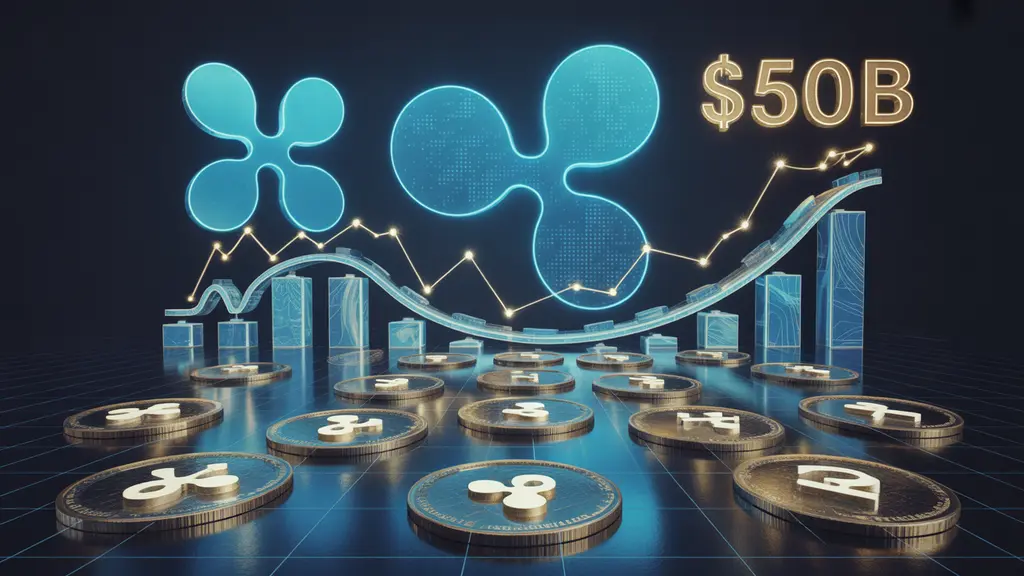
Catenaa, Wednesday, March 11, 2026 – Ripple launched a tender offer Wednesday to repurchase up to $750 million of its shares, valuing the privately held digital payments firm at about $50 billion and offering liquidity to investors and employees.
The buyback allows eligible shareholders to sell stock at $25 per share through April, according to people familiar with the transaction. The offer marks a valuation increase from roughly $40 billion used during a previous share repurchase program conducted in 2025.
The move reflects continued investor confidence in Ripple’s business model centered on blockchain-based cross-border payments and digital asset infrastructure. Executives have repeatedly indicated that the company intends to remain privately held for now while expanding its global financial technology operations.
Ripple President Monica Long said earlier this year that the company does not plan an initial public offering in the near term, citing a strong balance sheet and access to private capital.
The latest tender offer follows a $500 million funding round completed in late 2025 that also valued the company at $40 billion. Investment firms including Fortress Investment Group and Citadel Securities participated in that financing alongside several digital asset investment funds.
Ripple has used recent capital to expand its payments network and pursue acquisitions across the digital finance sector. In 2025 the company agreed to acquire prime brokerage platform Hidden Road for about $1.25 billion, strengthening its services for institutional trading firms and asset managers.
The company also acquired payments infrastructure firm Rail as part of a broader push to build enterprise settlement tools using blockchain technology.
Ripple’s payments platform processes transactions for banks and financial companies seeking faster international transfers. The system uses the digital asset XRP as a bridge currency in some payment corridors, allowing near-instant settlement across borders.
Ripple says its global network supports financial institutions operating in more than 70 countries. The company reported that cross-border payment volumes on its platform exceeded $100 billion during the past year as fintech firms and remittance providers adopted blockchain-based settlement.
Market participants also monitor the performance of XRP, which ranks among the largest digital assets by market capitalization. The token traded near $1.39 during recent sessions after declining from highs reached during the previous year’s cryptocurrency rally.
Ripple’s valuation also reflects its expanding presence beyond payments into areas such as digital asset custody, stablecoin issuance and tokenized financial infrastructure.
The company introduced a dollar-backed stablecoin called RLUSD, which has gained adoption among payment processors and enterprise treasury systems. Stablecoins are digital tokens designed to maintain a fixed value, often pegged to the US dollar.
Ripple executives say enterprise blockchain adoption continues to grow even during periods of broader cryptocurrency market volatility. Global payment companies and financial institutions have increased experimentation with blockchain settlement networks to reduce transaction costs and processing times.
The tender offer also addresses employee liquidity. Many technology firms conduct share buybacks to allow staff holding equity to sell a portion of their holdings before a potential public listing.
Analysts say private secondary markets for technology and cryptocurrency companies have expanded significantly as initial public offerings slowed during recent market cycles. Tender offers allow companies to manage shareholder liquidity while maintaining control over ownership structures.
Ripple’s growth has also been influenced by evolving regulation in the United States. The company settled a long-running dispute with the US Securities and Exchange Commission in 2025 over allegations related to earlier XRP sales.
A federal court previously ruled that certain XRP transactions on secondary markets did not constitute securities offerings, a decision that helped clarify regulatory treatment for the digital asset.
Industry observers say the outcome strengthened Ripple’s position in global financial markets and encouraged partnerships with banks, payment companies and fintech platforms.
The company continues expanding internationally, including regulatory approvals in Asia-Pacific and the Middle East, as governments establish clearer frameworks for blockchain-based payment systems.
If fully subscribed, Ripple’s new $750 million buyback would rank among the largest private share repurchase programs in the cryptocurrency industry, underscoring the firm’s growing role in global digital finance infrastructure.