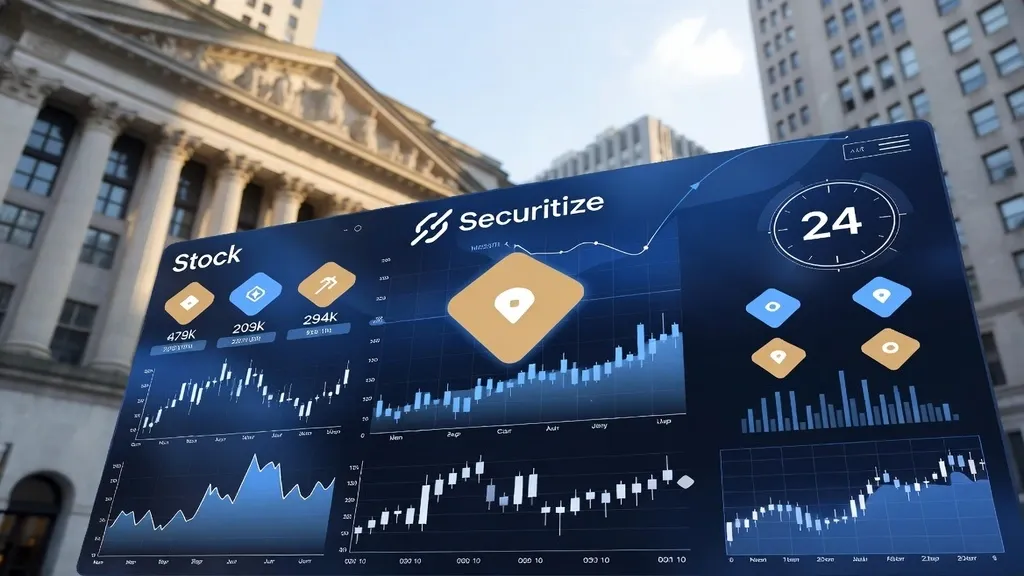
Catenaa, Saturday, March 28, 2026- The New York Stock Exchange said it has partnered with Securitize to develop a tokenized securities trading venue that could ultimately operate around the clock. The move marks a significant step in efforts to bring traditional equities and exchange-traded funds onto blockchain rails.
Under the partnership, Securitize will provide technology to create, manage and transfer tokenized shares of stocks and ETFs using blockchain infrastructure. The collaboration formalizes a key piece of the NYSE’s previously announced ambition to build a 24/7 trading ecosystem for digital representations of traditional financial instruments.
Tokenized securities are digital tokens that represent ownership of conventional assets such as equity or funds, allowing them to be traded and settled on distributed ledger technology. Advocates say tokenization can deliver faster settlement times, extended trading windows and more efficient capital flows compared with legacy systems.
NYSE’s plans come as financial markets explore ways to modernize infrastructure and integrate blockchain innovation. By linking with Securitize, a firm experienced in tokenizing real‑world assets, the exchange aims to bridge established trading venues with emerging digital asset protocols.
Tokenization has become a growing trend on Wall Street and in global capital markets. Large asset managers and exchanges have pursued pilot programs and partnerships to experiment with blockchain‑based securities, ranging from tokenized funds to programmable settlement utilities.
Proponents argue that tokenized assets can reduce settlement risk, lower operational friction and enable trading outside traditional market hours. Blockchain systems can also support automated compliance and transparent record‑keeping, which supporters say could improve market integrity.
However, regulatory frameworks are still evolving. In the United States, the Securities and Exchange Commission has begun engaging with industry participants on digital securities pilot programs, signaling a more open dialogue on how tokenized equities might fit within existing securities law. Officials including Commissioner Hester Peirce have encouraged firms to engage regulators as they build out structures for digital assets.
Rival stock exchanges are also pursuing parallel initiatives. The Nasdaq has teamed up with Kraken to link tokenized equity offerings with decentralized finance networks, illustrating competitive momentum in the tokenization space.
If successfully implemented, a tokenized securities platform operated or supported by NYSE could reshape how traditional and digital markets interact. 24/7 trading of tokenized stocks and ETFs may offer new opportunities for price discovery, liquidity and cross‑border participation far beyond conventional trading hours.
Institutional investors might gain additional tools for portfolio management, while retail traders could see broader access to new product types. Tokenized ETFs and equities may also support automated settlement workflows that reduce counterparty risk and operational costs.
However, execution risks remain. Integrating tokenized systems with existing exchange infrastructure requires robust technology, cybersecurity measures and clear regulatory compliance frameworks. The industry and regulators will need to address issues such as custody standards, transfer agent roles and cross‑border legal considerations.
Regulatory clarity will play a critical role in adoption. The SEC continues to refine its approach to digital assets, and tokenized securities fall at the intersection of existing securities laws and emerging blockchain innovation. How regulators choose to classify, supervise and enforce reporting requirements for tokenized assets will influence their viability in mainstream markets.
Tokenization refers to the representation of a real‑world asset — such as an equity, bond or commodity — as a digital token on a blockchain. Proponents say tokenized assets can offer several advantages over traditional representations, including programmable features, instant settlement and the potential for 24‑hour global trading.
The technology has gained traction as financial institutions have experimented with blockchain use cases across payments, derivatives and asset servicing. Early adopters include institutional pilots for tokenized funds, blockchain‑based settlement utilities and regulated stablecoin infrastructure.
Securitize has emerged as a key player in the tokenization space, enabling institutions to issue and manage tokenized securities and funds. The firm has worked with global clients including asset managers and broker‑dealers, supporting digital issuance workflows that connect traditional finance with blockchain rails.
Emerging regulatory engagement also reflects heightened interest from policymakers seeking to accommodate digital asset innovation within existing legal frameworks. As capital markets continue to evolve, tokenization is seen by some participants as a potential catalyst for modernization, though broad adoption hinges on regulatory certainty and infrastructure readiness.