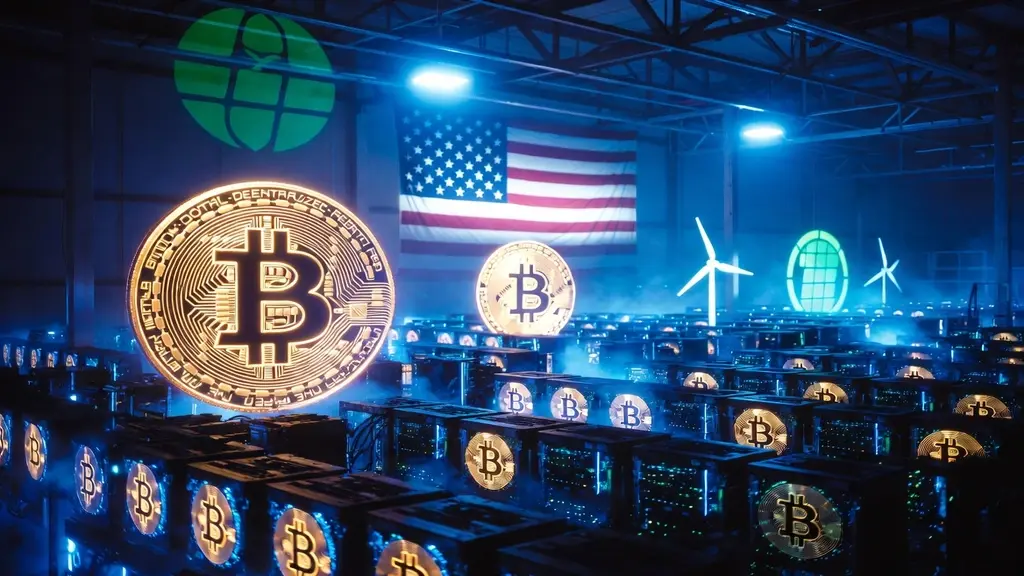
Catenaa, Monday, March 30, 2026 — Republican Sens. Cynthia Lummis and Bill Cassidy introduced legislation Monday to expand domestic cryptocurrency mining and codify a federal bitcoin reserve, advancing a broader US digital asset strategy.
The proposed Mined in America Act directs the Commerce Department to create a voluntary certification program for mining facilities and pools, while requiring participants to phase out equipment sourced from countries deemed foreign adversaries. The bill also embeds into statute a bitcoin reserve first established by executive order under Donald Trump earlier this month.
The reserve is capitalized with bitcoin seized in criminal cases and held by the Treasury Department, estimated at more than 200,000 tokens. Lawmakers seek to protect the stockpile from future policy reversals and set guidelines for long-term custody and oversight.
Policy design links mining expansion with national security
The bill ties certification eligibility to supply chain restrictions and domestic production targets. It calls for 70% of mining hardware used by certified operators to be manufactured in the United States by 2030. Companies meeting higher certification tiers could access tax credits, energy incentives and federal procurement opportunities.
The measure targets foreign hardware dominance led by firms such as Bitmain and MicroBT, which together account for most global application-specific integrated circuit production. Lawmakers frame the shift as both an economic and security objective.
The proposal also encourages the use of nuclear, renewable and stranded energy sources, reflecting ongoing debates about the environmental footprint of mining. Supporters argue that flexible mining loads can stabilize power grids, while critics warn of rising electricity demand.
Economic projections highlight industry scale
Sponsors estimate that each gigawatt-scale mining facility could generate hundreds of millions of dollars in annual tax revenue and thousands of jobs during construction and operation. The bill outlines incentives to expand capacity across energy-rich states, including Texas and Kentucky.
US share of global bitcoin mining has risen sharply since restrictions in China in 2021, with industry estimates placing it above half of global hash rate. The legislation aims to consolidate that lead by doubling domestic capacity by the end of the decade.
Strategic bitcoin reserve formalized in statute
The bill outlines custody rules for the federal bitcoin reserve, including cold storage requirements, periodic audits and limits on asset sales. Lawmakers propose that any liquidation would require congressional approval, positioning bitcoin holdings alongside traditional reserves such as gold.
Annual additions to the reserve would include newly seized digital assets, with optional provisions for future purchases under defined conditions. Supporters describe the reserve as a hedge against inflation and fiscal instability.
Industry and political reactions split
Mining firms and digital asset advocates welcomed the proposal as a step toward regulatory clarity and infrastructure investment. Banking groups and some policy analysts raised concerns about market distortion, energy usage and federal involvement in commodity accumulation.
The legislation enters a crowded policy agenda that includes separate efforts to define digital asset market structure and stablecoin oversight. Congressional committees are expected to review the bill in the coming weeks, with potential amendments on energy standards and compliance requirements.
Global context underscores competitive pressure
The proposal reflects intensifying competition among countries to attract mining operations and shape digital asset policy. Nations with low-cost energy resources, including Russia and Kazakhstan, continue to court miners despite regulatory uncertainty.
At the same time, the United States has moved to integrate digital assets into broader financial and industrial policy, linking mining, custody and reserve strategies under a single legislative framework.
US bitcoin mining expanded rapidly after China curtailed operations in 2021, shifting global infrastructure toward North America. Companies invested heavily in large-scale facilities, often colocated with energy producers.
The concept of a federal bitcoin reserve gained traction in recent years as policymakers debated digital assets as part of sovereign balance sheets. The current proposal builds on earlier legislative efforts led by Lummis to formalize bitcoin’s role in federal financial strategy.
The Mined in America Act combines these threads by pairing industrial policy with asset accumulation, marking one of the most detailed attempts to integrate cryptocurrency into national economic planning.