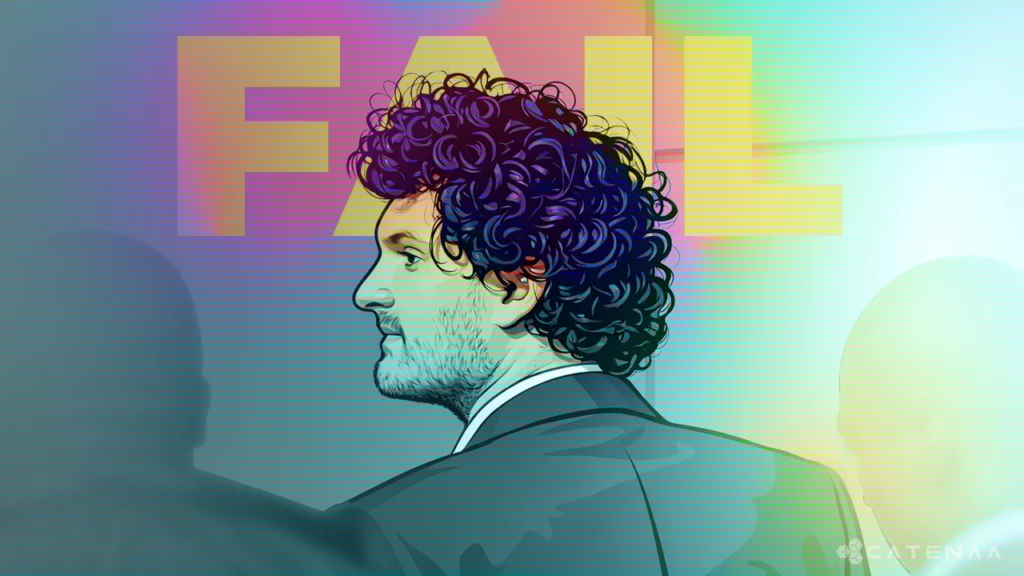
Catenaa, Friday, March 13, 2026- Federal prosecutors urged a judge Wednesday to reject a request by former cryptocurrency executive Sam Bankman-Fried for a new trial, arguing that his claims rely on evidence known to the defense before his 2023 conviction and do not justify reopening the case.
Bankman-Fried, 33, is serving a 25-year prison sentence after a Manhattan jury found him guilty of fraud and conspiracy linked to the collapse of the cryptocurrency exchange FTX.
Prosecutors say the company’s failure in November 2022 caused more than $8 billion in customer losses after funds were secretly redirected to the affiliated trading firm Alameda Research.
In a filing submitted to federal court in Manhattan, prosecutors said Bankman-Fried’s retrial motion depends on statements from two former executives, Daniel Chapsky and Ryan Salame. According to prosecutors, both individuals were available to testify during the original trial and had already been interviewed by the defense team.
The government argued that the defense made a strategic choice not to call those witnesses during proceedings that lasted several weeks in late 2023. As a result, prosecutors said the information cannot be treated as newly discovered evidence under federal rules governing retrial requests.
Jurors in the original case heard testimony from several senior executives who had worked alongside Bankman-Fried. Among them was former Alameda Research chief Caroline Ellison, who described how customer deposits from the FTX exchange were transferred to Alameda to cover trading losses and repay lenders.
Another cooperating witness, FTX co-founder Gary Wang, told jurors he created software code that allowed Alameda Research to maintain a large negative balance on the exchange without triggering automatic liquidation rules applied to other users.
Prosecutors said the testimony, combined with internal records, chat messages and financial data, demonstrated that Bankman-Fried directed the diversion of customer assets while publicly assuring investors and customers that funds were secure.
In seeking a retrial, Bankman-Fried’s lawyers argued that testimony from additional witnesses would show that certain business decisions were made collectively by executives rather than solely by the founder. They also repeated claims that FTX remained solvent at various points before its collapse.
Prosecutors rejected that argument, saying solvency after the fact does not negate criminal conduct. They wrote that fraud occurs when funds are misappropriated, regardless of later recovery through bankruptcy proceedings.
Bankman-Fried has also claimed the prosecution reflected political motivations. Federal attorneys disputed that suggestion, noting that the founder previously donated tens of millions of dollars to political campaigns across the United States. Investigators later charged him separately with campaign finance violations tied to those contributions.
The government’s filing emphasized that the case rested on financial records and witness testimony rather than political considerations.
Meanwhile, the bankruptcy process surrounding FTX continues to move forward under court supervision. Administrators working to recover assets say they have located billions of dollars through the liquidation of investments, legal settlements and clawback actions against former insiders.
The restructuring effort is overseen by turnaround specialist John Ray III, who replaced Bankman-Fried as chief executive after the exchange collapsed. Ray previously managed the unwinding of the energy company Enron following its early-2000s accounting scandal.
Bankruptcy officials estimate that creditors could eventually recover a large share of their claims, though repayment values depend on the market prices of digital assets and other holdings.
Despite those potential recoveries, prosecutors maintain that the criminal case against Bankman-Fried remains unchanged. They argue that the jury’s verdict reflected extensive evidence showing that billions of dollars in customer funds were misused to support Alameda Research trading operations, political donations and venture investments.
The federal judge overseeing the case will decide whether the retrial request meets the strict standard required for reopening a completed criminal trial. Legal experts say such motions are rarely granted unless genuinely new evidence emerges that could likely alter the outcome.
Bankman-Fried continues to pursue appeals of his conviction while serving his sentence in federal custody. His legal team is expected to continue challenging aspects of the trial record as the appellate process moves through the courts.