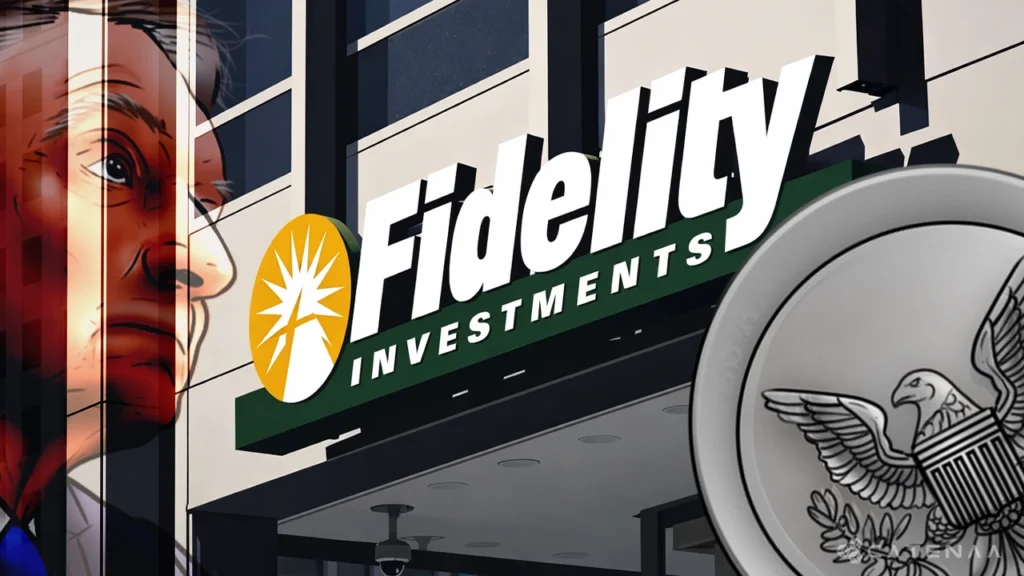
Catenaa, Tuesday, March 24, 2025- Fidelity Investments urged the US Securities and Exchange Commission to refine rules governing how broker-dealers handle cryptocurrency assets, calling for clearer standards as digital assets move deeper into traditional financial systems.
In a letter submitted Friday to the SEC’s crypto task force, Fidelity responded to a request for input from Commissioner Hester Peirce on how national exchanges and alternative trading systems should manage crypto trading.
The firm said updated guidance is needed for custody, trading and settlement practices involving digital assets.
Fidelity supported recent SEC steps allowing broker-dealers to custody both crypto asset securities and non-security tokens, but said gaps remain in how firms can safely operate within existing regulations. The company emphasized that clearer frameworks would help firms expand services while maintaining investor protections and market integrity.
Regulatory Expansion
Fidelity outlined several recommendations focused on improving regulatory clarity for broker-dealers. The firm said current guidance provides a foundation but does not fully address how firms should handle trading pairs involving both securities and non-security digital assets.
It called for additional direction on custody requirements, operational standards and compliance expectations. Without such clarity, broker-dealers face legal uncertainty that could limit participation in crypto markets.
Fidelity said regulatory development should continue evolving alongside market innovation to ensure that traditional financial institutions can engage with digital assets without compromising oversight standards.
Challenges
A central focus of Fidelity’s letter was the treatment of tokenized securities on alternative trading systems. The firm urged the SEC to establish clear standards allowing platforms to facilitate secondary trading of tokenized assets created by third parties.
Fidelity said broker-dealers need to rely on consistent classifications of digital assets. Uncertainty around whether a token represents a traditional security or a more complex instrument creates compliance risks for firms executing trades.
The company also recommended that tokenized versions of traditional securities be treated similarly to their underlying assets. Such alignment would reduce fragmentation between blockchain-based markets and conventional financial systems.
Innovation and Oversight
Fidelity highlighted the need to balance innovation with regulatory safeguards. Blockchain-based trading platforms can offer faster settlement, lower costs and improved transparency compared with traditional systems.
However, the firm noted that decentralized or disintermediated platforms may lack the protections required in regulated markets, including oversight mechanisms and investor safeguards.
Fidelity said regulators should consider how traditional intermediaries and decentralized platforms can coexist, ensuring that innovation does not come at the expense of market stability.
Blockchain Integration
The firm also urged the SEC to clarify that broker-dealers can use blockchain technology for recordkeeping and settlement without being classified as clearing agencies. This distinction is important for firms seeking to adopt distributed ledger systems while remaining compliant with existing regulations.
Allowing blockchain integration could streamline back-office processes, reduce operational costs and improve transparency in transaction records.
Fidelity said such changes would support the gradual modernization of financial infrastructure as digital asset adoption expands.
The letter reflects a broader shift in the regulatory environment, where US authorities have begun engaging more directly with firms exploring digital asset products.
Recent SEC actions, including guidance on custody and tokenized securities, suggest a move toward accommodating blockchain-based financial infrastructure within existing frameworks.
Commissioner Peirce has encouraged industry participants to engage with regulators, signaling a more collaborative approach compared with earlier enforcement-driven strategies.
Fidelity’s recommendations come as institutional interest in digital assets continues to grow. Asset managers, banks and broker-dealers are expanding crypto offerings, increasing the need for clear and consistent regulatory standards.
Firms are seeking certainty to scale operations, particularly in areas such as custody, trading infrastructure and tokenized asset markets.
Analysts said regulatory clarity could accelerate adoption by reducing compliance risks and enabling broader participation from traditional financial institutions.
The integration of crypto assets into traditional markets is reshaping financial infrastructure. Tokenization, blockchain settlement and digital custody are increasingly viewed as extensions of existing systems rather than separate ecosystems.
Fidelity’s proposal underscores the importance of aligning regulatory frameworks with technological developments to support this transition.
As regulators continue to evaluate digital asset policies, industry input is expected to play a central role in shaping future rules.
Fidelity has been active in digital assets through custody services, trading platforms and investment products. The firm has consistently advocated for clearer regulatory frameworks to support institutional adoption.
The SEC has taken incremental steps to address crypto markets, including guidance on custody and tokenized securities. Alternative trading systems are emerging as a focal point for integrating digital assets into regulated environments.
Industry participants expect further rulemaking as regulators balance innovation with investor protection and market oversight.