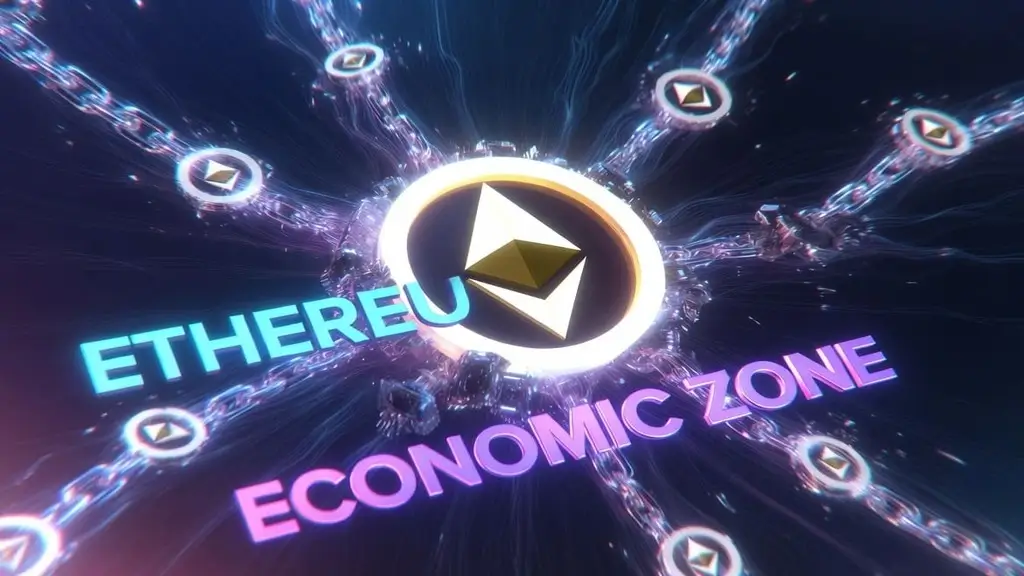
Catenaa, Tuesday, March 31, 2026- Gnosis and Zisk have launched the Ethereum Economic Zone, a new framework co-funded by the Ethereum Foundation to address fragmentation across Layer 2 networks and improve interoperability.
The initiative was announced at the EthCC conference in Cannes by Friederike Ernst and Jordi Baylina. It aims to allow smart contracts on participating rollups to execute transactions across networks, including Ethereum mainnet, within a single operation using ETH as native gas, without relying on bridging mechanisms.
Developers behind the project say the framework focuses on enabling near real-time composability, a long-standing challenge for Ethereum as its ecosystem expands across multiple scaling layers.
Ethereum’s rollup-centric strategy has significantly increased transaction capacity, particularly after upgrades that reduced costs and improved efficiency. However, the rapid growth of Layer 2 networks has fragmented liquidity, users and applications across dozens of chains.
Different interoperability efforts have emerged to address these challenges, including shared infrastructure models and coordination frameworks. Most existing solutions rely on asynchronous communication between networks, which can introduce delays and complexity.
The Ethereum Economic Zone positions itself as a solution focused on tighter integration, leveraging advances in zero-knowledge technology to reduce latency and enable smoother interaction between networks.
If widely adopted, the framework could reduce fragmentation by allowing assets and applications to interact more seamlessly across Layer 2 networks. This may improve efficiency in decentralized finance, tokenized assets and broader blockchain use cases.
The initiative may also influence competition among scaling solutions. Projects that offer more unified environments could attract developers and users seeking simplified experiences, while others may continue to prioritize independence and customization.
At the same time, the approach raises questions about coordination and governance. Shared infrastructure models may introduce concerns about centralization or reliance on specific providers.
Supporters of the initiative argue that recent advances in zero-knowledge proving make near real-time interoperability more feasible. They say reducing reliance on bridges could improve both security and usability.
Some analysts view the project as part of a broader effort to strengthen Ethereum’s position against competing blockchain platforms that emphasize unified architectures. Others caution that technical complexity and ecosystem coordination could slow adoption.
Despite differing opinions, there is broad agreement that fragmentation remains a central challenge for Ethereum’s long-term growth.
Ethereum has pursued a scaling model that relies on Layer 2 rollups to process transactions while the mainnet provides security and settlement. This approach has enabled rapid expansion but has also divided activity across numerous networks.
Gnosis has been involved in decentralized infrastructure and applications, while Zisk builds on earlier work in zero-knowledge virtual machines and scaling technologies.
The Ethereum Foundation has supported research and development across the ecosystem, including efforts to improve scalability and interoperability. The Ethereum Economic Zone reflects ongoing attempts to balance decentralization, usability and performance as the network evolves.