

March 21, 2026 – A wallet holding 2,100 BTC since July 2012 transferred its entire balance. The coins have gained over 10,000x in value. No exchange deposits have been detected.
KEY TAKEAWAYS
- First, a wallet from July 2012 moved 2,100 BTC ($146M) after nearly 14 years of inactivity.
- As a result, the original $13,685 investment has returned over 10,000x at current BTC prices.
- Importantly, no coins have reached any exchange, ruling out an immediate sell signal.
- Meanwhile, over $1.87 billion in leveraged BTC longs are at risk of liquidation if prices dip below $66,827.
- Furthermore, an estimated 3–4 million BTC are permanently lost, tightening effective supply to ~16 million.
On Friday morning, a Bitcoin address that had been dormant since July 4, 2012, transferred 2,100 BTC, worth approximately $147 million. Notably, the wallet had not recorded any outbound activity in nearly 14 years.
Specifically, blockchain tracking platform Whale Alert flagged the transfer at 10:27 UTC on March 20, 2026. The original 2,100 BTC cost roughly $13,685. Therefore, at today’s price of around $70,000, this represents a return exceeding 10,000x.
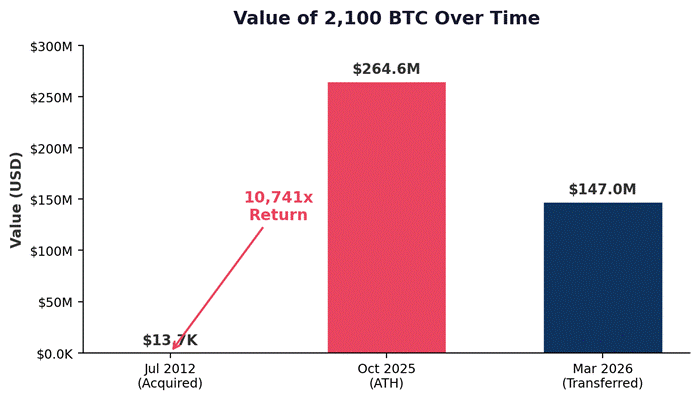
Fig 1: Value of 2,100 BTC from acquisition (2012) through transfer (March 2026). Source: The Block, Mempool.
Transaction Details
In particular, the transaction consolidated multiple UTXOs into a single output. Additionally, the funds moved to the same “1NB3Z” address prefix, while a small portion went to a secondary address.
Moreover, the wallet uses the P2PKH format, Bitcoin’s oldest address type. However, analytics platform Arkham Intelligence found no label on the address. As a result, both the owner’s identity and the transfer’s purpose remain unclear.
Most importantly, no coins have moved to any exchange so far. Consequently, this suggests a consolidation or security upgrade rather than an intent to sell.
Market Context and Liquidation Risk
Currently, Bitcoin trades near $70,500. It reached an all-time high of approximately $126,000 in October 2025. Since then, however, the cryptocurrency has pulled back roughly 44% from that peak.
Meanwhile, CoinGlass data reveals over $1.87 billion in leveraged long positions at risk. Specifically, these positions will be liquidated if the price falls below $66,827. As a result, any sell pressure from whale wallets could accelerate this cascade.
A Pattern of Dormant Whales Awakening
Importantly, this is not an isolated event. In fact, multiple long-dormant wallets have reactivated since Bitcoin crossed $100,000 in late 2024. Furthermore, the trend accelerated throughout 2025 and into 2026.
For instance, in July 2025, Galaxy Digital facilitated the sale of 80,000 BTC ($9 billion) for a Satoshi-era investor. That sale stemmed from estate planning requirements. Before that, the coins had not moved in 14 years.
Similarly, on March 19, 2026, another whale who had accumulated 5,000 BTC 13 years earlier offloaded 1,000 BTC. That sale totaled roughly $71.6 million. In addition, investor Owen Gunden sold 650 BTC ($46.3 million) on the same day.
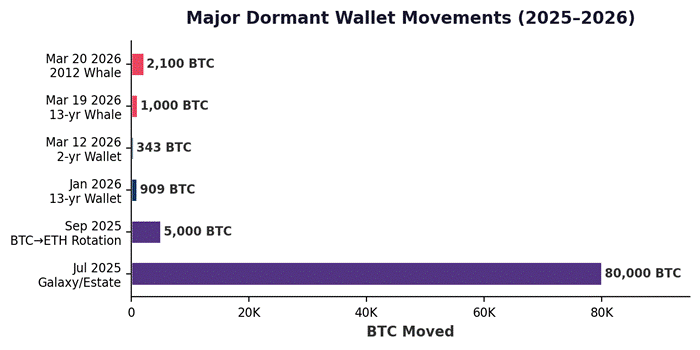
Fig 2: Major dormant wallet movements from mid-2025 to March 2026. Source: Whale Alert, Lookonchain, The Block.
Supply Scarcity Remains the Key Narrative
To date, miners have produced approximately 19.8 million BTC out of the 21 million cap. However, analysts estimate that 3 to 4 million BTC have vanished permanently. Consequently, only 15.5 to 16 million BTC effectively circulate in the market.
Furthermore, long-term holders control roughly 14.8 million BTC, 75% of the circulating supply. In contrast, traders actively exchange only an estimated 3.5 million BTC. Meanwhile, miners add just 450 BTC per day at the current block reward of 3.125 BTC.
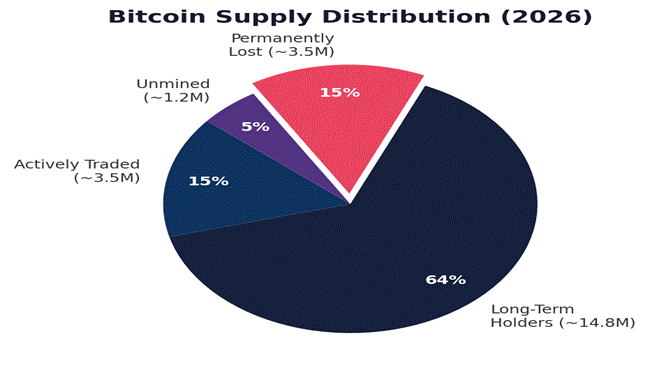
Fig 3: Bitcoin supply distribution in 2026. Effective circulating supply is far below the 21M cap. Source: BitGo, CoinLedger.
What This Means for the Market
Above all, dormant wallet reactivations serve as sentiment indicators. They reveal how early adopters view current price levels. Therefore, when wallets that survived multiple cycles finally move, the market pays close attention.
Additionally, some analysts point to concerns about quantum computing. Because older P2PKH addresses expose public keys on the blockchain, this could motivate holders to migrate coins to modern formats for added security.
On the other hand, others speculate about estate planning or generational transfers. For example, several confirmed 2025 sales traced back to heirs accessing wallets from deceased holders.
The Bottom Line
In summary, a $13,685 investment from 2012 now stands at $147 million. The holder’s patience produced one of Bitcoin’s most extraordinary returns. Nevertheless, whether the coins ultimately hit the open market or settle into new cold storage remains unknown.
Ultimately, the awakening of a 13.7-year dormant wallet sends a clear reminder. Bitcoin’s available supply is far more constrained than its total circulating figure suggests. Hence, early wealth continues to shape the market’s trajectory.