

March 31, 2026 – A new bipartisan draft bill would shut down crypto’s biggest tax loophole. In return, it shields regulated stablecoins from taxes on small, everyday deals.
In Summary
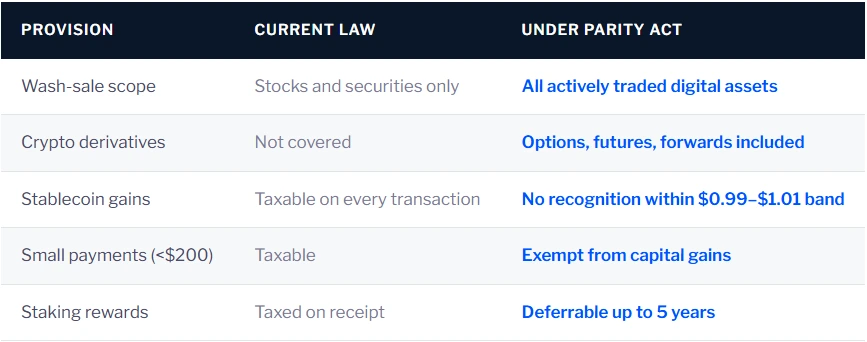
Wash-sale rules now cover crypto: As a result, traders can no longer sell at a loss and rebuy within 30 days to claim write-offs.
Stablecoins get a tax break: Specifically, deals within a $0.99–$1.01 price band trigger no gain or loss.
Small payments are exempt: In addition, stablecoin payments under $200 will not trigger capital gains tax.
Staking tax can be delayed: Moreover, miners and validators can put off reward taxes for up to 5 years.
Everyday traders lose most: Consequently, the loophole closes faster than stablecoin benefits take shape.
U.S. Congress is shaking up crypto tax rules. Specifically, the Digital Asset PARITY Act, put forward by Reps. Max Miller (R-OH) and Steven Horsford (D-NV), goes after Bitcoin’s most used tax trick. As a result, wash-sale rules now extend to digital assets for the first time.
In return, regulated stablecoins get a tax break. For instance, deals within a tight $0.99–$1.01 band will not trigger any gain or loss. In other words, the bill clearly favors digital dollars over digital gold.
What the Wash-Sale Closure Means
Currently, wash-sale rules only apply to stocks. Because of this, digital assets fall outside the scope. As a result, crypto traders can sell Bitcoin at a loss, buy it back the next day, and still claim the write-off. In contrast, stock traders cannot do this under IRS Section 1091.
Therefore, the PARITY Act closes this gap for good. It updates Section 1091 to cover “specified assets.” In addition, this group now includes digital assets, options, futures, and short sales. Moreover, the same 30-day window before and after a sale applies.
As a result, everyday crypto holders lose access to tax-loss selling. However, pro traders gain a new mark-to-market choice under Section 475. This brings crypto in line with how stocks are treated.
The Stablecoin Carveout: Follow the Money
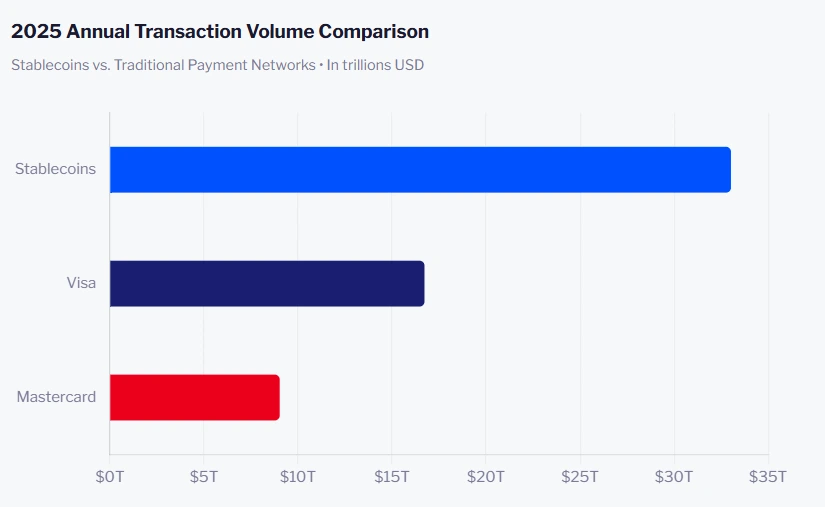
Above all, the numbers tell the real story. The stablecoin market now tops $312 billion in total value. Furthermore, deal volume passed $33 trillion in 2025 alone. To put it simply, that is nearly double Visa’s yearly total of $16.7 trillion.

However, a key detail weakens the payments story. A Wharton/WEF study found that about 99% of stablecoin use involves trading, not payments. In essence, Congress is giving tax breaks to the use case it wants to grow. At the same time, it is adding new costs to the one it wants to shrink.
In order to qualify for this tax break, a stablecoin must meet the GENIUS Act rules. Notably, it must be pegged to the dollar and issued by an approved body. Also, brokers and dealers in stocks are left out of this break.
Revenue Implications and Legislative Outlook
First, the wash-sale change is a money maker for the government. According to BDO, it is almost sure to stay in the final bill. Because of this, it would pay for other, more friendly parts of the law. Meanwhile, the stablecoin break still needs more work on its wording.
Besides, Rep. Miller has said the bill could move forward before August 2026. However, lawmakers set a tight first-quarter deadline that now looks hard to meet. On top of that, the broader crypto rules remain stuck. Banks and crypto firms are still at odds over stablecoin terms.
What Traders Should Watch
Already, the IRS requires Form 1099-DA for digital asset sales since January 1, 2025. In fact, brokers started sending copies to taxpayers by February 2026. As a result, the reporting setup is ready. The real question, though, is whether Congress wraps up the rules before the next tax season.
In the worst case, wash-sale rules pass with little change. At the same time, the stablecoin break stalls in talks. Because of this, everyday taxpayers lose their loophole first. On the other hand, pro trading firms get a cleaner setup. Clearly, this gap is built into the design of the bill.
Overall, Congress is sending a clear message. It wants digital dollars for daily payments and Bitcoin as a store of value. Consequently, the PARITY Act’s tax setup backs exactly that split. Therefore, traders should plan ahead before the rules become final.